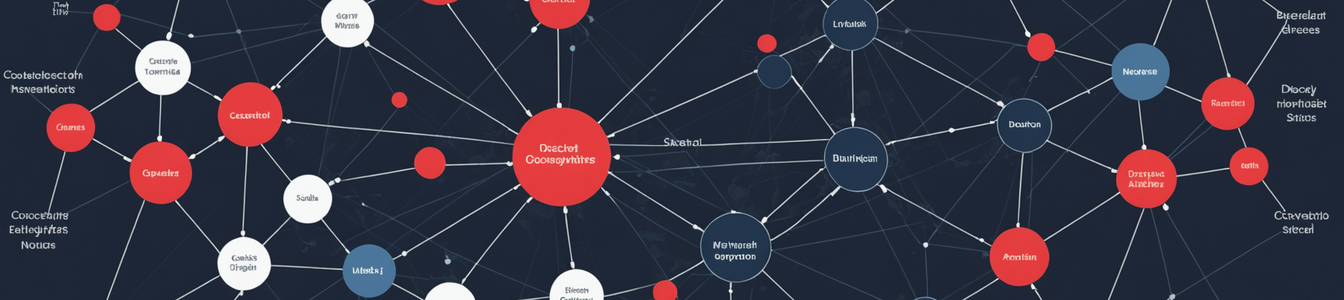
The cybersecurity landscape is facing a new wave of sophisticated attacks targeting the weakest links in enterprise security chains: third-party vendors. The recent breach affecting Grubhub through the Salesloft Drift platform represents a textbook example of how supply chain vulnerabilities can cascade through interconnected business ecosystems, compromising multiple organizations through a single point of failure.
The Attack Vector: Compromised Third-Party Platform
According to security investigations, attackers gained unauthorized access to Salesloft's Drift customer engagement platform using compromised credentials. This initial breach provided threat actors with a foothold in a system shared by numerous enterprise clients. The platform, designed to facilitate customer communications and marketing automation, contained integration points with client systems that became conduits for lateral movement.
Grubhub confirmed that corporate data was exfiltrated during the incident, though the company has not disclosed the specific nature or volume of compromised information. Security analysts suggest that the exposed data likely includes internal communications, customer interaction logs, and potentially integration credentials that could provide further access to Grubhub's internal systems.
The Expanding Threat Landscape
This incident occurs against a backdrop of escalating cybercrime activity. Recent testimony before national authorities revealed that over 150,000 cybercrime complaints were filed in 2025 alone, indicating a dramatic increase in both the frequency and sophistication of attacks. Supply chain compromises now represent a significant percentage of these incidents, as attackers recognize the efficiency of targeting shared service providers rather than individual organizations.
"Third-party breaches have become the new normal in enterprise attacks," explained cybersecurity analyst Maria Chen. "Attackers are strategically targeting vendors with broad client bases, knowing that a single successful compromise can yield access to dozens or even hundreds of organizations. The Salesloft-Grubhub incident follows this exact pattern."
Technical Analysis of the Breach Chain
The attack methodology appears to follow a multi-stage pattern common in modern supply chain attacks:
- Initial Access: Compromised credentials or unpatched vulnerabilities in the Drift platform
- Persistence Establishment: Creation of backdoor access mechanisms within the shared environment
- Lateral Movement: Exploration of connected client systems through integration points
- Data Exfiltration: Targeted extraction of valuable corporate information from accessible systems
Security researchers note that the use of legitimate business platforms as attack vectors makes detection particularly challenging. The traffic patterns appear normal to security systems, as they originate from authorized third-party services with established trust relationships.
Broader Implications for Enterprise Security
The Grubhub breach through Salesloft represents more than an isolated incident—it signals a fundamental shift in attack strategies. Organizations must now consider not only their own security posture but also that of every vendor, partner, and service provider in their operational ecosystem.
Key vulnerabilities exposed by this incident include:
- Overly Permissive Integration Access: Third-party services often request and receive broader system access than necessary for their functions
- Inadequate Vendor Security Assessments: Many organizations fail to conduct rigorous, continuous security evaluations of their vendors
- Shared Credential Management: Compromised credentials in shared platforms can provide access to multiple client environments
- Delayed Detection Capabilities: Most security monitoring focuses on direct attacks rather than compromise through trusted third parties
Industry Response and Mitigation Strategies
In response to the growing threat of supply chain attacks, security leaders are advocating for several key strategies:
- Zero-Trust Architecture Implementation: Treat all access requests—including those from trusted vendors—as potentially malicious until verified
- Enhanced Vendor Risk Management Programs: Implement continuous security monitoring and regular audits of all third-party providers
- Principle of Least Privilege Enforcement: Restrict vendor access to only the specific systems and data necessary for their services
- Supply Chain Attack Simulation: Regularly test security defenses against scenarios involving compromised third-party providers
- Shared Threat Intelligence: Participate in industry information-sharing initiatives to receive early warnings about vendor compromises
Regulatory and Compliance Implications
The increasing frequency of supply chain attacks is prompting regulatory bodies to reconsider compliance requirements. New frameworks are emerging that specifically address third-party risk management, with stricter requirements for vendor security assessments, contractual security obligations, and incident response coordination.
Organizations that fail to adequately manage third-party risk may face not only security breaches but also regulatory penalties and loss of customer trust. The Grubhub incident serves as a cautionary tale for companies across all sectors that rely on external service providers.
Future Outlook and Preparedness
As digital ecosystems become increasingly interconnected, the attack surface for supply chain compromises will continue to expand. Security experts predict that third-party breaches will account for an even larger percentage of major security incidents in coming years.
Organizations must adopt a proactive rather than reactive approach to supply chain security. This includes:
- Mapping all third-party dependencies and integration points
- Implementing continuous security monitoring of vendor access and activities
- Developing comprehensive incident response plans specifically for supply chain compromises
- Investing in security awareness training focused on third-party risk recognition
Conclusion: A New Security Paradigm
The Salesloft Drift breach affecting Grubhub and potentially other organizations represents a watershed moment in enterprise cybersecurity. It demonstrates that traditional perimeter-based security models are insufficient in an era of interconnected business services.
As one security director noted, "Your security is only as strong as your weakest vendor's security. The Grubhub incident makes this painfully clear. We need to fundamentally rethink how we approach enterprise security in a world where business boundaries are increasingly porous."
Organizations that successfully navigate this new threat landscape will be those that recognize supply chain security not as a compliance checkbox but as a core business imperative requiring continuous investment, vigilance, and adaptation to emerging threats.
Comentarios 0
Comentando como:
¡Únete a la conversación!
Sé el primero en compartir tu opinión sobre este artículo.
¡Inicia la conversación!
Sé el primero en comentar este artículo.