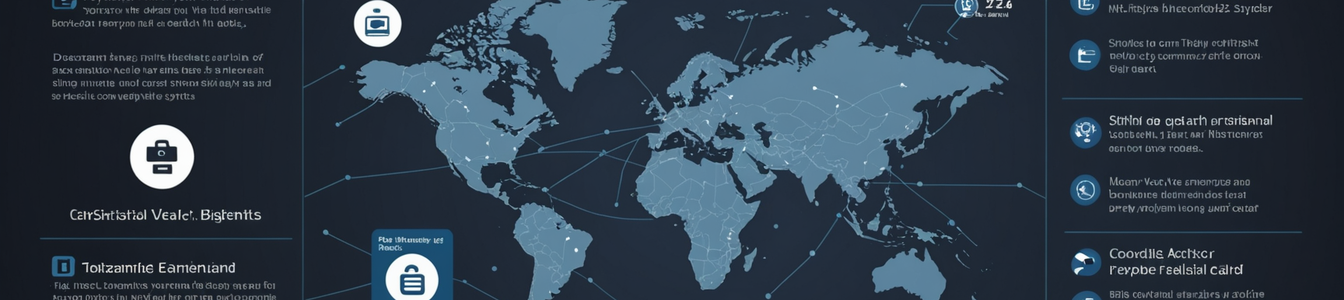
A coordinated phishing campaign exploiting national healthcare identity systems has emerged across European borders, targeting citizens in Italy and France with sophisticated government-imposter tactics. The operation represents a significant escalation in social engineering attacks against critical public services, demonstrating threat actors' ability to adapt their techniques to different national contexts while maintaining operational consistency.
Campaign Mechanics and Technical Execution
The attacks employ professionally crafted email and SMS communications that mimic official government health authorities. In Italy, messages reference the "Tessera Sanitaria" (health card) renewal process, while French citizens receive communications about their "Carte Vitale" being ready for shipment for the year 2026. The messages create urgency through official-sounding language and references to administrative deadlines, leveraging the legitimate anxiety citizens feel about maintaining uninterrupted healthcare access.
The phishing infrastructure employs convincing domain names that resemble legitimate government portals, though closer inspection reveals subtle discrepancies in spelling or domain extensions. The fraudulent websites are technically sophisticated, featuring official logos, color schemes, and form layouts that closely mirror authentic health service portals. These sites prompt victims to enter comprehensive personal data including full names, national identification numbers, addresses, and crucially, financial information under the guise of processing administrative fees.
Cross-Border Coordination and Tactical Analysis
What makes this campaign particularly noteworthy is its simultaneous appearance in multiple European countries with different healthcare systems. The threat actors have demonstrated remarkable adaptability, customizing their social engineering narratives to align with specific national administrative procedures while maintaining core technical infrastructure and operational patterns.
Cybersecurity analysts have identified several commonalities suggesting either a single coordinated group or sophisticated information sharing between regional threat actors:
- Timing Synchronization: Attacks coincide with legitimate renewal cycles in each country, maximizing psychological impact
- Template Adaptation: Core phishing templates are linguistically and culturally adapted while maintaining identical technical structures
- Infrastructure Overlap: Some technical indicators suggest shared hosting infrastructure or domain registration patterns
- Data Targeting: Both campaigns specifically seek national health identifiers, which have significant value on dark web markets
Impact on Healthcare Cybersecurity Posture
The campaign exposes vulnerabilities in public trust of digital healthcare communications. As European nations increasingly digitize health services, the attack surface for such social engineering operations expands correspondingly. The success of these phishing attempts relies on the legitimate expectation that health authorities might communicate digitally about card renewals or updates.
Healthcare cybersecurity teams now face the dual challenge of securing their own systems while also educating the public about legitimate communication channels. The attacks have prompted Italian and French health ministries to issue public warnings, clarifying that they never request sensitive personal or financial information via unsolicited emails or SMS messages.
Defensive Recommendations and Industry Implications
For cybersecurity professionals, this campaign highlights several critical defensive considerations:
- Enhanced Email Filtering: Healthcare organizations should implement advanced email security solutions capable of detecting sophisticated government impersonation attempts
- Public Awareness Campaigns: Proactive communication about legitimate administrative processes can reduce phishing success rates
- Multi-Factor Authentication: Critical health portals should implement robust authentication mechanisms beyond simple credential entry
- Cross-Border Intelligence Sharing: European cybersecurity agencies should establish formal mechanisms for sharing threat intelligence about healthcare-focused attacks
- Domain Monitoring: Continuous monitoring for lookalike domains targeting healthcare services should become standard practice
The campaign's sophistication suggests it may be the work of organized cybercriminal groups rather than opportunistic attackers. The healthcare sector's rich personal data makes it an increasingly attractive target, with stolen health identifiers commanding premium prices on illicit markets due to their utility in medical fraud, identity theft, and insurance scams.
As digital transformation accelerates across European healthcare systems, cybersecurity must evolve in parallel. This campaign serves as a stark reminder that threat actors are closely monitoring administrative processes and public communication patterns, ready to exploit any gap between digital service implementation and public cybersecurity awareness. The cross-border nature of the attacks further complicates defensive efforts, requiring unprecedented levels of international cooperation among both cybersecurity professionals and law enforcement agencies.
Comentarios 0
Comentando como:
¡Únete a la conversación!
Sé el primero en compartir tu opinión sobre este artículo.
¡Inicia la conversación!
Sé el primero en comentar este artículo.