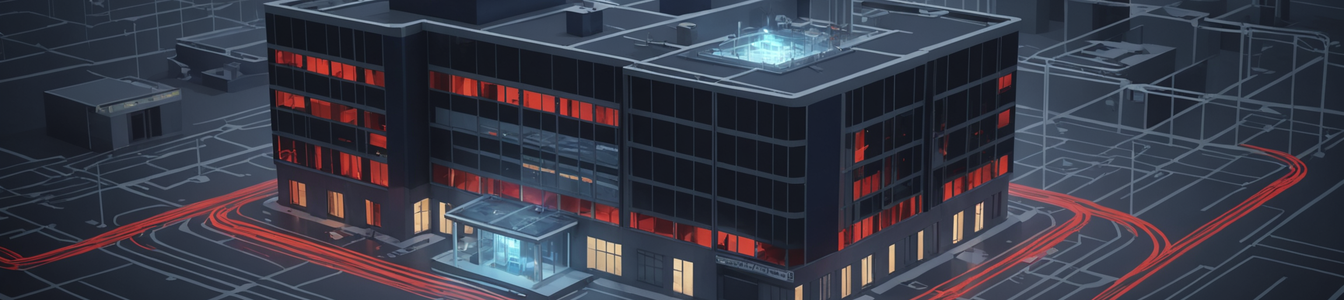
The narrative of a public health crisis often focuses on the acute phase: the initial surge, the scramble for resources, and the immediate operational pivot. However, for security operations and critical infrastructure managers, the true test begins long after the headlines fade. Events like the COVID-19 pandemic apply a persistent, unseen strain that fundamentally tests and transforms organizational resilience, exposing flaws in business continuity plans and stretching accountability frameworks to their breaking point.
The Resilience Mirage: Weathering the Immediate Storm
Initial analyses, such as those observing the security service industry during the pandemic, often highlight surface-level resilience. Reports indicated that core security services were deemed essential and maintained operations despite economic turbulence. This created a perception of robustness. Yet, this first-layer resilience can be misleading. It often masks underlying fragilities in digital infrastructure, supply chain dependencies, and workforce models that were hastily adapted rather than strategically redesigned. The ability to keep the lights on during lockdown did not equate to being prepared for the sustained, multi-year pressure of a rolling global health crisis and its secondary effects.
The Long Tail of Disruption: Stress Fractures in Systems
As the crisis prolongs, the strain shifts from acute shock to chronic stress. This phase reveals systemic weaknesses that initial business continuity plans rarely address. The concept of a 'super flu' or recurring severe health threats underscores a new reality: disruptions are not one-off events but part of a continuum. For cybersecurity, this means the distributed workforce model adopted during COVID-19 is no longer temporary. The attack surface has permanently expanded, with home networks, personal devices, and cloud collaboration tools becoming integral, yet vulnerable, parts of the corporate security perimeter. Supply chains for critical hardware and software components, already under geopolitical pressure, face additional disruption from health-related absenteeism and logistics bottlenecks, creating ripe opportunities for threat actors to exploit delays and introduce compromises.
The Accountability Quagmire: When Scrutiny Becomes a Burden
A profound, yet often overlooked, impact of prolonged crises is on governance and accountability. As seen in calls for time limits on public inquiries whose costs and durations soar, the aftermath of a crisis can itself become a debilitating event. Lengthy, open-ended investigations into systemic failures—whether in public health data security, vaccine research IP protection, or critical infrastructure oversight—can drain financial resources, consume leadership focus, and create a culture of risk aversion that stifles the agile decision-making needed for future resilience. For security leaders, this translates into an environment where post-incident forensic analysis and regulatory compliance reporting can become so burdensome that they impede the organization's ability to adapt and prepare for the next challenge.
Transforming Security Operations for the Age of Persistent Strain
Moving forward requires a paradigm shift from recovery-based resilience to adaptive endurance. Security operations centers (SOCs) must evolve from monitoring fixed perimeters to managing dynamic risk in a hybrid ecosystem. This involves:
- Building Elastic Security Architectures: Implementing Zero Trust frameworks that secure access based on identity and context, not network location, to protect distributed operations.
- Strengthening Digital Supply Chains: Conducting rigorous third-party risk assessments not just on primary vendors but deep into the software bill of materials (SBOM) and service dependencies, ensuring resilience against health-related disruptions anywhere in the chain.
- Developing Agile Governance Models: Creating streamlined incident response and reporting protocols that satisfy accountability requirements without triggering bureaucratic paralysis. This includes pre-defining investigation scopes and leveraging automation for compliance data collection.
- Prioritizing Human Resilience: Acknowledging that sustained crisis mode leads to SOC analyst burnout and fatigue, which directly impacts threat detection rates. Investing in AI-driven tooling for alert triage and ensuring sustainable workforce rotation models is a security imperative.
Conclusion: Endurance as the New Metric
The unseen strain of prolonged public health emergencies has delivered a clear verdict: the old models of business continuity and disaster recovery are insufficient. The goal is no longer just to bounce back, but to withstand constant pressure without breaking. For the cybersecurity community, this is a call to embed resilience into the very DNA of operations—designing systems that are not only secure but also adaptable, accountable without being stifled, and human-centric enough to endure the long haul. The next crisis may be a pandemic, a climate event, or a geopolitical shock; the organizations that survive and thrive will be those that have learned to treat resilience as a continuous state, not a post-incident destination.
Comentarios 0
Comentando como:
¡Únete a la conversación!
Sé el primero en compartir tu opinión sobre este artículo.
¡Inicia la conversación!
Sé el primero en comentar este artículo.