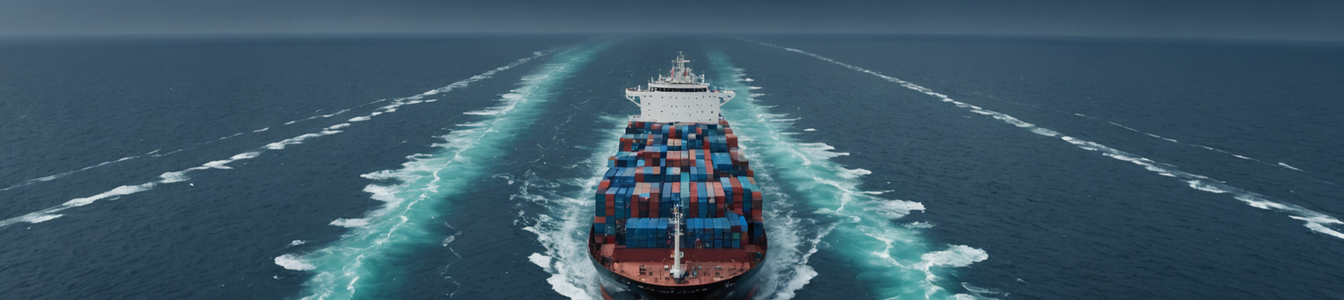
The Strait of Hormuz, a narrow waterway through which nearly a third of the world's seaborne oil and a significant portion of containerized goods transit, has become the epicenter of a new type of crisis. Iran's Islamic Revolutionary Guard Corps (IRGC) has escalated its maritime operations, seizing two container ships and firing upon a third, marking a dangerous pivot from economic disruption to direct supply chain warfare. For the global cloud industry, which relies on a just-in-time delivery model for hardware, this is a nightmare scenario.
The seized vessels, operated by major shipping lines, were transporting a variety of cargo, including electronics and industrial components. While the immediate focus has been on the safety of the 21 Indian nationals and other crew members, the cybersecurity and cloud infrastructure community must recognize a deeper, structural vulnerability. The hardware that powers hyperscale data centers—the custom ASICs for AI, the high-density storage arrays, and the advanced networking switches—often originates from manufacturing hubs in East Asia. These components travel through the Strait of Hormuz to reach assembly points in the Middle East, Europe, and North America.
Iran's use of 'fast-attack boats' is a tactical evolution. These swarming vessels, capable of speeds exceeding 60 knots, can intercept and board commercial ships with minimal warning. This layered system of threats, combining small boat swarms with longer-range naval assets, creates a 'denial of access' scenario. For cloud providers, this means that even a temporary disruption in the Strait can cascade into weeks of delays for data center expansions, hardware refreshes, and AI cluster deployments.
The geopolitical calculus is clear. By targeting commercial shipping, Iran is signaling that it can disrupt global trade without engaging in a full-scale naval conflict. The Strait of Hormuz is not just an energy chokepoint; it is a critical node in the physical supply chain for digital infrastructure. The seizure of ships with crew members from multiple nations, including India, adds a diplomatic layer that complicates any military response.
For cybersecurity professionals, the lesson is that 'cloud security' must extend beyond software patches and encryption. The physical security of the supply chain is now a first-order concern. Hyperscalers must diversify their logistical routes, pre-position hardware in regional hubs, and integrate real-time geopolitical intelligence into their procurement and deployment cycles. The era of assuming that hardware will arrive on time is over.
The incident also highlights the vulnerability of undersea cables. While the Strait is a surface chokepoint, the same geopolitical tensions threaten the fiber optic cables that crisscross the region. A coordinated attack on both shipping and cables could isolate entire regions from cloud services, creating a digital blockade.
In response, some shipping lines, like Hapag-Lloyd, have reported that one of their vessels successfully crossed the Strait, suggesting that passage is still possible but under extreme risk. However, the unpredictability of the IRGC's actions makes long-term planning impossible. The cloud industry must now consider the Strait of Hormuz as a high-risk zone, with implications for insurance, contract terms, and service-level agreements.
This crisis is a defining moment for the intersection of geopolitics and cybersecurity. The physical supply chain is the forgotten frontier of cloud security. As Iran continues to project power through maritime means, the global technology sector must adapt or face catastrophic delays in the infrastructure that powers AI, finance, and public services.
Comentarios 0
Comentando como:
¡Únete a la conversación!
Sé el primero en compartir tu opinión sobre este artículo.
¡Inicia la conversación!
Sé el primero en comentar este artículo.