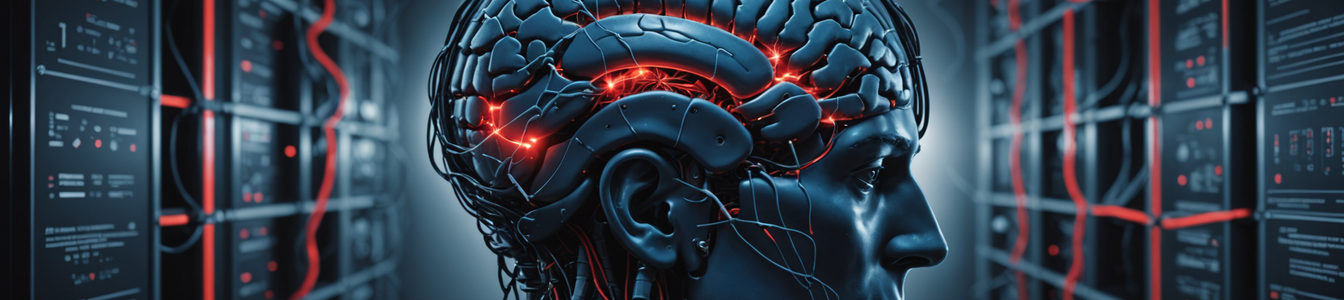
The cybersecurity community has long focused on technological vulnerabilities, malware signatures, and network anomalies while largely overlooking what may be the most predictable yet least monitored attack vector: the human psyche under extreme stress. Recent unrelated tragedies across Europe provide sobering case studies in how personal crises among critical infrastructure workers create systemic security vulnerabilities that traditional Security Operations Centers (SOCs) are ill-equipped to detect.
The Healthcare Case: When Caregivers Become Vulnerable
In Pitesti, Romania, a 33-year-old physiotherapist was found deceased in a private hospital where he worked. Described as having "a wonderful family," this healthcare professional's personal tragedy represents more than a human loss—it signals potential security implications for the medical facility. Healthcare workers with access to sensitive patient data, medical IoT devices, and hospital control systems represent critical security nodes. When such individuals experience personal crises, their ability to follow security protocols, recognize social engineering attempts, or maintain operational vigilance diminishes significantly.
This incident exemplifies what Romanian politician Mihai Fifor recently highlighted: "A socially weak state is a strategically vulnerable state." While Fifor's statement addressed national security, the principle applies directly to organizational security. Institutions with poor social support systems—whether hospitals, government agencies, or utilities—create environments where stressed employees become unwitting security liabilities.
The Family Tragedy: Cascading Effects on Professional Capacity
Parallel cases from the United Kingdom demonstrate how family emergencies create security vulnerabilities that extend beyond the immediate tragedy. The heartbreaking case of two-year-old Xielo Maruziva, who disappeared in the River Soar, illustrates this dynamic profoundly. Family members, including the child's aunt who leaped into the river during frantic searches and the father who had to be dragged from the swollen waters while attempting to save his son, experienced trauma that would inevitably affect their professional capacities if employed in critical roles.
Consider a scenario where any of these grieving family members worked as network administrators for power grids, financial systems, or transportation networks. Their cognitive load, emotional state, and decision-making capabilities would be severely compromised during and after such crises, creating windows of vulnerability that sophisticated threat actors could exploit.
The SOC Blind Spot: Missing Human Behavioral Indicators
Traditional SOC monitoring focuses on digital footprints: failed login attempts, unusual data transfers, malware signatures, and network traffic anomalies. What's missing is integration with human resources data, employee assistance programs, and behavioral indicators that might signal an employee under duress.
The cybersecurity industry has developed sophisticated algorithms to detect technical anomalies but lacks equivalent systems for identifying employees experiencing personal tragedies, financial stress, family emergencies, or mental health challenges. These human factors represent what military strategists call "centers of gravity"—critical vulnerabilities that, if compromised, can lead to systemic failure.
Building Human-Centric Threat Intelligence
Progressive organizations are beginning to recognize that security monitoring must extend beyond network perimeters to include workforce wellbeing indicators. This doesn't mean invasive surveillance of employees' personal lives but rather creating supportive systems that:
- Identify At-Risk Employees: Through voluntary wellness check-ins, manager training to recognize signs of extreme stress, and anonymous reporting systems for colleagues concerned about peers
- Implement Temporary Role Adjustments: Creating protocols for temporarily reassigning security-sensitive tasks from employees undergoing personal crises without stigma or career penalty
- Integrate HR and Security Data: Developing privacy-preserving methods to alert security teams when employees in critical roles experience major life events that might affect their security vigilance
- Build Resilient Team Structures: Ensuring no single employee represents a single point of failure, with cross-training and backup protocols for all security-critical functions
The Strategic Imperative: From Technical to Human Security
The cases from Romania and the UK, while geographically and contextually distinct, converge on a critical insight: organizations that neglect the human dimension of security are building their defenses on fundamentally unstable foundations. A physiotherapist's tragedy in a hospital and a family's trauma after a river accident may seem distant from cybersecurity concerns, but they represent precisely the types of human events that cascade into security failures.
As critical infrastructure becomes increasingly interconnected and dependent on human operators making sound security decisions, the industry must expand its understanding of "threat indicators" to include psychosocial factors. The next generation of Security Information and Event Management (SIEM) systems may need to incorporate anonymized wellbeing metrics alongside firewall logs and intrusion detection alerts.
Conclusion: Toward Holistic Security Operations
The cybersecurity community stands at a crossroads. We can continue to refine our technical detection capabilities while ignoring the human vulnerabilities that increasingly represent the most exploitable attack surface. Or we can evolve toward holistic security operations that recognize employees not as potential threats to be controlled, but as human beings whose wellbeing directly correlates with organizational security.
The tragic cases highlighted here serve as urgent reminders that the most sophisticated firewall cannot protect against an employee whose cognitive resources are depleted by personal tragedy. By developing human-centric security practices that support employees through crises, organizations don't just demonstrate ethical leadership—they build more resilient, secure operations that recognize security as fundamentally human before it becomes technological.
Comentarios 0
Comentando como:
¡Únete a la conversación!
Sé el primero en compartir tu opinión sobre este artículo.
¡Inicia la conversación!
Sé el primero en comentar este artículo.