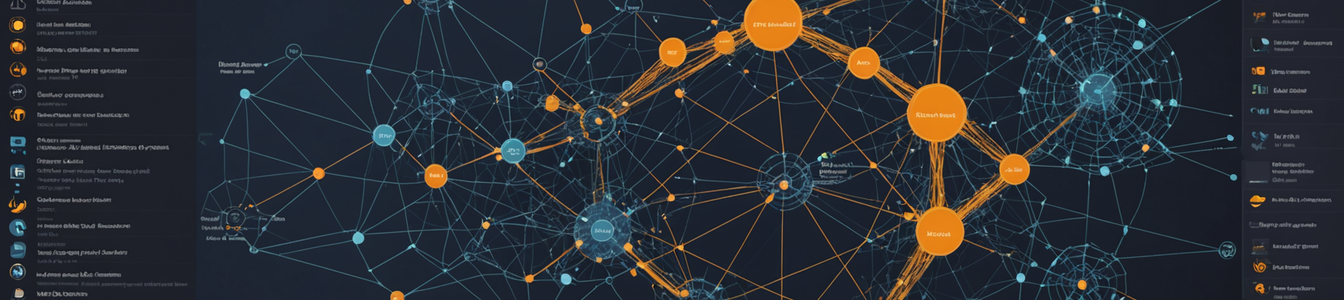
The cybersecurity landscape is witnessing a fundamental shift from standalone tools to deeply interconnected ecosystems. The latest evidence of this trend is the strategic integration announced between threat intelligence platform Criminal IP and IBM's flagship QRadar SIEM and SOAR suite. This partnership is more than a simple API connection; it represents a deliberate move to embed specialized threat intelligence directly into the daily workflow of security analysts, signaling a new phase in the evolution of Security Operations Centers (SOCs).
For years, SOC teams have grappled with the challenge of "context switching"—juggling between multiple consoles to correlate alerts with external threat data. This process is not only time-consuming but also prone to human error, creating dangerous gaps in the detection and response cycle. The integration between Criminal IP and QRadar directly addresses this pain point by delivering real-time threat intelligence context automatically within the QRadar interface itself.
Technical Mechanics and Operational Impact
The integration functions as a bidirectional conduit. When QRadar generates an alert involving an external IP address, domain, or file hash, it can automatically query the Criminal IP threat intelligence database. The results—including risk scores, associated threat actors, malware families, geolocation data, and historical attack patterns—are then appended directly to the alert or incident within QRadar. This automated enrichment transforms a generic alert (e.g., "Connection to suspicious IP") into a prioritized, contextualized incident (e.g., "Connection to IP known for distributing Cobalt Strike, associated with FIN7 activity, high confidence").
Conversely, analysts can proactively hunt for threats from within QRadar by querying Criminal IP's vast dataset, pulling potential indicators of compromise (IoCs) observed in their industry or region directly into their investigation panes. This seamless flow of information effectively makes the threat intelligence platform an invisible yet powerful layer within the SIEM/SOAR, augmenting human analysts with machine-speed context.
The Broader Industry Trend: The Integration Arms Race
This announcement is a single move in a larger strategic game. Specialized threat intelligence vendors are engaged in what industry observers call an "integration arms race." Their core value proposition is no longer just the quality and breadth of their data feeds, but how effortlessly that intelligence can be consumed by overburdened security teams. Direct, native integrations with major SIEM/SOAR platforms like IBM QRadar, Splunk, Microsoft Sentinel, and others have become critical differentiators and a prerequisite for enterprise adoption.
The rationale is clear: intelligence that is difficult to access or operationalize is intelligence wasted. By forging these alliances, vendors like Criminal IP ensure their data is actionable at the precise moment a decision is needed—during triage, investigation, or response orchestration via SOAR playbooks. This trend is pushing the entire market towards a more unified security operations experience, reducing tool sprawl and cognitive load on analysts.
Implications for Enterprise Security Teams
For CISOs and SOC managers, this evolution has tangible benefits. First, it promises to significantly improve Mean Time to Detect (MTTD) and Mean Time to Respond (MTTR) by eliminating manual lookup steps. Second, it enhances the accuracy of alert triage, allowing teams to focus their limited resources on genuine, high-severity threats rather than chasing false positives. Third, it democratizes access to advanced threat intelligence, making it available to junior analysts within their familiar toolset, thereby elevating the entire team's capability.
However, it also necessitates a strategic review. Security leaders must evaluate their existing threat intelligence partnerships not just on data quality, but on integration depth and workflow efficiency. The question is shifting from "What do you know?" to "How easily can my team use what you know?"
Looking Ahead: The Future of Integrated SOCs
The Criminal IP-IBM QRadar integration is a harbinger of the future SOC: a cohesive, intelligence-driven environment where data, analytics, and response actions are interwoven. The next logical steps will involve even deeper automation, where SOAR playbooks can automatically trigger investigative or containment actions based on the enriched threat score provided by the integrated intelligence. We can also expect to see these integrations expand to cover emerging data types, such as SaaS application risks and identity-based threats.
In conclusion, the alliance between Criminal IP and IBM is a significant development in the ongoing consolidation of the security operations stack. It underscores that in the modern threat landscape, speed and context are inseparable. The winners in cybersecurity will be those who can fuse intelligence with action in the shortest possible loop, and integrations like this are building the pipelines to make that possible.
Comentarios 0
Comentando como:
¡Únete a la conversación!
Sé el primero en compartir tu opinión sobre este artículo.
¡Inicia la conversación!
Sé el primero en comentar este artículo.