India's ambitious national strategy to become a global leader in artificial intelligence is entering a critical implementation phase, with profound implications for cybersecurity professionals worldwide. The country is simultaneously deploying AI into the heart of its physical critical infrastructure while becoming a major battleground for hyperscale data center investments. This convergence creates unprecedented security challenges that will define the next decade of digital sovereignty and operational resilience.
AI Meets the Rails: Securing Physical Infrastructure
The integration begins at ground level, quite literally. At major railway junctions like Prayagraj, Indian Railways is implementing AI-based inspection systems for trains. These systems represent a classic case of operational technology (OT) and information technology (IT) convergence, where computer vision algorithms analyze visual data to detect faults, wear, and potential safety issues in rolling stock. While this promises increased efficiency and safety, it immediately expands the attack surface of a critical national asset. Railways are lifeline infrastructure; an AI system vulnerability could be exploited to cause operational disruption, mask safety-critical defects, or even facilitate physical sabotage. The security of these systems depends not just on the integrity of the AI models and their data pipelines, but also on the underlying industrial control systems (ICS) and supervisory control and data acquisition (SCADA) environments they connect to. Cybersecurity teams must now consider adversarial machine learning attacks—where inputs are manipulated to fool the AI—as a new threat vector for physical infrastructure.
The Manufacturing Revolution and its Supply Chain
Beyond transportation, the push is industrial. The recent India AI Manufacturing Congress highlighted a national drive to embed AI across production lines, from predictive maintenance and quality control to optimized logistics. This "intelligent industrial revolution" aims to boost productivity and position India as a competitive manufacturing hub. However, it introduces complex supply chain security questions. The AI software stacks, hardware accelerators (like GPUs), and cloud platforms underpinning this revolution are often sourced from a limited number of international vendors. This creates dependencies and potential single points of failure. A compromise in an upstream AI model repository, a vulnerability in a widely used industrial AI framework, or geopolitical tensions affecting hardware supply could ripple through the entire nascent ecosystem. Furthermore, the proprietary AI models developed by Indian manufacturers become high-value intellectual property targets for both corporate and state-sponsored espionage.
The Data Center Gold Rush: Sovereignty in the Cloud
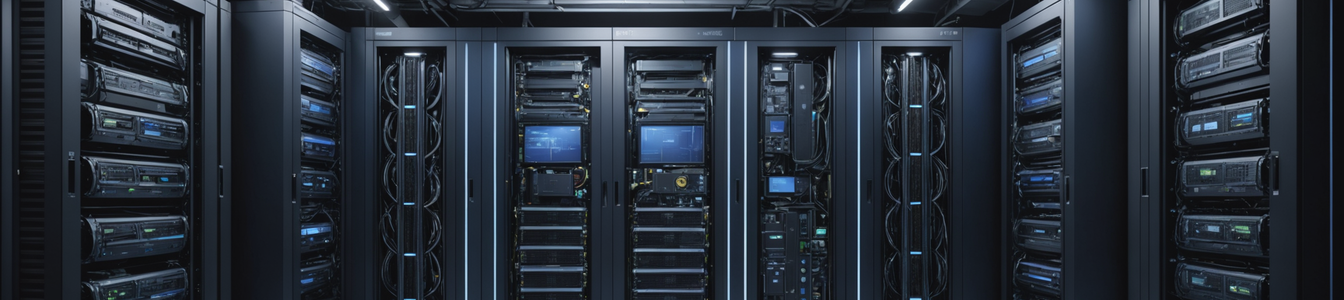
Parallel to these operational deployments is a staggering surge in data center construction. American technology giants—Google, Amazon (AWS), and Microsoft—are collectively investing billions of dollars to establish and expand hyperscale facilities across India. This is driven by booming domestic demand for cloud services, data localization requirements, and India's strategic geographic position. For cybersecurity, this investment boom is a double-edged sword.
On one hand, it brings world-class physical and digital security architectures, robust compliance frameworks, and advanced threat detection capabilities to the region. On the other, it concentrates vast amounts of sensitive Indian governmental, corporate, and personal data within infrastructure owned and operated by foreign corporations. This raises acute questions about data sovereignty, legal jurisdiction, and access controls. Who has ultimate administrative access to these systems? Under what legal frameworks can data be seized or accessed by foreign governments? How are encryption keys managed? The security of India's digital future is increasingly tied to the security policies and geopolitical alignments of these US-based firms.
The Convergence Risk: A Perfect Storm?
The most significant risk emerges from the interconnection of these trends. AI-driven manufacturing plants will rely on cloud-based AI services for model training and inference. Railway inspection systems may upload diagnostic data to cloud platforms for analysis. This creates a chain of dependency: the security of physical national infrastructure becomes contingent on the security of commercial cloud data centers. A major incident at a cloud provider—whether a technical outage, a sophisticated breach, or a ransomware attack—could now have cascading effects that halt factories or disrupt transportation networks.
This scenario demands a holistic security approach that India is still developing. Key challenges include:
- Regulatory Clarity: India needs robust, technically sound regulations governing the security of AI systems in critical infrastructure and the operation of foreign-owned data centers. These must go beyond basic data localization to cover model security, incident response coordination, and supply chain audits.
- Skill Gap: There is a severe shortage of cybersecurity professionals with expertise in both OT/IoT security and AI/ML system security. Building this domestic talent pool is essential for oversight and incident response.
- Public-Private Partnership: Effective security will require unprecedented collaboration between Indian government agencies (like CERT-In), public sector undertakings (like Indian Railways), private manufacturers, and the US tech firms building the data centers. Threat intelligence sharing and joint exercises are critical.
- Securing the AI Pipeline: From data collection at the sensor level to model training in the cloud, every stage of the AI lifecycle must be secured. This includes ensuring the integrity of training data, hardening models against evasion and poisoning attacks, and securing deployment environments.
The Road Ahead
India's AI ascent represents one of the world's largest real-time experiments in securing a digitally transforming nation. The decisions made in the coming 12-18 months, as highlighted in industry forecasts for 2026, will set the security posture for decades. Success will require moving beyond viewing cybersecurity as a compliance checkbox and embracing it as a foundational component of national competitiveness and resilience. The world will be watching: the strategies pioneered—or the failures encountered—in securing India's AI-powered infrastructure will provide critical lessons for every nation embarking on a similar path. For the global cybersecurity community, India has just become one of the most important theaters to observe.
Comentarios 0
Comentando como:
¡Únete a la conversación!
Sé el primero en compartir tu opinión sobre este artículo.
¡Inicia la conversación!
Sé el primero en comentar este artículo.