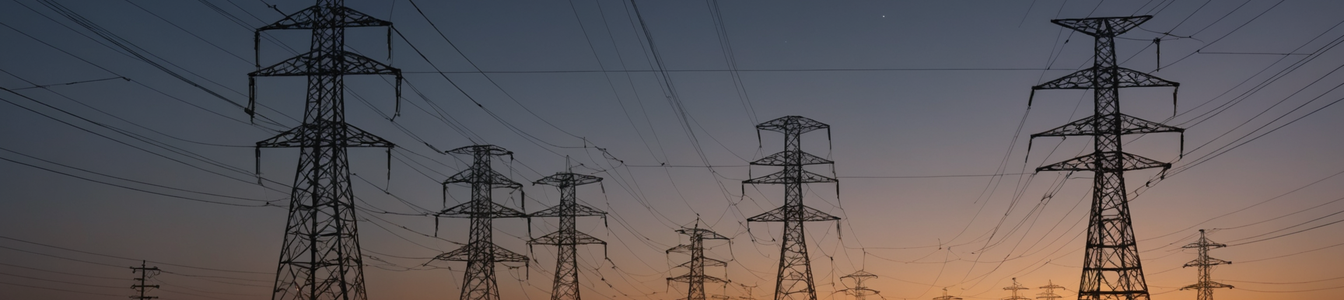
A stark dichotomy is emerging across India's critical infrastructure landscape, creating a complex and underappreciated attack surface for cybersecurity professionals. On one hand, the country's power distribution sector is celebrating a remarkable turnaround. After years of debilitating losses, discoms have posted a consolidated profit of ₹2,701 crore for the 2024-25 fiscal year. This financial recovery is widely attributed to operational reforms and, significantly, increased digitalization. Utilities are implementing advanced metering infrastructure (AMI), smart grid technologies, and centralized SCADA (Supervisory Control and Data Acquisition) systems to improve efficiency, reduce theft, and optimize distribution. This digital layer represents a massive expansion of the cyber-physical attack surface, integrating IT networks with operational technology (OT) that controls physical power flow.
However, this narrative of digital progress exists in parallel with a reality of physical decay in other essential services. In Firozabad, Uttar Pradesh, residents of Abbas Nagar are receiving visibly contaminated, foul-smelling water through municipal supply lines. Local complaints to the Nagar Nigam (municipal corporation) have reportedly gone unaddressed, pointing to systemic failures in maintenance, monitoring, and response within the physical infrastructure itself. This is not an isolated IT failure but a breakdown of the physical pipes, treatment plants, and quality assurance processes that deliver a fundamental resource.
This juxtaposition defines the core vulnerability: the collision of digital transformation with physical decay. When a water treatment plant undergoes digital modernization—adding IoT sensors for pH monitoring, programmable logic controllers (PLCs) for chemical dosing, and network-connected SCADA for remote management—it creates a new cyber gateway. If this digital system is layered atop corroded pipes, poorly maintained filtration units, and a culture of neglected physical upkeep, the entire system's resilience is compromised. An attacker need not execute a sophisticated SCADA exploit to cause harm; they could simply exploit the known physical weaknesses that the digital system is now blindly managing.
The Cybersecurity Implications of the Infrastructure Paradox
For security teams, this environment creates unique challenges:
- Blind Spots in Risk Assessment: Traditional risk frameworks often silo physical and cybersecurity. A team assessing the security of a newly digitized discom might focus on network segmentation for the AMI head-end system or patching schedules for the SCADA servers. They may inadequately account for how a physical event—like the failure of a century-old water main near a substation, as hinted at in the Firozabad case—could cascade into the digital control system, causing erroneous sensor data or automatic shutdowns.
- Supply Chain and Third-Party Risk: The reported use of personal water purifiers by public figures, while a personal health choice, symbolizes a loss of faith in public water quality. From a security perspective, it highlights an uncontrolled, consumer-grade IoT ecosystem interfacing with critical infrastructure. Employees bringing personal IoT devices into control centers, or citizens installing unvetted, internet-connected purification systems that could be hijacked, introduces unpredictable threat vectors into the environment surrounding critical assets.
- The Integrity-Availability Conflict: Digital modernization often prioritizes availability and efficiency (e.g., ensuring 24/7 power supply, automating water flow). However, in a physically decaying system, integrity of data becomes paramount. If pressure sensors are attached to rusting pipes, their data is inherently unreliable. A cyber-attack that manipulates this already flawed data (a false low-pressure reading) could trigger automated responses that cause physical damage, like pump cavitation or pipeline bursts. The convergence makes data integrity attacks particularly potent.
- Socio-Technical Attack Surface: The negligence reported in Firozabad is a human and procedural failure. In a digitized context, this translates to poor credential hygiene among municipal workers, lack of incident response protocols for cyber-physical events, and an organizational culture that may not prioritize the security of new digital tools. Social engineering attacks could find easy prey in such an environment, providing a path to the newly installed digital controls.
Toward an Integrated Defense Posture
Addressing this hybrid threat requires a convergence of disciplines. Cybersecurity strategies for modernizing infrastructure must begin with a physical audit. Penetration testing should include physical security assessments of substations, water pumping stations, and pipeline access points. Network architecture for OT must be designed with the understanding that the physical endpoints (sensors, actuators) are in harsh, vulnerable, and often unattended environments.
Furthermore, incident response plans must be co-authored by IT security, OT engineers, and physical facility managers. A 'cyber' incident may manifest as water contamination or a localized blackout, requiring first responders who understand both the digital root cause and the physical mitigation steps.
The Indian case study is a global microcosm. As nations from the United States to Brazil push to modernize aging grids, water systems, and transportation networks, they will encounter this same collision. The lesson for the global cybersecurity community is clear: securing the digital future of critical infrastructure is impossible without honestly assessing and fortifying its physical present. Investment in digital control systems must be matched by investment in the pipes, wires, and concrete they are meant to control. Otherwise, we are merely building a sophisticated digital nervous system for a body that is already failing.
Comentarios 0
Comentando como:
¡Únete a la conversación!
Sé el primero en compartir tu opinión sobre este artículo.
¡Inicia la conversación!
Sé el primero en comentar este artículo.