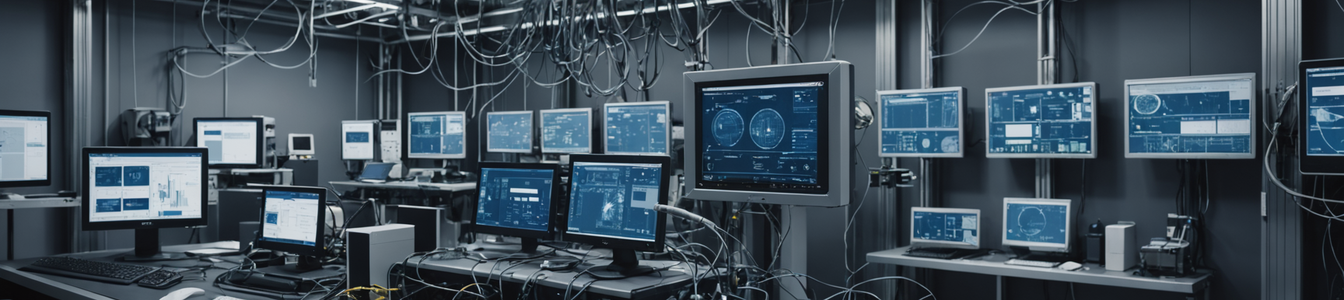
The Industrial Internet of Things (IIoT) revolution is accelerating at an unprecedented pace, bringing both transformative efficiency gains and critical security challenges to manufacturing and agricultural sectors worldwide. As factories and farms become increasingly connected, cybersecurity professionals are sounding the alarm about the expanding attack surface in industrial environments that were previously isolated from digital threats.
Market projections reveal the staggering scale of this transformation. According to recent forecasts, Japan alone is expected to reach 110 million cellular M2M/IoT subscriptions by 2030, representing massive connectivity expansion in industrial applications. Meanwhile, the global AI in edge computing market is projected to surpass $83.86 billion by 2032, driven largely by Industrial IoT deployments, 5G connectivity, and intelligent infrastructure expansion.
The acceleration of IIoT adoption is being fueled by technological advancements that dramatically reduce development timelines. The recent launch of platforms like the Grinn SBC enables developers to bring sophisticated AI-ready embedded systems to market in months rather than years. While this rapid deployment capability benefits innovation, it also raises concerns about whether security considerations are keeping pace with development speed.
In practical applications, IIoT technology is being deployed across diverse industrial sectors. From smart manufacturing facilities to agricultural operations like hydroponic melon farming in Sragen, connected sensors and automation systems are becoming ubiquitous. These deployments demonstrate the tangible benefits of IIoT in optimizing production, monitoring crop conditions, and improving operational efficiency through real-time data analytics.
However, this connectivity comes with significant security implications. Industrial control systems (ICS) and operational technology (OT) environments, traditionally air-gapped from corporate networks, are now exposed to cyber threats through IIoT connections. The convergence of IT and OT networks creates new attack vectors that could potentially disrupt critical infrastructure, compromise safety systems, and cause substantial economic damage.
Security challenges in IIoT environments are particularly complex due to several factors. Many industrial devices have long lifecycles and weren't designed with security in mind. The heterogeneous nature of IIoT ecosystems, combining legacy equipment with modern connected devices, creates compatibility issues and security gaps. Additionally, the real-time requirements of industrial processes often conflict with security protocols that can introduce latency.
Cybersecurity professionals must address these challenges through comprehensive strategies that include network segmentation, zero-trust architectures, specialized IoT security protocols, and continuous monitoring of industrial networks. The development of security frameworks specifically designed for IIoT environments is becoming increasingly critical as more industrial operations depend on connected technologies.
The regulatory landscape is also evolving to address IIoT security concerns. Governments and industry standards organizations are developing guidelines and requirements for securing industrial IoT deployments. However, the rapid pace of technological change often outstrips regulatory responses, placing the primary responsibility for security on organizations implementing these systems.
Looking forward, the security of Industrial IoT will require collaboration between device manufacturers, software developers, industrial operators, and cybersecurity experts. As AI capabilities increasingly move to the edge, the security implications become even more complex, requiring advanced threat detection and response capabilities tailored to industrial environments.
The transformation of factories and agricultural operations into connected, intelligent systems represents one of the most significant technological shifts of our time. Ensuring the security and resilience of these systems is not just a technical challenge but a fundamental requirement for the safe and reliable operation of critical infrastructure worldwide.
Comentarios 0
Comentando como:
¡Únete a la conversación!
Sé el primero en compartir tu opinión sobre este artículo.
¡Inicia la conversación!
Sé el primero en comentar este artículo.