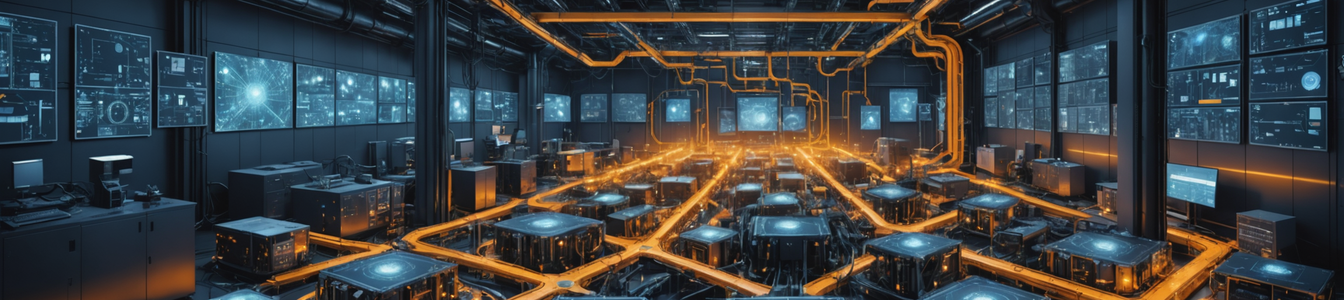
The Industrial IoT landscape is undergoing a fundamental transformation as edge computing platforms become the backbone of critical infrastructure operations. Recent technological advancements from leading companies are accelerating this shift, but security professionals are raising concerns about the systemic risks emerging from these decentralized architectures.
EdgeAI's recently unveiled decentralized industrial intelligence network represents a significant leap forward in real-world IoT implementation. The platform leverages distributed edge nodes to process data closer to industrial operations, reducing latency and bandwidth requirements. However, this distributed approach creates multiple attack vectors that traditional centralized security models cannot adequately address.
Simultaneously, DEEPX's recognition at CES 2026 for their DX-M1 AI chip, which powers Sixfab's ALPON X5 industrial computing solution, demonstrates the rapid hardware innovation driving this sector. These specialized processors enable advanced machine learning capabilities at the edge, but they also introduce new security considerations around firmware integrity, secure boot processes, and hardware-level vulnerabilities.
In the manufacturing sector, the convergence of operational technology (OT) and information technology (IT) networks creates complex security challenges. Legacy industrial control systems, originally designed for air-gapped environments, now connect to enterprise networks through edge computing gateways. This interconnection exposes previously isolated systems to cyber threats from corporate networks and the internet.
The maritime industry faces similar challenges as shipping companies deploy edge computing platforms for vessel monitoring, cargo management, and port operations. These systems process sensitive navigation data, cargo information, and operational metrics in real-time, making them attractive targets for cybercriminals and nation-state actors.
Key security concerns include the physical security of edge devices deployed in uncontrolled environments, the integrity of data processed across distributed nodes, and the management of security updates across heterogeneous device fleets. Traditional perimeter-based security approaches are insufficient for these decentralized architectures, requiring zero-trust principles and comprehensive encryption strategies.
Security teams must also contend with the complexity of managing identities and access controls across thousands of distributed devices. Each edge node represents a potential entry point for attackers, and compromised devices can serve as footholds for lateral movement within industrial networks.
The supply chain security of edge computing components presents another critical challenge. With multiple vendors providing hardware, software, and integration services, ensuring the security of the entire technology stack becomes increasingly difficult. Recent initiatives from companies like Quectel, developing intelligent single-board computers for rapid prototyping, highlight the need for security-by-design principles in industrial IoT development.
Looking forward, the industry must develop standardized security frameworks specifically designed for edge computing in industrial environments. These frameworks should address device authentication, secure communication protocols, anomaly detection, and automated incident response capabilities. Regulatory bodies are beginning to recognize these needs, with new standards emerging for critical infrastructure protection.
As industrial organizations continue their digital transformation journeys, security must remain a foundational consideration rather than an afterthought. The economic benefits of edge computing in industrial IoT are clear, but they must be balanced against the potentially catastrophic consequences of security breaches in critical infrastructure systems.
Security professionals should focus on developing comprehensive risk management strategies that account for the unique characteristics of edge computing architectures. This includes implementing robust monitoring solutions, establishing clear security governance frameworks, and ensuring adequate investment in security personnel and technologies.
The evolution of industrial IoT security will require collaboration between technology providers, industrial operators, and cybersecurity experts to create resilient systems that can withstand emerging threats while supporting operational excellence and business innovation.
Comentarios 0
Comentando como:
¡Únete a la conversación!
Sé el primero en compartir tu opinión sobre este artículo.
¡Inicia la conversación!
Sé el primero en comentar este artículo.