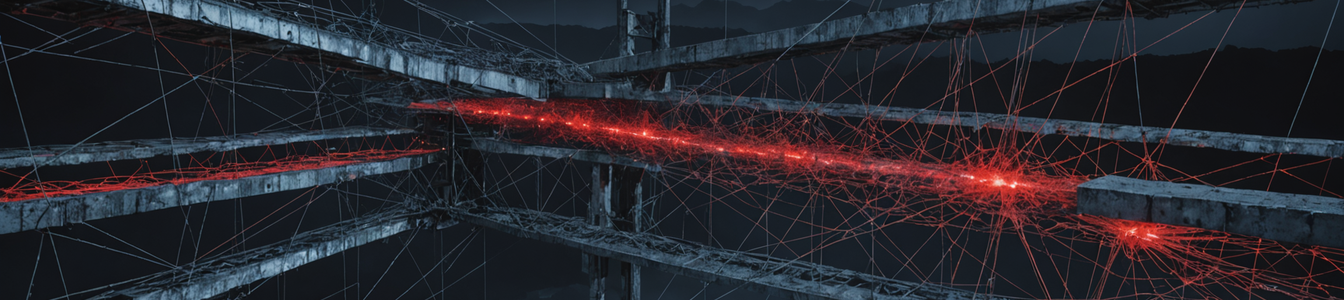
The recent emergency structural audit of Delhi's Signature Bridge by IIT experts, following multiple safety concerns, represents more than just a physical infrastructure problem. It exposes a systemic crisis in mandatory safety inspections that creates dangerous cyber-physical vulnerabilities across critical infrastructure sectors. This pattern of neglected audits—visible in bridge inspections, water system hygiene checks, and school building safety assessments—creates a perfect storm where physical deterioration converges with digital connectivity to produce unprecedented security risks.
The Physical Foundation of Cyber Risk
When the Public Works Department called in IIT Delhi and IIT Kanpur to conduct emergency structural audits of the Signature Bridge, they were addressing visible cracks and stability concerns. What they were also inadvertently highlighting was how physical inspection failures create digital attack surfaces. Modern infrastructure relies on networks of sensors, SCADA systems, and IoT devices that monitor structural health, water quality, and building integrity. When physical audits are delayed or inadequate, these digital systems often become the sole source of truth—and a single point of failure.
The water contamination crisis in Indore, where political officials have reported 31 deaths linked to compromised water supplies, demonstrates how hygiene audit failures translate directly to public health emergencies with cyber implications. Water treatment facilities increasingly depend on automated monitoring systems. If physical hygiene audits are neglected, cyber attackers could potentially manipulate sensor data to hide contamination events or trigger false alarms that disrupt water distribution.
School Safety Audits as Cyber-Physical Indicators
The plea for mandatory safety audits of school buildings in Pudukottai's district reveals another dimension of this crisis. Educational institutions are rapidly adopting smart building technologies, from automated climate control to digital access systems and emergency notification networks. When structural audits are ignored, these digital systems operate on flawed assumptions about the physical environment they monitor and control.
Cybersecurity professionals traditionally focus on digital vulnerabilities, but the Indian cases demonstrate how physical audit failures create what security researchers call "inherited digital risk." A bridge's structural monitoring system, a water plant's quality control network, or a school's building management system—all become vulnerable when their physical foundations are compromised and those compromises go undetected due to poor auditing practices.
The SCADA and IoT Convergence Challenge
Critical infrastructure worldwide is undergoing digital transformation, with legacy SCADA systems merging with modern IoT platforms. This convergence creates unprecedented efficiency but also introduces complex attack vectors. The structural audit crisis demonstrates how attackers could exploit known physical weaknesses to gain access to connected digital systems.
Consider a scenario where delayed bridge inspections mean corrosion goes undetected. The bridge's IoT sensors might show normal readings until catastrophic failure occurs. A threat actor aware of the inspection gap could manipulate sensor data to accelerate deterioration while hiding evidence from remote monitoring centers. Similarly, in water systems, neglected hygiene audits mean contamination events might only be detected through digital sensors that could be compromised to hide public health threats.
Regulatory and Compliance Implications
The pattern emerging across Indian infrastructure suggests a systemic failure in audit enforcement mechanisms. Mandatory safety audits exist on paper but often lack proper implementation, verification, and integration with cybersecurity protocols. This creates regulatory gaps that sophisticated threat actors could exploit.
For cybersecurity teams, this means expanding threat models to include audit compliance status as a risk factor. Organizations should implement:
- Integrated audit tracking systems that correlate physical inspection schedules with cybersecurity assessments
- Digital twins of critical infrastructure that simulate both physical deterioration and potential cyber attacks
- Cross-disciplinary teams combining structural engineers, public health officials, and cybersecurity experts
- Automated alert systems that trigger when audit deadlines are missed or when physical sensor data contradicts recent inspection reports
Recommendations for Cybersecurity Professionals
- Expand Asset Inventories: Include audit compliance status and physical inspection records as part of critical infrastructure asset management
- Develop Converged Response Plans: Create incident response protocols that address simultaneous physical and digital failures
- Implement Multi-Layer Validation: Use independent physical audits to validate digital sensor data and vice versa
- Advocate for Regulatory Reform: Push for cybersecurity requirements to be integrated into structural and safety audit mandates
- Conduct Converged Red Team Exercises: Test how physical infrastructure weaknesses could be exploited to compromise connected digital systems
The cases from Delhi, Indore, and Pudukottai serve as warning signs for global infrastructure security. As critical systems become increasingly interconnected, the line between physical safety and cybersecurity continues to blur. The structural audit crisis isn't just about crumbling bridges or contaminated water—it's about creating systemic vulnerabilities that threat actors can exploit through both physical and digital means.
Cybersecurity must evolve from protecting purely digital assets to securing the complex cyber-physical ecosystems that modern societies depend on. This requires new frameworks, new partnerships with civil engineers and public health officials, and a fundamental rethinking of how we assess risk in an increasingly connected world. The alternative—waiting for a catastrophic failure that exploits both physical deterioration and digital vulnerability—is a risk no society should accept.
Comentarios 0
Comentando como:
¡Únete a la conversación!
Sé el primero en compartir tu opinión sobre este artículo.
¡Inicia la conversación!
Sé el primero en comentar este artículo.