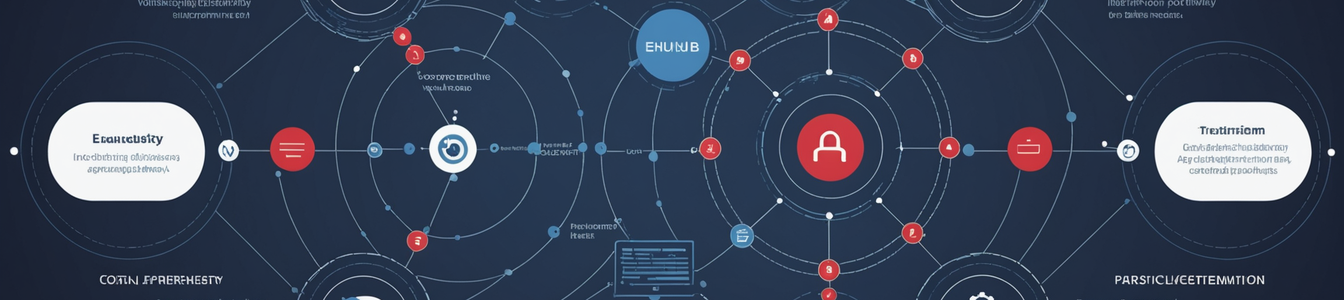
The institutional cryptocurrency security landscape is undergoing a dramatic transformation as major financial players accelerate their digital asset allocations, creating unprecedented security challenges for corporate treasuries and wealth management firms. Recent developments indicate a significant shift in how institutions approach crypto asset protection, with security considerations becoming paramount in allocation decisions.
Luxembourg's entry into the Bitcoin market marks a watershed moment for sovereign wealth funds adopting digital assets. The nation's wealth fund, known for its conservative investment approach, has made its first crypto allocation, signaling growing mainstream acceptance among traditionally risk-averse institutional investors. This move follows similar allocations by other European wealth funds and underscores the need for robust security frameworks capable of protecting national-level digital asset holdings.
Simultaneously, BitMine Immersion (BMNR), under the guidance of Tom Lee, has substantially increased its Ethereum exposure with a $103-104 million purchase. This significant allocation comes as Ethereum maintains its position above $4,300, demonstrating institutional confidence in both the asset's value proposition and the security infrastructure supporting large-scale Ethereum holdings. The transaction highlights the evolving security requirements for institutional ETH staking and smart contract management.
Market dynamics reveal an interesting tension between traditional crypto whales and new institutional entrants. As Bitcoin struggles to break past the $125,000 resistance level, data indicates that long-term Bitcoin holders ('OG whales') are currently outselling institutional buyers. This trend suggests that while institutions are building positions, security concerns may be limiting the pace of adoption. The security infrastructure required for institutional-scale Bitcoin holdings differs significantly from retail solutions, requiring enterprise-grade custody, insurance, and risk management frameworks.
Hong Kong's HashKey Group is capitalizing on this institutional momentum with plans for a $500 million IPO in 2025. As a major digital asset services provider, HashKey's public offering represents a significant milestone in the maturation of institutional crypto infrastructure. The company's security protocols, compliance frameworks, and institutional-grade custody solutions will face increased scrutiny as public market investors evaluate the investment opportunity.
Security Implications and Requirements
The accelerating institutional adoption creates complex security challenges that extend beyond traditional cybersecurity concerns. Multi-signature wallet implementations require sophisticated key management systems with geographic distribution and legal entity separation. Cold storage solutions must balance security with accessibility, ensuring assets remain protected while available for strategic rebalancing or liquidity needs.
Institutional security teams must address several critical areas:
Custody Solutions: The transition from self-custody to third-party institutional custody services requires rigorous due diligence and security assessments. Institutions must evaluate custody providers based on their security track records, insurance coverage, and regulatory compliance.
Transaction Security: Large-scale crypto transactions demand sophisticated security protocols, including multi-party computation, hardware security modules, and comprehensive audit trails. The $100+ million Ethereum acquisition by BitMine demonstrates the scale at which institutions are operating.
Regulatory Compliance: Security frameworks must incorporate regulatory requirements across multiple jurisdictions. Luxembourg's entry into crypto highlights the cross-border nature of institutional digital asset management and the corresponding security compliance challenges.
Insurance and Risk Management: Traditional insurance products are evolving to address the unique risks of digital assets. Institutions require comprehensive coverage for theft, loss, and operational failures while maintaining transparent risk assessment processes.
Future Outlook
The institutional crypto security arms race shows no signs of slowing. As more sovereign wealth funds, corporations, and financial institutions allocate to digital assets, security providers must innovate to meet escalating requirements. The convergence of traditional financial security practices with blockchain-native solutions will define the next generation of institutional digital asset protection.
Security professionals should anticipate increased demand for expertise in blockchain forensics, smart contract auditing, and decentralized security protocols. The growing institutional presence will likely drive standardization in security practices and accelerate the development of industry-wide security certifications for digital asset management.
As the market matures, institutions that prioritize security infrastructure will be better positioned to capitalize on digital asset opportunities while managing the unique risks of this emerging asset class. The current developments represent just the beginning of a broader transformation in how institutions approach digital asset security and management.
Comentarios 0
Comentando como:
¡Únete a la conversación!
Sé el primero en compartir tu opinión sobre este artículo.
¡Inicia la conversación!
Sé el primero en comentar este artículo.