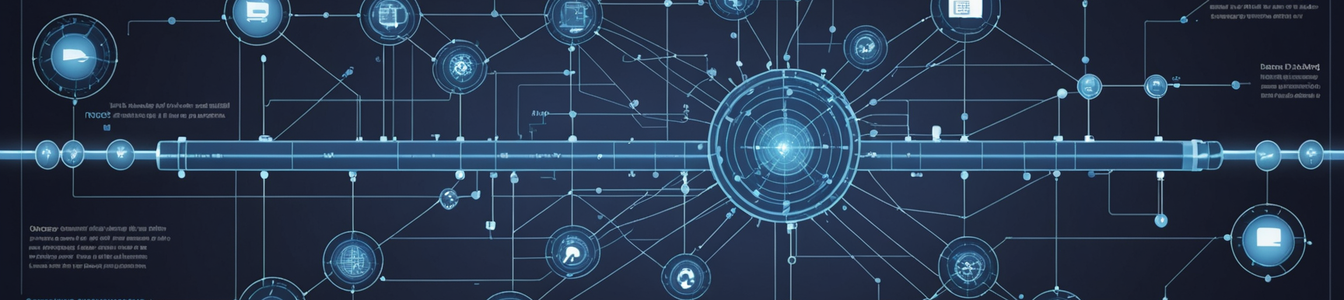
The Infrastructure Blind Spot: When Monitoring Creates Vulnerability
Across the globe, a quiet revolution is transforming how nations manage their most critical physical assets. From the dams of central India to the power grids connecting Southeast Asia, and the water systems serving megacities from Tehran to Delhi, governments are racing to implement centralized digital monitoring systems. Driven by climate pressures, operational efficiency demands, and the promise of predictive maintenance, this shift represents one of the largest convergences of operational technology (OT) and information technology (IT) in history. Yet cybersecurity experts are sounding alarms that this well-intentioned modernization is creating a dangerous new attack surface—one where the systems designed to protect critical infrastructure could become the very vectors for its compromise.
The Centralization Paradox
The pattern is becoming disturbingly consistent. In Bhopal, India, authorities are implementing centralized monitoring for the Upper Lake and surrounding dams—critical water sources for millions. The system promises real-time data on water levels, structural integrity, and environmental conditions. Similarly, the Laos-China electricity interconnection, scheduled for operational status in April, represents a transnational infrastructure project where monitoring and control systems will manage power flows across borders. Meanwhile, water crises in Tehran and Delhi highlight the desperate need for better resource management, creating pressure to implement sophisticated IoT monitoring solutions.
What connects these disparate projects is their architectural vulnerability: centralized command and data aggregation points that, if compromised, could provide attackers with unprecedented control over physical systems. "We're witnessing the creation of single points of failure on a national and sometimes continental scale," explains Dr. Elena Rodriguez, an industrial control systems (ICS) security researcher. "The operational benefits are real, but the security implications are being systematically underestimated."
The Attack Vectors Emerging
Security analysts identify three primary risk categories emerging from this infrastructure monitoring trend:
- Data Manipulation Attacks: By compromising sensor networks or data aggregation points, attackers could feed false information to operators—showing safe water levels when dams are actually overflowing, or indicating normal power flows during grid instability. This could delay critical responses or trigger inappropriate actions.
- Monitoring Blindness: Sophisticated attackers could selectively disable monitoring capabilities while leaving control systems operational, creating situations where infrastructure failures occur without detection or alarm. This "dark infrastructure" scenario represents a particular concern for environmental monitoring systems, such as those referenced in the Gujarat pollution control case.
- Cascade Triggers: In interconnected systems like the Laos-China power link, compromising monitoring systems could enable attackers to manipulate perceived load conditions, potentially triggering automatic protection systems that would cause widespread blackouts or equipment damage.
The Convergence Challenge
The fundamental problem lies in the convergence between traditionally isolated OT environments and modern IT networks. Industrial control systems for dams, power grids, and water treatment facilities were historically air-gapped or used proprietary protocols. Today's centralized monitoring solutions typically bridge these worlds, connecting legacy SCADA (Supervisory Control and Data Acquisition) systems to cloud platforms, corporate networks, and mobile management applications.
"Every sensor added to a dam or power transformer creates a potential entry point," notes Michael Chen, lead security architect for critical infrastructure at a global cybersecurity firm. "When those sensors connect to centralized platforms accessible via the internet—even through indirect paths—the entire attack surface expands exponentially."
The Regulatory Gap
Compounding the technical vulnerabilities is a significant regulatory and oversight gap. The Supreme Court's intervention in Gujarat's pollution monitoring case highlights how legal and administrative systems struggle to keep pace with technological implementation. Security standards for IoT devices in critical infrastructure remain fragmented across jurisdictions, with little international coordination.
Furthermore, the procurement processes for these monitoring systems often prioritize functionality and cost over security. Vendors rushing to meet government tenders may implement minimal security controls, while operators lacking cybersecurity expertise may accept systems without proper assessment of their digital risk profiles.
Mitigation Strategies for a Connected World
Security professionals emphasize that abandoning digital monitoring is neither practical nor desirable. Instead, they advocate for a security-by-design approach incorporating several key principles:
- Defense-in-Depth Segmentation: Critical monitoring systems should employ multiple layers of network segmentation, ensuring that compromise of one component doesn't provide access to control systems or other critical assets.
- Zero-Trust Architecture: Every access request—whether from an operator's console or a remote sensor—should be authenticated, authorized, and encrypted. Continuous verification should replace traditional perimeter-based security models.
- Air-Gapped Backups: While primary monitoring may occur through connected systems, critical safety parameters should have isolated, analog or digitally air-gapped backup indicators that cannot be remotely manipulated.
- Behavioral Anomaly Detection: Rather than relying solely on threshold alarms, modern systems should employ AI-driven behavioral analysis to detect when monitoring data patterns deviate from normal operational baselines—potentially indicating manipulation rather than physical changes.
- International Security Standards: The transnational nature of infrastructure like the Laos-China power link necessitates coordinated security standards and incident response protocols between nations.
The Path Forward
As climate change intensifies water crises and energy demands grow more complex, the pressure to implement sophisticated monitoring will only increase. The cybersecurity community faces a critical window to influence how these systems are designed and deployed.
Professional organizations like ISACA and (ISC)² are developing specialized certifications for ICS security, while government agencies in several countries are beginning to mandate security assessments for critical infrastructure projects. However, experts agree that awareness remains the most significant barrier.
"Operational teams managing dams and power grids often don't consider cybersecurity until after implementation," observes Rodriguez. "We need security professionals at the design table from day one, speaking the language of engineers and operators, not just IT."
The coming years will test whether our critical infrastructure can achieve the digital transformation necessary for 21st-century challenges without introducing catastrophic vulnerabilities. The monitoring systems being deployed today will either become examples of resilient design or case studies in systemic failure. For cybersecurity professionals, the mission is clear: ensure it's the former.
Comentarios 0
Comentando como:
¡Únete a la conversación!
Sé el primero en compartir tu opinión sobre este artículo.
¡Inicia la conversación!
Sé el primero en comentar este artículo.