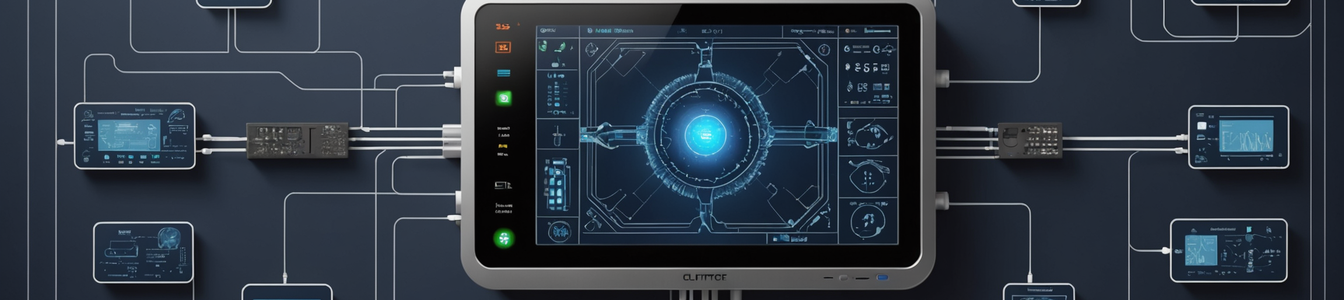
The silent integration of sophisticated, next-generation Internet of Things (IoT) sensors into the fabric of healthcare and critical industrial operations represents a paradigm shift in monitoring and automation. From hospital beds that can predict tissue damage to optical fibers that sense minute vibrations in pipelines, these technologies promise enhanced safety, efficiency, and predictive maintenance. However, this sensor-driven revolution is unfolding with significant, and often overlooked, cybersecurity blind spots. For security leaders, the stakes have transcended data confidentiality; they now encompass data integrity, system availability, and ultimately, human safety and operational continuity in the physical world.
The Medical Frontline: Sensorized Care and Invisible Vulnerabilities
Advancements in medical IoT are producing highly sensitive, always-on sensor systems designed for proactive patient care. Research highlighted in recent developments shows new sensor arrays capable of continuously monitoring pressure, moisture, and temperature to prevent debilitating pressure injuries in immobile patients. These systems represent a leap forward in clinical outcomes, but they also create a new attack vector within hospital networks. A compromised sensor could provide falsified readings, leading to missed alerts for critical interventions or causing alarm fatigue by flooding nurses with false positives. The integrity of this physiological data is paramount; manipulation could directly impact patient treatment plans. Furthermore, these medical sensors often connect via proprietary or lightweight protocols to central nursing stations or Electronic Health Record (EHR) systems, potentially serving as a pivot point into broader, more sensitive hospital IT networks if not properly segmented and hardened.
Critical Infrastructure's Nervous System: Optical Fiber as a Sensor
Beyond the clinic, a more pervasive transformation is underway. The repurposing of ubiquitous optical fiber cables—the backbone of global communications—into distributed acoustic and temperature sensing (DAS/DTS) networks is a game-changer for industrial and national infrastructure. As reported, a single fiber strand can now function as thousands of sensitive points, detecting leaks in oil and gas pipelines, monitoring structural health in bridges and dams, and securing perimeters. The security implications are profound. These systems monitor the literal heartbeat of critical infrastructure. An attacker who gains access to the sensor interrogation unit or corrupts the data stream could mask a pipeline leak, hide structural fatigue, or create false alerts of a perimeter breach, triggering costly and disruptive emergency responses. The attack surface includes not just the software managing the sensor data but also the physical integrity of the fiber line itself, which could be tampered with to inject spoofed signals.
The Ubiquitous Sensor Ecosystem: From Dashboards to Smart Environments
The risk landscape extends to everyday environments. Modern vehicles, for instance, are equipped with an array of environmental sensors, including the often-overlooked light/rain sensor behind the dashboard's circle. This sensor autonomously controls headlights and wipers, a convenience feature that is part of a larger vehicle data network. A compromised environmental sensor could feed erroneous data to a vehicle's central computer, potentially leading to unsafe driving conditions (e.g., failing to activate headlights at night) or, in a more sophisticated attack, serving as a foothold to exploit vulnerabilities in connected automotive systems. This model replicates across smart buildings and factories, where temperature, humidity, vibration, and presence sensors feed Building Management Systems (BMS) and Industrial Control Systems (ICS). The compromise of what seems like a mundane sensor can have cascading effects on environmental control, safety interlocks, and automated processes.
Converging Risks and the Path to Secured Sensing
The common thread across medical, industrial, and consumer IoT sensors is the convergence of cyber and physical risk. The primary threats shift from data theft to data integrity attacks (spoofing sensor readings), availability attacks (denial-of-service on sensor networks), and manipulation of automated physical responses. These systems frequently suffer from a perfect storm of vulnerabilities: legacy or proprietary communication protocols with weak encryption, minimal compute resources for robust security controls, insecure firmware update mechanisms, and integration into networks without proper segmentation.
Addressing these blind spots requires a fundamental shift in security strategy:
- Security by Redesign: Manufacturers must move beyond functionality-first design. Security requirements, including secure boot, hardware-based root of trust, encrypted communications (even for "simple" data), and secure, attestable firmware updates, must be integral from the silicon level up.
- Network Segmentation and Zero Trust for OT/IoT: Sensor networks must be logically and physically isolated from core enterprise IT networks. Implementing Zero Trust principles, where sensor data is continuously validated and devices are never inherently trusted, is crucial.
- Anomaly Detection at the Edge: Deploying behavioral analytics that can identify deviations from normal sensor telemetry patterns is key to detecting spoofing or malfunction, whether malicious or accidental.
- Supply Chain and Lifecycle Vigilance: Security teams must vet the provenance and update lifecycle of sensor hardware and software, understanding that a vulnerability in a single sensor model could be deployed across thousands of critical points.
As sensors become the primary interface between the digital and physical worlds in high-stakes environments, the cybersecurity community's focus must expand. The goal is no longer just to protect information, but to ensure that the digital "senses" of our critical systems remain trustworthy. The integrity of a sensor reading is becoming as critical as the integrity of a database record, and its failure can have immediate, tangible, and dangerous consequences. Securing this next generation of IoT is not an IT problem; it is a foundational requirement for safety and resilience in an increasingly sensor-driven society.
Comentarios 0
Comentando como:
¡Únete a la conversación!
Sé el primero en compartir tu opinión sobre este artículo.
¡Inicia la conversación!
Sé el primero en comentar este artículo.