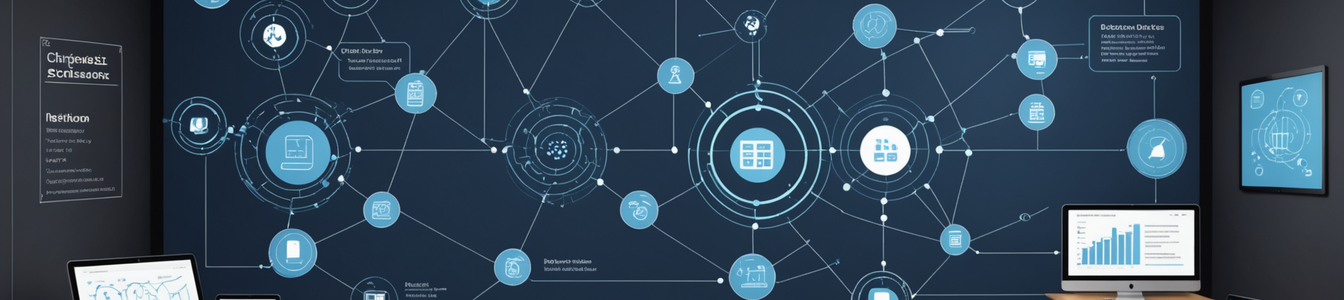
A silent revolution is transforming classrooms worldwide, but security experts warn it's creating one of the most vulnerable digital environments ever conceived. The global education technology market is embracing Internet of Things (IoT) devices at an unprecedented rate, with current projections indicating over 1 billion connected devices will populate schools by 2030, representing annual growth exceeding 15%. This massive deployment, often driven more by investment opportunities than pedagogical necessity, is creating what researchers are calling 'the quantified classroom'—an environment where every aspect of student presence, attention, behavior, and physiology can be monitored, measured, and transmitted.
The Expanding IoT Ecosystem in Education
The modern educational IoT landscape extends far beyond simple smartboards or tablet carts. Today's connected classrooms include biometric attendance systems using facial recognition or fingerprint scanning, environmental sensors monitoring air quality and temperature, wearable devices tracking student movement and engagement, interactive learning tools collecting response data, and location-aware devices monitoring campus movements. Each device generates a continuous stream of sensitive data, creating comprehensive digital profiles of minors that include their learning patterns, behavioral tendencies, physiological responses, and precise physical locations throughout the school day.
This expansion is being accelerated by technological breakthroughs like the recently developed neuromorphic humidity sensor inspired by frog skin and brain function. Created by Indian researchers, this brain-like sensor operates with extreme energy efficiency, potentially enabling always-on monitoring devices with minimal power requirements. Such advancements promise to make IoT deployment in resource-constrained educational environments more feasible, but they also lower barriers to pervasive surveillance without corresponding advances in security architecture.
The Security Crisis in Educational IoT
Cybersecurity professionals identify multiple critical vulnerabilities in this rapid expansion. First, most educational IoT devices are designed with convenience and cost as primary considerations, not security. Many lack even basic encryption for data transmission, use default credentials that are never changed, and receive infrequent or nonexistent security updates. School IT departments, often understaffed and underfunded, lack the expertise to manage complex IoT security protocols across hundreds or thousands of disparate devices.
Second, the data being collected represents an extraordinarily sensitive dataset. Unlike corporate IoT deployments that might monitor machinery or environmental conditions, educational IoT captures intimate details about children—their attention spans, social interactions, physical movements, and in some cases, biometric identifiers that cannot be changed if compromised. This data flows through often-unsecured networks to cloud platforms that may have inadequate security measures, creating multiple points of potential breach.
Third, the regulatory landscape has failed to keep pace with this technological deployment. While regulations like GDPR and COPPA provide some protections, they were not designed for the scale and intimacy of data collection enabled by modern educational IoT. Many schools lack clear data governance policies specifically addressing IoT devices, and procurement processes rarely include comprehensive security assessments of connected technologies.
Emerging Threat Vectors and Consequences
The security implications extend beyond simple data breaches. Compromised environmental sensors could provide attackers with precise knowledge of classroom occupancy patterns, potentially facilitating physical security threats. Manipulated attendance systems could create false records or enable unauthorized campus access. Behavioral data could be weaponized for social engineering attacks against families, or sold to predatory marketing firms targeting vulnerable demographics.
Perhaps most concerning is the potential for systemic manipulation. If learning platforms collecting student response data were compromised, attackers could alter educational content delivery or manipulate performance metrics. In extreme scenarios, compromised biometric systems could enable identity theft that follows victims throughout their lives, as biometric markers are permanent identifiers.
The Path Forward: Security by Design
Addressing this crisis requires immediate, coordinated action. Device manufacturers must adopt 'security by design' principles, building encryption, secure authentication, and regular update mechanisms into educational IoT products from inception. Educational institutions need to develop comprehensive IoT security policies, conduct regular risk assessments, and ensure adequate IT staffing and training.
Regulatory bodies must establish specific security standards for educational technology, particularly for devices handling children's data. These should include mandatory encryption, data minimization principles, clear data retention limits, and independent security certification requirements. Procurement processes should prioritize security features alongside educational functionality.
Finally, the cybersecurity community must engage directly with educators and administrators. Security awareness training should extend to teachers using these technologies, and researchers should prioritize developing lightweight security protocols suitable for resource-constrained educational environments.
The quantified classroom offers genuine educational potential, but realizing that potential requires building security foundations equal to the sensitivity of the data being collected. Without urgent action, the education sector risks creating a generation of digital environments where children's most intimate data flows through some of the least secure channels imaginable—a failure of protection that could have consequences lasting decades.
Comentarios 0
Comentando como:
¡Únete a la conversación!
Sé el primero en compartir tu opinión sobre este artículo.
¡Inicia la conversación!
Sé el primero en comentar este artículo.