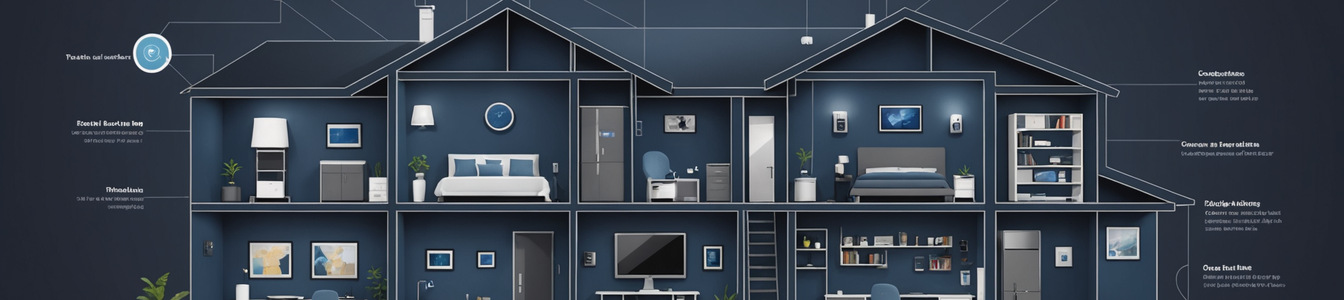
The modern smart home and connected office operate on a foundational promise: seamless, uninterrupted connectivity. From security cameras and smart locks to climate control and even coffee machines, our environments are increasingly automated and interdependent. However, this interconnected ecosystem rests on a single, fragile pillar—continuous electrical power. Security professionals are now confronting a sobering reality: the 'always-on' illusion of IoT infrastructure masks a critical vulnerability that extends far beyond software exploits and network intrusions, reaching into the very physical infrastructure that enables digital connectivity.
The Power Dependency Blind Spot
Traditional cybersecurity frameworks focus heavily on protecting data in transit and at rest, securing network perimeters, and patching software vulnerabilities. While these remain essential, they often overlook the physical layer's absolute dependence on stable power. A sophisticated smart office with encrypted communications, zero-trust architecture, and advanced endpoint protection can be rendered completely inoperative—and insecure—by a simple power interruption. Smart locks may default to unlocked states, security cameras go blind, and environmental controls fail, creating both physical security risks and operational chaos.
This vulnerability is being actively exploited. Reports indicate that threat actors are moving beyond targeting servers and workstations to attack the IoT devices that manage physical environments. Smart air conditioning units, connected refrigeration systems, and even internet-enabled coffee machines are being compromised. The objective isn't always data exfiltration; it can be physical disruption, ransom through operational paralysis, or creating a diversion for other attacks. These devices, often procured and managed outside traditional IT departments, typically have weaker security postures and become the perfect entry point to attack the power-dependent ecosystem they support.
The Emergence of 'Invincible' Solutions and Their Implications
The market is beginning to recognize this gap, giving rise to solutions that explicitly address power and connectivity resilience. Products like Spectrum's 'Invincible WiFi' system exemplify this trend. Promoted as an 'always-on upgrade,' it combines a traditional broadband router with integrated cellular failover and a substantial battery backup (reportedly up to 8 hours). If the primary internet connection fails or power is lost, the system automatically switches to a cellular LTE/5G connection and draws from its internal battery to keep the WiFi network operational.
From a security perspective, such solutions are a double-edged sword. On one hand, they provide crucial continuity for essential security devices—ensuring that alarm systems, cameras, and smart locks remain online during an outage. This maintains a security perimeter that would otherwise collapse. On the other hand, they potentially create a new single point of failure and a high-value target. The convergence of power backup, primary and failover connectivity, and core routing functions in one device demands its own rigorous security assessment. Could it become a prized target for attackers seeking to disrupt the very lifeline designed to ensure resilience?
Redefining Resilience: A Holistic Security Mandate
The conversation must evolve from merely ensuring uptime to comprehensively securing the resilient infrastructure itself. For cybersecurity teams, this means expanding their purview:
- Integrated Risk Assessment: Security audits must now include power dependency maps. What critical security IoT devices fail during an outage? What are their default states (fail-secure vs. fail-open)? How long can batteries sustain them?
- Supply Chain and IoT Device Hardening: The security of every connected device, especially those managing physical systems (HVAC, access control), must be scrutinized. Default passwords, unpatched firmware, and insecure network services on these devices are not just IT problems; they are physical security threats.
- Architecting for Resilience: Resilience should be designed in layers. This includes Uninterruptible Power Supplies (UPS) for critical network infrastructure, diverse internet connections (fiber, cellular, satellite), and clear procedures for manual overrides when digital systems fail.
- Testing Under Duress: Disaster recovery and incident response plans must be tested against scenarios involving power loss and IoT system failure. How does the security operation center (SOC) function when primary sensors are offline?
The Path Forward: Bridging Physical and Cybersecurity
The line between physical and cybersecurity has irrevocably blurred. The attack surface now includes air conditioning units that can shut down a data center, smart doors that can be locked or unlocked remotely, and power management systems that can be manipulated. Security leaders must foster closer collaboration between facilities management, physical security teams, and IT/cybersecurity departments.
Vendors, for their part, must prioritize building security and resilience into IoT devices from the ground up, not as an afterthought. This includes secure default configurations, reliable secure update mechanisms, and transparent behavior during power events.
The promise of the smart, connected environment is undeniable. But its security cannot be an illusion built on the assumption of perpetual power. By recognizing power resilience as a first-class component of cybersecurity strategy, professionals can build environments that are not only intelligent but truly secure and resilient in the face of real-world disruptions. The next frontier in security isn't just about defending bits and bytes; it's about ensuring the uninterrupted flow of electrons that bring them to life.
Comentarios 0
Comentando como:
¡Únete a la conversación!
Sé el primero en compartir tu opinión sobre este artículo.
¡Inicia la conversación!
Sé el primero en comentar este artículo.