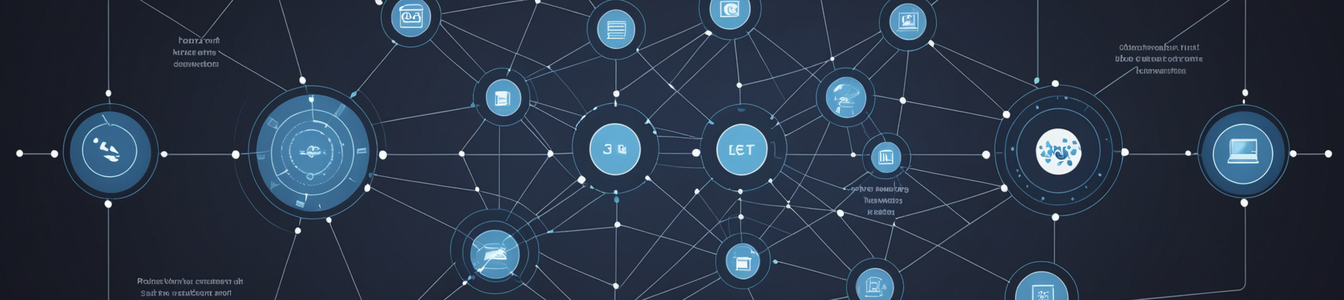
The enterprise Internet of Things (IoT) landscape is undergoing a fundamental connectivity schism. On one path lies the promise of high-volume data SIMs, enabling rich, broadband-like applications—real-time video streaming, complex edge analytics, and AI-driven automation. On the other, the established route of traditional, low-bandwidth sensor networks continues to power millions of devices with minimalist data exchange. For cybersecurity leaders, this isn't merely a procurement decision about data plans; it's a foundational security architecture choice with profound implications for risk posture, attack surface management, and defensive strategy.
The Broadband IoT Frontier: Power and Peril
High-volume data SIMs transform IoT devices from simple data loggers into potent edge computing nodes. This capability unlocks transformative use cases in smart cities, connected healthcare, and advanced industrial automation. However, this power introduces a cascade of security complexities. The increased data flow necessitates robust encryption for data in transit, moving beyond basic protocols to solutions like TLS 1.3 and ensuring proper certificate lifecycle management for potentially thousands of devices. The attack surface expands exponentially: each high-bandwidth device becomes a more attractive target for threat actors seeking to exfiltrate sensitive data, hijack computational resources for botnets, or use the device as a pivot point into core corporate networks.
Security for these deployments must be multi-layered. Network segmentation becomes non-negotiable, requiring micro-segmentation strategies to isolate IoT traffic from mission-critical enterprise systems. Endpoint protection must evolve from simple device authentication to include runtime protection, anomaly detection based on data transmission patterns, and secure over-the-air (OTA) update mechanisms capable of delivering large firmware patches efficiently. The volume of data also raises the stakes for data sovereignty and privacy compliance (GDPR, CCPA, etc.), as personally identifiable information or sensitive operational data may be constantly in motion.
The Sensor Network Bastion: Constrained but Targeted
Traditional IoT connectivity, encompassing protocols like LoRaWAN, NB-IoT, and Zigbee, is defined by constraint. Devices are designed for longevity, often operating for years on a single battery, transmitting only small packets of essential data. The security model here is inherently different. The primary threats are often physical—tampering with a remote sensor—or involve protocol-level attacks like jamming or replay attacks. Cryptographic operations are limited by processor capability and power budget, often relying on lightweight cryptography (LWC).
The security challenge shifts from protecting high-volume data streams to ensuring the integrity and authenticity of sparse but critical telemetry. Key management for millions of constrained devices is a monumental task. Furthermore, the inability to perform frequent, large OTA updates means security must be "baked in" at manufacture, with hardware-based root of trust becoming a critical component. Patching vulnerabilities in a deployed fleet of low-power devices is often impractical, making initial security design and robust device identity paramount.
Wi-Fi 8: The New Wild Card in Enterprise IoT Security
Emerging as a significant factor in this equation is Wi-Fi 8 (802.11bn). Promising multi-link operation, deterministic latency, and enhanced efficiency, it is poised to become a backbone for high-density industrial IoT and real-time applications within corporate campuses and factories. From a security perspective, Wi-Fi 8 introduces both opportunities and new concerns. Features like enhanced multi-AP coordination could improve the resilience of wireless mesh networks against jamming. However, the increased complexity of managing multiple simultaneous links across different frequency bands (2.4 GHz, 5 GHz, 6 GHz) expands the configuration attack surface. Misconfigurations could lead to security gaps or performance issues that impact safety-critical operations.
Securing a Wi-Fi 8-powered IoT environment will demand next-generation Wireless Intrusion Prevention Systems (WIPS) capable of understanding the new standard's behaviors. The use of the 6 GHz band (where permitted) offers cleaner spectrum but requires new radio frequency (RF) monitoring strategies. Integration with existing network access control (NAC) and Zero Trust frameworks will be essential to ensure that every device, whether a 4K surveillance camera or a vibration sensor, is authenticated and authorized before communicating.
Forging a Risk-Based Connectivity Strategy
The choice between broadband and traditional IoT is not binary. Most enterprises will operate a hybrid ecosystem. The strategic imperative for cybersecurity is to develop a risk-assessment framework that guides this choice application-by-application.
Key questions must be answered: What is the sensitivity and volume of the data generated? What are the consequences of a device compromise—is it data theft, operational disruption, or physical safety? What is the device's expected lifespan and patchability? A smart parking sensor may perfectly suit a low-bandwidth, highly secure LPWA network. A drone performing automated warehouse inventory, however, may require the bandwidth of a high-volume SIM alongside stringent local AI processing to minimize data exfiltration risk.
Ultimately, the connectivity crossroads demands that CISOs and network architects move beyond viewing connectivity as a utility. It is a primary determinant of security architecture. By aligning the connectivity model with the application's risk profile and security requirements, organizations can build resilient, scalable, and secure IoT deployments that support innovation without introducing unacceptable levels of cyber risk. The roadmap must include continuous monitoring, adaptive security policies, and an understanding that the connectivity layer itself is now a critical security control plane.
Comentarios 0
Comentando como:
¡Únete a la conversación!
Sé el primero en compartir tu opinión sobre este artículo.
¡Inicia la conversación!
Sé el primero en comentar este artículo.