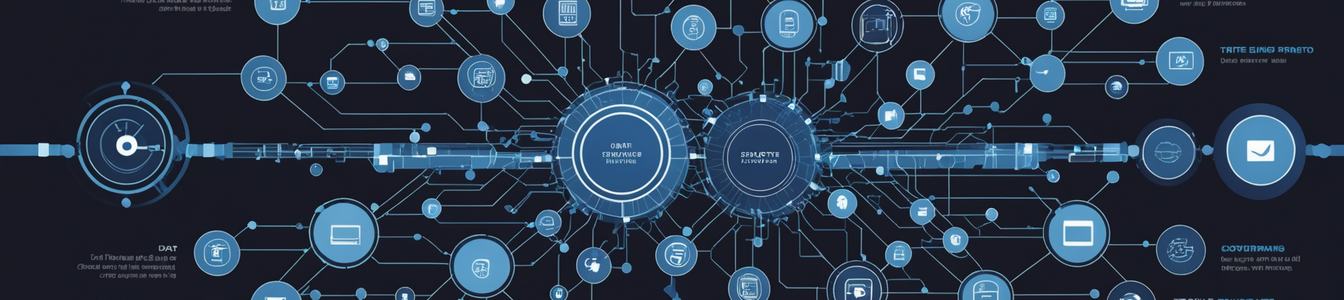
A silent transformation is reshaping the digital infrastructure of modern enterprise. Beyond the buzz of consumer smart devices, a vast, corporate Internet of Things (IoT) is expanding, driven by partnerships between hardware manufacturers, software platforms, and telecom giants. This growth is not decentralized; it is consolidating into powerful, centralized data channels controlled by a shrinking number of corporate entities. For cybersecurity professionals, this consolidation of the 'invisible backbone'—the networks carrying sensor data from weather stations, factory floors, and global logistics—presents a paradigm shift in risk, creating critical chokepoints that demand urgent attention.
The evidence of this trend is clear in recent market movements. In Spain, Telefónica Tech has aggressively positioned itself to become the leader in IoT lines by 2025, aiming to control a significant portion of the national connectivity layer for everything from smart meters to connected vehicles. Simultaneously, on the product front, strategic partnerships are forging integrated vertical solutions. Indian electronics manufacturer Aimtron has partnered with Aurassure, a specialist in environmental sensing platforms, to create turnkey IoT-enabled weather monitoring systems. Similarly, Dot AI has allied with Wiliot, a pioneer in ambient IoT, to innovate industrial-grade solutions that leverage tiny, battery-free sensors to track assets and environmental conditions at scale.
These developments signal a move away from fragmented, single-purpose IoT deployments toward integrated ecosystems offered by single vendors or tight partnerships. The business rationale is compelling: simplified procurement, guaranteed interoperability, and unified data analytics. However, from a security perspective, this consolidation creates a high-value attack surface with multifaceted risks.
The Concentration of Critical Data
The primary security implication is data aggregation. When a telecom provider like Telefónica Tech becomes the default conduit for millions of IoT connections across diverse sectors—agriculture, utilities, manufacturing—it amasses a holistic, real-time dataset of a nation's operational heartbeat. A breach here is no longer about compromising a single factory's temperature logs; it could expose patterns revealing national energy consumption, transportation logistics, or agricultural output. The Aimtron-Aurassure partnership exemplifies how specialized data (hyper-local weather conditions) becomes centralized within a specific corporate cloud platform, creating a rich target for espionage or sabotage, particularly if such systems are used for critical infrastructure like flood warning or precision farming.
The Blurring of OT/IT Boundaries and Attack Vectors
The partnerships driving 'ambient' or industrial IoT deeply fuse Operational Technology (OT) with traditional IT networks. Wiliot's battery-free sensors, designed to be embedded everywhere, represent a massive scaling of the IoT edge. Each sensor is a potential ingress point, and their connection to centralized platforms like Dot AI's bridges the air-gapped world of physical operations with corporate data networks. This erasure of historical segmentation means a vulnerability in the cloud analytics platform could potentially be exploited to send malicious instructions back down to the physical layer, manipulating sensor data or disrupting industrial processes. The attack vector shifts from targeting a single device to compromising the centralized management console or the data pipeline itself.
The Third-Party Risk Quagmire
This model exponentially increases third-party and supply chain risk. An organization deploying Aurassure's weather monitoring via Aimtron hardware inherits the security posture of both companies, plus any underlying cloud provider. The complexity of the software bill of materials (SBOM) and the hardware supply chain becomes daunting. A zero-day vulnerability in a common component used by the hardware manufacturer could propagate across thousands of deployed systems managed by the same platform, making coordinated, large-scale attacks feasible.
Governance and Visibility Challenges
For corporate security teams, this consolidation can paradoxically reduce visibility. When an entire IoT solution is procured 'as-a-Service' from a partner like Telefónica Tech, internal teams may have limited insight into the network architecture, encryption standards, access controls, and patch management processes governing the data flow. The 'invisible backbone' becomes a black box, complicating compliance with data sovereignty regulations (like GDPR) and incident response. Who is responsible when a data stream is intercepted or manipulated? The device maker, the platform provider, or the connectivity carrier?
Strategic Recommendations for Security Leaders
To navigate this new landscape, cybersecurity strategies must evolve:
- Demand Transparency and Shared Responsibility Models: In procurement contracts, mandate clear SLAs for security, requiring detailed architecture diagrams, audit rights, and evidence of secure development practices (like adherence to frameworks such as PSA Certified or IoT Security Foundation compliance).
- Implement Zero-Trust for IoT Data Flows: Treat all data moving from the consolidated backbone into the corporate network as untrusted. Enforce micro-segmentation, strict identity and access management (IAM) for device and service identities, and continuous verification of data integrity.
- Focus on Data-Centric Security: Assume the platform may be compromised. Employ field-level encryption for sensitive sensor data before it leaves the edge device, ensuring it remains confidential even if the central database is breached. Explore confidential computing techniques for processing encrypted data in the platform's cloud.
- Enhance Threat Intelligence: Subscribe to threat feeds that focus on major IoT platform and telecom providers. Understanding threats targeting these central nodes is as crucial as knowing endpoint malware signatures.
- Plan for Isolation and Resilience: Design systems with the capability to operate in a degraded, offline mode if the centralized platform or connectivity is disrupted. Avoid architectures where critical physical processes have a hard, single-point-of-failure dependency on a remote corporate cloud.
The corporate IoT expansion is irreversible, offering immense efficiency gains. However, the accompanying consolidation of data networks creates a central nervous system for the physical economy that is both powerful and perilous. For the cybersecurity community, the task is no longer just to secure individual 'things,' but to fortify the increasingly invisible—and indispensable—backbone upon which they all depend.
Comentarios 0
Comentando como:
¡Únete a la conversación!
Sé el primero en compartir tu opinión sobre este artículo.
¡Inicia la conversación!
Sé el primero en comentar este artículo.