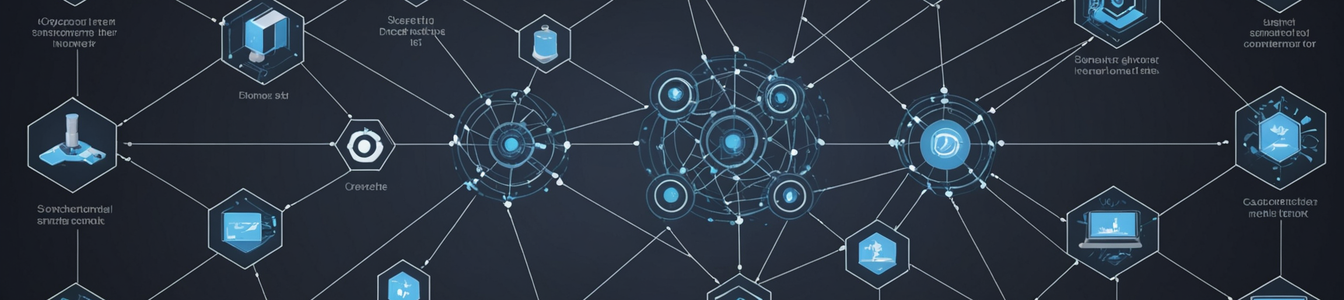
In the critical minutes and hours following a natural disaster or major accident, a silent digital transformation is reshaping emergency response. Restoration companies and first responders are increasingly deploying interconnected networks of Internet of Things (IoT) sensors, AI-driven analytics platforms, and autonomous systems to accelerate damage assessment, resource allocation, and recovery efforts. While these technologies offer unprecedented efficiency, they are weaving a complex web of digital dependencies into the very fabric of crisis management—creating a new, vulnerable attack surface that cybersecurity professionals are only beginning to map.
The New Frontline: IoT in Disaster Restoration
The modern disaster restoration industry has evolved far beyond manual labor. Companies now deploy fleets of drones equipped with high-resolution cameras and LiDAR, connected via 5G or satellite links to cloud-based AI platforms. These systems can autonomously survey disaster zones, using machine learning algorithms to classify structural damage, identify hazardous material leaks, and prioritize areas for intervention. Simultaneously, IoT sensors are embedded within restoration equipment—from industrial dehumidifiers to air scrubbers—transmitting real-time data on environmental conditions, operational status, and job progress to centralized command centers.
This operational model creates a just-in-time, data-driven response capability. However, it also establishes a critical dependency chain. The AI's damage assessment is only as good as the data feed from the drones. The coordination of restoration crews relies on the integrity of the communication network and the cloud platform. An attacker needs only to compromise one link in this chain—by jamming drone control signals, poisoning the AI's training data with adversarial attacks, or hijacking the IoT sensor network—to induce cascading failures, delaying response and exacerbating the crisis.
Convergence with Public Emergency Systems
The risk extends beyond private contractors into public safety infrastructure. Innovations like the next-generation V16 emergency beacon, which integrates a virtual V27 warning triangle, exemplify this trend. These beacons, mandatory in many jurisdictions for roadside emergencies, now transmit precise GNSS location, vehicle data, and hazard warnings directly to traffic management centers and connected vehicles via cellular (eSIM) and satellite links. They create a dynamic, digital safety perimeter.
From a security perspective, this turns every deployed beacon into a potential node in a large-scale IoT network. A compromised beacon could transmit false location data, creating ghost incidents that divert emergency resources. A coordinated attack could spoof hundreds of beacons, simulating a massive multi-vehicle pile-up and triggering a full-scale, resource-intensive emergency response to a non-existent event. The protocols governing these devices, often designed for reliability and cost over security, may lack robust authentication, encryption, or secure update mechanisms, making them low-hanging fruit for sophisticated threat actors.
The Cybersecurity Implications of Silent Dependencies
The core vulnerability lies in the 'silent' nature of this infrastructure. Unlike a power grid or water treatment plant, these IoT ecosystems are deployed ad-hoc, often by multiple private and public entities with varying security postures. There is rarely a unified asset inventory or security governance model. The devices themselves are frequently 'set-and-forget,' with long lifespans and minimal patch management cycles.
This environment is ripe for exploitation. Attack motives range from criminal ransomware attacks targeting restoration companies during peak demand, to state-sponsored actors seeking to test or degrade a nation's disaster resilience. An attack could follow a 'double-tap' strategy: a physical disaster (e.g., a hurricane) is followed immediately by a cyber-attack on the digital response systems, paralyzing recovery efforts and maximizing chaos.
Toward a Resilient Framework
Addressing this threat requires a paradigm shift in how we view emergency response technology. Security cannot be an afterthought. Key actions include:
- Security-by-Design Mandates: Procurement policies for emergency response IoT must mandate strong authentication (e.g., certificate-based), encrypted communications, and secure, over-the-air update capabilities.
- OT/IoT Convergence Security: Security teams must expand their scope to include these field-deployed OT/IoT systems, implementing network segmentation, continuous monitoring for anomalous device behavior, and incident response plans that assume compromise.
- Public-Private Threat Intelligence Sharing: A formal mechanism for sharing vulnerability and threat data between restoration companies, device manufacturers, and government emergency agencies is crucial to build collective defense.
- Resilience Testing: Emergency drills must now include cyber disruption scenarios—simulating beacon network failures, drone fleet hijackings, or AI system manipulation—to build operational resilience.
Conclusion
The integration of IoT and AI into emergency services represents a monumental leap forward for public safety and disaster recovery. Yet, it quietly constructs a lattice of digital critical infrastructure that is inherently fragile. For the cybersecurity community, the mission is clear: to harden these life-saving technologies against exploitation before a major crisis reveals their weaknesses in the most devastating way possible. The security of this silent infrastructure is no longer a niche concern—it is a foundational element of national and community resilience.
Comentarios 0
Comentando como:
¡Únete a la conversación!
Sé el primero en compartir tu opinión sobre este artículo.
¡Inicia la conversación!
Sé el primero en comentar este artículo.