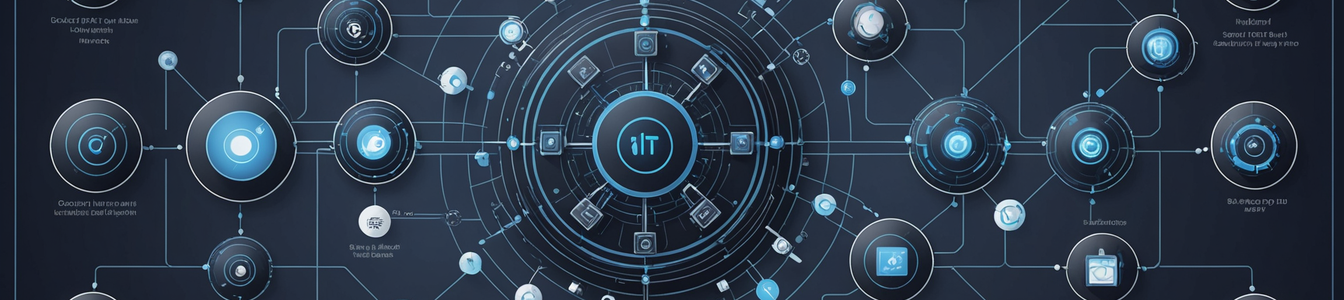
The architecture of Internet of Things (IoT) security is undergoing a seismic shift, driven not by a single vulnerability but by a confluence of regulatory, technological, and market forces. Recent developments, including a pivotal court ruling against Google, the expansion of embedded SIM (eSIM) technology, and the commoditization of wireless spectrum, are collectively dismantling old gatekeeping models and creating a new, more fragmented—and riskier—connectivity landscape. For cybersecurity leaders, understanding this transformation is critical to securing the next generation of connected devices.
The Unbundling of Platform Power
A recent judicial ruling in the United States has mandated that Google must limit its default contracts for search and AI applications on devices to a maximum of one year. This decision, while focused on antitrust and market competition, has profound indirect implications for IoT security. For years, the deep integration of services like Google Search, Assistant, and Play Services into Android-based IoT devices created a relatively stable, if monopolistic, security baseline. Device manufacturers and carriers operated within a known framework for updates, identity management, and service integration.
This ruling threatens to destabilize that model. With contracts potentially changing annually, the long-term security commitments for software components in smart devices become uncertain. Will a new default search or AI provider in year two maintain the same rigor in patch management or threat detection? The consistency of the security supply chain is now in question. This regulatory pressure forces a move from a centralized, platform-controlled security model to a more modular and transient one, increasing the complexity of vulnerability management and compliance auditing across device fleets.
eSIM and the Democratization of Connectivity
Simultaneously, the rapid adoption of eSIM technology is severing the traditional, physical link between a device and its cellular carrier. An eSIM allows for remote provisioning and switching of network profiles over-the-air. For IoT, this means a sensor deployed in the field can now switch from a primary to a backup carrier dynamically based on coverage, cost, or security policy without manual intervention.
While this offers operational resilience and cost benefits, it introduces novel attack vectors. The eSIM provisioning process itself becomes a high-value target. A compromised provisioning platform could allow an attacker to redirect a massive fleet of IoT devices—from industrial sensors to connected vehicles—to a malicious network under their control, enabling man-in-the-middle attacks, data exfiltration, or device bricking. Furthermore, the ability to rapidly switch carriers could be exploited to bypass network-based security controls or geographic restrictions, complicating forensic investigations and threat hunting.
The New Frontier: Private Networks and Spectrum Risk
The connectivity revolution extends beyond traditional carriers. The FCC's Citizens Broadband Radio Service (CBRS) spectrum auctions in the U.S. have opened the 3.5 GHz band for shared commercial use, enabling enterprises to deploy their own private LTE and 5G networks. This is a game-changer for factories, ports, and campuses deploying dense IoT networks, offering low latency, high reliability, and data locality.
However, as highlighted by recent analyses, these auctions and the subsequent deployment of private networks carry significant, often overlooked, risks. The security responsibility shifts entirely from a experienced mobile network operator (MNO) to the enterprise IT or OT team. Configuring and securing a private cellular core—managing authentication (like the SEAL and SORA frameworks in CBRS), encryption, and network segmentation—requires specialized telecom security knowledge that most corporate cybersecurity teams lack. Misconfigurations could expose critical operational technology (OT) IoT devices directly to the internet or create gaps in isolation between priority access license (PAL) and general authorized access (GAA) users on the shared spectrum.
Convergence with the AI-Home Ecosystem
These connectivity shifts are intersecting with the push for more intelligent, autonomous environments. Samsung's vision of an AI home, where everyday appliances adapt to user behavior, exemplifies this trend. These AI-driven ecosystems rely on constant, seamless connectivity to function—gathering data, processing it in the cloud or on-edge, and executing commands. The security of this adaptive digital life now depends on the integrity of the dynamic connectivity layers discussed above.
If the AI model in a smart refrigerator making grocery orders is served through a now-changeable default contract, and the device connects via a remotely provisionable eSIM to a privately managed CBRS network, the attack surface multiplies. An adversary could manipulate connectivity to poison the AI's training data, intercept sensitive household information, or cause physical malfunctions.
Strategic Recommendations for Cybersecurity Teams
- Audit Contractual Security SLAs: Scrutinize agreements with device makers and platform providers for clauses related to change-of-control in default services. Demand clear security service level agreements (SLAs) that survive contract transitions.
- Secure the eSIM Lifecycle: Treat eSIM provisioning systems with the same security rigor as certificate authorities. Implement strong mutual authentication between the device and the provisioning server and monitor for anomalous profile download requests.
- Build Private Network Competency: Before deploying private CBRS or similar networks, invest in training for your security staff on 3GPP standards, cellular core security (SecGW, UPF), and spectrum monitoring tools. Consider managed security services for the cellular core.
- Embrace Zero-Trust for IoT: Assume the network is hostile. Implement device identity and posture checking (regardless of carrier) and encrypt data end-to-end. Network-level security can no longer be the sole control.
- Plan for Increased Fragmentation: Develop asset management and vulnerability disclosure processes that can handle devices with software and connectivity stacks that may change more frequently.
The era of a stable, carrier-centric IoT security model is ending. The new landscape of platform unbundling, dynamic connectivity, and private networks offers flexibility and innovation but demands a more sophisticated, proactive, and holistic approach to security. The control points have shifted, and so must our defenses.
Comentarios 0
Comentando como:
¡Únete a la conversación!
Sé el primero en compartir tu opinión sobre este artículo.
¡Inicia la conversación!
Sé el primero en comentar este artículo.