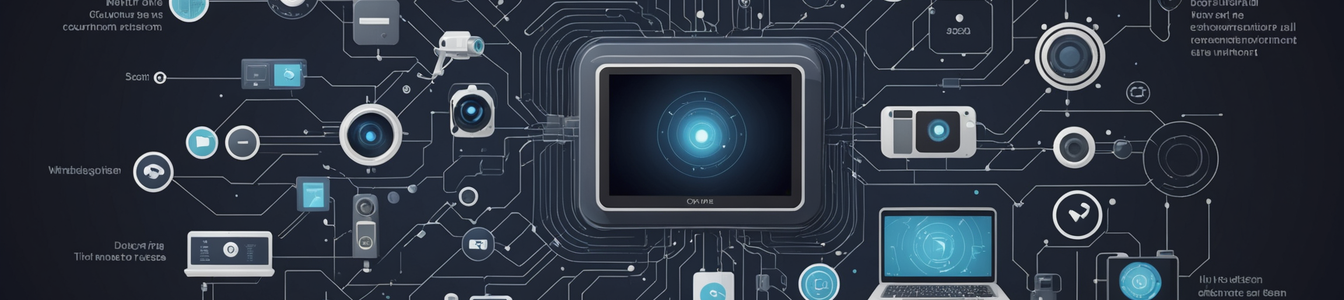
The perimeter of enterprise security is dissolving. As organizations deploy Internet of Things (IoT) devices for surveillance and monitoring in locations devoid of traditional network infrastructure, a new frontier of cybersecurity challenges is emerging. This shift toward off-grid, edge-deployed connectivity is not merely an operational evolution; it represents a fundamental redefinition of the attack surface for critical infrastructure, environmental systems, and remote industrial operations.
The Off-Grid Imperative and Its Security Implications
Innovations in portable connectivity, such as those developed by companies in regions like North Idaho, are enabling persistent data transmission from previously disconnected locations. These solutions often combine satellite backhaul, long-range wireless protocols (LoRaWAN, NB-IoT), and portable power sources to create ad-hoc networks. While this delivers undeniable benefits for monitoring remote assets, environmental conditions, or infrastructure, it bypasses the centralized security controls of corporate networks. Each field-deployed sensor or camera becomes a potential ingress point, operating with varying levels of built-in security and often managed through cloud dashboards accessible from anywhere—a tempting target for threat actors.
A concrete example of this expansion is seen in municipal projects, such as one in Pune, India, where authorities are deploying sensor networks to digitally monitor private sewage treatment plants and river pollution control stations. These systems collect critical environmental data, but their off-grid nature raises pressing questions: How are these sensors authenticated? Is data in transit encrypted? Who manages the firmware updates for devices scattered across a city or a watershed? The compromise of such a network could lead to falsified environmental data, disguised pollution events, or even the disruption of water treatment processes.
The Expanded Attack Surface: Beyond the Firewall
The traditional security model, built around a fortified network perimeter, is ill-suited for this dispersed reality. The attack surface now includes:
- The Physical Device: Often placed in publicly accessible or remote locations, devices are vulnerable to physical tampering, SIM card swapping, or hardware implants.
- The Communication Link: Data traveling via radio frequencies or satellite can be intercepted, jammed, or spoofed, especially if encryption is weak or absent.
- The Management Plane: Cloud-based management consoles used to configure these dispersed devices become high-value targets. A single credential compromise could grant control over an entire fleet of field sensors.
- The Supply Chain: Off-grid solutions often integrate hardware and software from multiple niche vendors, increasing the risk of vulnerable components entering the deployment.
The Human Interface: AR and Operational Reality
Further complexity is added by emerging human-machine interfaces. Experiments in augmented reality (AR), where users interact with digital overlays of real-world data, demonstrate a future where technicians might maintain or monitor these off-grid systems through AR glasses or tablets. This creates a new vector for social engineering or interface-based attacks. If the AR system visualizing sensor data is compromised, an operator could be fed false information, leading to incorrect decisions with potentially severe physical consequences.
A Path Forward for Security Professionals
Securing this new frontier requires a paradigm shift. Security strategies must be designed for the edge from the outset. Key priorities include:
- Zero-Trust for the Edge: Implement device identity and robust mutual authentication before any data exchange, assuming the network is always hostile.
- Secure by Default, Resilient by Design: Devices must have hardware-based root of trust, encrypted storage, and the ability to operate securely even during intermittent connectivity. Over-the-air (OTA) update mechanisms must be both secure and reliable.
- Lightweight Cryptography: Deploy encryption and authentication protocols suitable for the constrained power and processing capabilities of edge devices.
- Unified Visibility and Control: Security teams need a single pane of glass to monitor the security posture of all assets, whether inside a data center or on a remote pole, integrating telemetry from these devices into existing Security Operations Center (SOC) workflows.
- Incident Response for the Physical World: Playbooks must be updated to include scenarios where a cyber incident has direct physical environmental or infrastructure impacts, requiring coordination with field operations and public safety teams.
The drive for greater connectivity and visibility beyond the grid is unstoppable. For the cybersecurity community, the task is to ensure that this expansion does not come at the cost of resilience. By building security into the fabric of these off-grid IoT and surveillance systems, we can harness their benefits while protecting the critical functions and environments they are designed to monitor.
Comentarios 0
Comentando como:
¡Únete a la conversación!
Sé el primero en compartir tu opinión sobre este artículo.
¡Inicia la conversación!
Sé el primero en comentar este artículo.