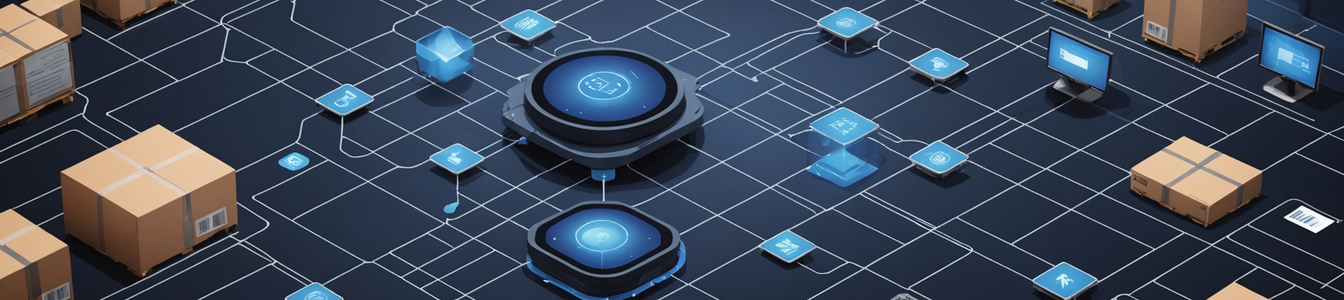
The Silent Expansion: IoT Integrates into Retail, Logistics, and Space, Forging a New Industrial Attack Surface
While consumer smart devices capture headlines, a far more significant and quiet transformation is reshaping global enterprise and critical infrastructure. The Industrial Internet of Things (IIoT) is experiencing a silent, large-scale deployment across retail, logistics, and even space, creating a sprawling, interconnected, and often overlooked digital attack surface that cybersecurity professionals are only beginning to map.
Retail Reimagined: The Data-Driven Store
The frontline of this expansion is the modern retail store. Walmart Mexico's recent strategic expansion of its partnership with Vusion to deploy a comprehensive connected store platform across its Express stores and Supercenters is a prime example. This move goes beyond simple inventory tracking. The platform digitizes the entire in-store environment, integrating electronic shelf labels (ESLs), smart sensors, and IoT-enabled devices to manage pricing, inventory, energy, and customer flow in real-time.
From a cybersecurity perspective, this creates a hyper-connected node. Each sensor and label is a potential entry point. The network bridging the physical shelf to the cloud inventory database now handles critical pricing and stock data. A compromise could lead to financial fraud, supply chain disruption, or large-scale data theft of consumer behavior patterns. The scale is immense—hundreds of stores, each with thousands of endpoints—making traditional perimeter security models insufficient.
Logistics on the Edge: The Connected Fleet
Parallel to the retail revolution, urban logistics is undergoing a digital metamorphosis. In São Paulo, Brazil, delivery platform Keeta has begun testing smart helmets for its cyclist couriers. These helmets are not just protective gear; they are sophisticated IoT nodes equipped with telemetry sensors, communication modules, and likely integration with navigation and order management systems.
This initiative aims to optimize delivery routes, enhance courier safety, and provide real-time tracking. However, it introduces a mobile, geographically dispersed attack surface into the corporate network. Each helmet is an edge device operating in uncontrolled environments, vulnerable to physical tampering, network spoofing, or malware designed to intercept delivery data or disrupt operations. Securing a fleet of thousands of such devices requires robust device identity management, encrypted communications, and over-the-air (OTA) update capabilities resistant to sabotage.
The Final Frontier: Space-Based IoT Connectivity
To connect these ground-based deployments, especially in remote areas, a new layer of infrastructure is being launched—literally. Companies like Spain's Fossa Systems are rapidly building dedicated satellite constellations. The recent launch of its 25th satellite, signed by Spain's Minister for Digital Transformation, Carlos Cuerpo, underscores the strategic push to reinforce global IoT connectivity.
These small satellites form the backbone for Machine-to-Machine (M2M) communications, linking IIoT devices anywhere on the planet. For cybersecurity, this adds a complex, space-based component to the threat model. The ground station networks that communicate with these satellites become high-value targets. Furthermore, the satellites themselves, often built with cost-effective components, could be vulnerable to signal jamming, spoofing, or cyber-physical attacks that degrade or deny service to vast regions, impacting logistics tracking, agricultural sensors, or remote infrastructure monitoring.
Convergence and Complexity: The AIoT Partnership
The trend is further amplified by the convergence of IoT with Artificial Intelligence, forming the AIoT (Artificial Intelligence of Things). New partnerships, such as the exclusive alliance between ACS Technologies Limited and UAE's Tahaluf Al Emarat to deliver AI and IoT solutions, highlight the drive towards intelligent, autonomous systems. These solutions will likely involve AI analyzing vast streams of IoT data from retail shelves, delivery fleets, and satellite feeds to make predictive decisions.
This integration creates a double-edged sword. While AI can enhance threat detection, it also introduces new risks. The AI models and the data pipelines that feed them become critical assets. Adversarial attacks could poison training data or manipulate sensor inputs to cause cascading operational failures, from misguided inventory orders to faulty logistics routing.
Implications for Cybersecurity Professionals
This silent expansion mandates a fundamental shift in security strategy for organizations operating in these sectors:
- Asset Discovery and Visibility: The first challenge is simply knowing what is connected. Continuous, automated asset discovery must extend to every smart label, helmet sensor, and satellite modem.
- Zero-Trust for Operational Technology (OT): The implicit trust within OT networks must be replaced with Zero-Trust principles. Every device-to-device and device-to-cloud communication must be authenticated and authorized.
- Secure by Design in Procurement: Security can no longer be an afterthought. Contracts with IoT platform vendors like Vusion, device manufacturers, and satellite providers must include stringent security requirements, vulnerability disclosure policies, and support for secure OTA updates.
- Supply Chain Vigilance: The interconnected nature of these ecosystems means an attack on a single supplier (e.g., a sensor manufacturer) could compromise an entire retail chain or logistics fleet. Third-party risk management is paramount.
- Incident Response for Physical-Digital Systems: Response plans must account for cyber-physical impacts. How do you respond to a ransomware attack that freezes all electronic price tags in a country? Or a spoofing attack that misroutes an entire delivery fleet?
Conclusion
The digitization of retail, logistics, and the deployment of space-based connectivity represent a quantum leap in operational efficiency. However, this silent expansion of IIoT is building a vast, complex, and attractive attack surface. For the cybersecurity community, the time for proactive defense is now. The convergence of IT, OT, and physical operations demands a holistic security approach that spans from the smart shelf on a store floor to the satellite in low Earth orbit. Ignoring this quiet revolution is a risk that enterprises—and the critical infrastructure they support—can no longer afford.
Comentarios 0
Comentando como:
¡Únete a la conversación!
Sé el primero en compartir tu opinión sobre este artículo.
¡Inicia la conversación!
Sé el primero en comentar este artículo.