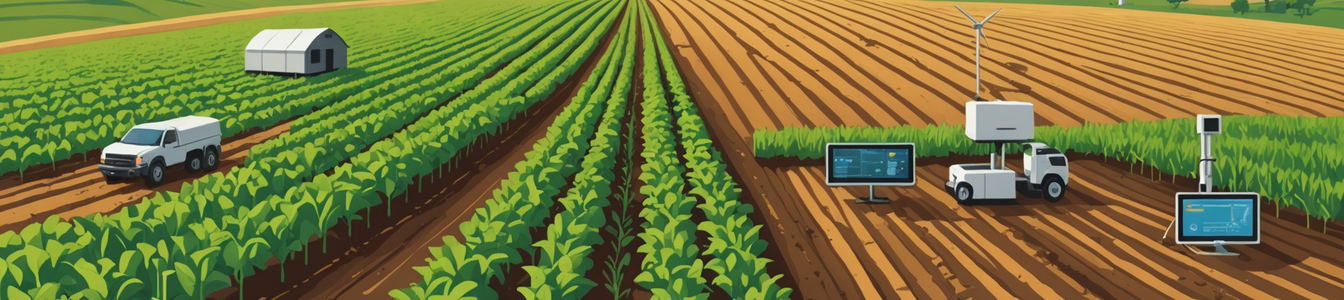
The global agricultural sector is undergoing a profound digital transformation. From the fields of Uttar Pradesh, India, where smart farming initiatives blend tradition with IoT sensors for soil and crop monitoring, to multinational equipment financing platforms managing billions in connected assets, a new era of data-driven agriculture is here. However, this 'smart' revolution is sowing a parallel crop of unprecedented cybersecurity risks directly into the world's food supply chain. The convergence of Information Technology (IT) and Operational Technology (OT) in these historically isolated environments is creating a vast, complex, and often poorly defended attack surface with implications for food security, economic stability, and public safety.
The Expanding Attack Surface: From Soil Sensors to Heavy Machinery
The core of the vulnerability lies in the rapid, scale-first deployment of IoT devices. In regions like Uttar Pradesh, sensors deployed to monitor moisture, nutrient levels, and climate conditions are typically designed for low cost and ease of use, not security. These devices often have default credentials, unencrypted data transmission, and insecure communication protocols. An attacker compromising a network of soil sensors could not only steal proprietary agricultural data but also feed false information into irrigation or fertilization systems, leading to crop damage, resource waste, and significant financial loss for farmers.
This risk escalates dramatically with larger industrial assets. Programs like EquipmentShare's OWN program, which has financed over $454 million in equipment, highlight the scale of connected industrial assets in the supply chain. Construction and agricultural machinery—tractors, combines, telehandlers—are increasingly internet-enabled for remote diagnostics, GPS tracking, and performance optimization. These machines are essentially industrial control systems on wheels. A breach here could allow threat actors to disable critical equipment during harvest, lock operators out of systems for ransom, or even manipulate machinery in a way that causes physical damage or safety incidents. The financial incentive is clear: disrupting a fleet of leased harvesters during a critical harvest window could extort massive payments from agricultural cooperatives or leasing companies.
The Convergence Threat: Blurred Lines Between IT, OT, and Critical Infrastructure
The agricultural supply chain does not exist in a vacuum. It intersects with energy, transportation, and logistics networks. The development of supporting infrastructure, such as the AI-powered EV charging networks mentioned in related tech initiatives, illustrates this interconnectedness. A charging station network for electric farm vehicles or delivery trucks could become an intrusion vector into the broader agricultural OT environment if security boundaries are not rigorously enforced.
This convergence creates a perfect storm. IT networks, which may be somewhat more mature in their security posture, are now directly connected to OT assets that were never designed to face internet-borne threats. Legacy PLCs (Programmable Logic Controllers) in processing plants or silo management systems lack basic security features and cannot be easily patched. Attackers can pivot from a compromised corporate email account (IT) to the SCADA system controlling a refrigerated storage facility (OT), potentially spoiling vast quantities of food.
The Stakes: Beyond Data Breach to Physical Disruption
The impact of a successful cyberattack in this domain transcends traditional data confidentiality concerns. We are entering an era where cyber threats can directly cause:
- Food Contamination & Safety Risks: Manipulating temperature controls in storage or transport logistics could lead to bacterial growth and foodborne illness outbreaks.
- Supply Chain Disruption: Disabling sorting, packaging, or automated logistics systems at a key distribution center could create bottlenecks, leading to food waste and shortages.
- Economic Warfare & Extortion: Nation-state or criminal actors could target the agricultural sector of a rival country to destabilize its economy or create social unrest, or simply hold entire fleets of equipment for ransom.
- Environmental Harm: Malicious control over irrigation systems or chemical application equipment could lead to overuse, runoff, and ecological damage.
A Call to Action for the Cybersecurity Community
Addressing this growing threat requires a collaborative, multi-faceted approach:
- Security by Design for AgTech: IoT sensor and machinery manufacturers must integrate security as a core requirement, not an afterthought. This includes secure boot, hardware-based trust anchors, encrypted communications, and manageable update mechanisms.
- OT Security Awareness: Farmers, equipment dealers, and agricultural cooperatives need education on cyber hygiene for OT. Simple steps like changing default passwords, segmenting network traffic, and maintaining an asset inventory are critical first steps.
- Regulatory & Standards Development: Governments and industry bodies should develop and enforce cybersecurity standards for connected agricultural equipment, similar to emerging regulations in other critical infrastructure sectors.
- Incident Response for OT: The cybersecurity industry must develop and promote incident response playbooks tailored to agricultural OT scenarios, where the priority is safety and continuity of operations.
The promise of smart agriculture is immense: greater yields, efficient resource use, and improved sustainability. But to reap this harvest securely, we must first weed out the vulnerabilities being sown alongside the seeds. The security of our food chain depends on recognizing agricultural OT as critical infrastructure and defending it with the seriousness it deserves.
Comentarios 0
Comentando como:
¡Únete a la conversación!
Sé el primero en compartir tu opinión sobre este artículo.
¡Inicia la conversación!
Sé el primero en comentar este artículo.