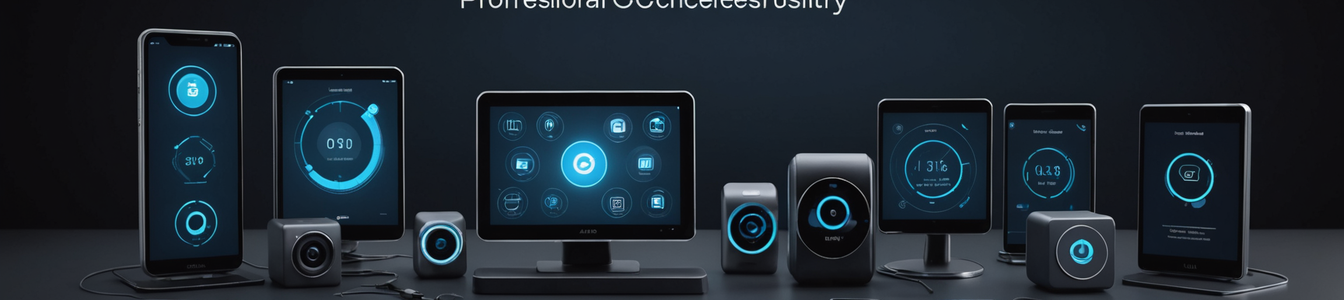
The smart home is undergoing a quiet revolution, one not centered on voice assistants or entertainment systems, but on an increasingly sophisticated network of silent guardians: IoT sensors. These unassuming devices are fundamentally redefining the boundaries of personal safety and medical care, creating unprecedented capabilities while simultaneously presenting cybersecurity professionals with a landscape of novel and deeply sensitive risks. From monitoring neurodegenerative diseases to tracking elderly relatives and managing home environments, sensor technology represents both a remarkable leap forward in quality of life and a complex new frontier in data protection.
The Healthcare Paradigm Shift: Continuous, Invisible Monitoring
A primary driver of this transformation is in healthcare, particularly for chronic and degenerative conditions. Recent developments demonstrate how in-home sensor technology, combined with artificial intelligence, is creating smarter care ecosystems for patients with conditions like Amyotrophic Lateral Sclerosis (ALS). Unlike traditional periodic check-ups, these systems enable continuous, passive monitoring of a patient's movement, activity patterns, and potential symptoms within their own home. This data stream, when processed by AI algorithms, can provide clinicians with objective, longitudinal insights into disease progression and treatment efficacy, potentially enabling earlier interventions and personalized care plans.
The value proposition is clear: improved patient outcomes, reduced hospital visits, and enhanced quality of life. Companies like S3 Connected Health, recently awarded Frost & Sullivan's 2025 Global Company of the Year for excellence in medical device connectivity, are at the forefront of building the secure platforms that enable this data flow from device to clinician. Their work highlights the critical infrastructure layer that must exist to make sensor-derived healthcare data both useful and trustworthy.
Beyond Healthcare: The Expanding Sensor Ecosystem
The sensor revolution extends far beyond clinical applications into the broader domain of personal safety and environmental management. Services like iSharing, whose CEO has publicly framed the debate around tracking elderly parents as a matter of safety rather than surveillance, illustrate how location and movement sensors are being normalized for familial care. The argument centers on providing peace of mind and enabling rapid response in case of falls, disorientation, or medical emergencies.
Simultaneously, the smart home ecosystem is expanding to include environmental sensors. Innovations like ALLUONE's Smart Garden system represent the entry of sustainable green technology into the domestic sphere, using sensors to monitor soil conditions, light, and humidity to optimize plant growth and resource use. While seemingly benign, these systems contribute to the densifying mesh of data-generating devices within the home.
The Cybersecurity Crucible: Sensitive Data, Expanded Attack Surfaces
For cybersecurity experts, this proliferation is a cause for both fascination and profound concern. Each new sensor represents a node in an increasingly complex network, and each data stream carries uniquely sensitive information. The security challenges are multifaceted:
- Data Sensitivity and Privacy: The data collected is exceptionally personal. ALS monitoring systems can infer a patient's physical capabilities, decline, and daily struggles. Elderly tracking reveals patterns of life, solitude, and vulnerability. Even smart garden data could indicate periods of absence from home. This creates attractive targets for malicious actors, from extortion and blackmail to targeted phishing campaigns against individuals or their families.
- The Attack Surface Expansion: Every connected sensor is a potential entry point. Many consumer-grade IoT devices have historically suffered from weak default credentials, unpatched vulnerabilities, and insecure communication protocols. A vulnerability in a smart garden hub or a health sensor gateway could serve as a beachhead to pivot to more critical systems on the home network, such as personal computers or network-attached storage.
- Integrity and Safety Risks: Unlike a data breach of an email account, compromised medical or safety sensor data carries direct physical safety implications. If an attacker can manipulate sensor readings—for example, suppressing fall detection alerts or falsifying physiological data—the consequences could be life-threatening. Ensuring data integrity from sensor to decision-maker is paramount.
- The Consent and Transparency Dilemma: As the CEO of iSharing's commentary suggests, the line between caregiving and surveillance is blurring. Cybersecurity and privacy are intertwined. Users must fully understand what data is collected, how it is used, where it is stored, and who has access. Opaque data practices or complex terms of service can undermine informed consent, even with benevolent intentions.
Navigating the Future: Security by Design and Ethical Frameworks
The path forward requires a concerted effort from device manufacturers, platform providers, cybersecurity professionals, and regulators. The principle of "Security by Design" must be non-negotiable for devices handling sensitive personal data. This includes end-to-end encryption for data in transit and at rest, secure boot mechanisms, regular and automated security updates, and minimal data collection policies.
Furthermore, the industry needs robust ethical frameworks to govern this new class of data. Clear data sovereignty rules, transparent user controls, and strict access limitations are essential. Cybersecurity professionals will play a key role in auditing these systems, developing new security models for heterogeneous IoT networks, and educating the public about both the benefits and risks of inviting these silent guardians into their homes.
The evolution of sensor technology promises a future where our living spaces are more responsive, supportive, and safe. Realizing this promise without compromising our privacy and security is the defining challenge. The silent guardians can watch over us, but we must ensure we are also watching over them, securing the profound intimacy of the data they collect with the utmost rigor and responsibility.
Comentarios 0
Comentando como:
¡Únete a la conversación!
Sé el primero en compartir tu opinión sobre este artículo.
¡Inicia la conversación!
Sé el primero en comentar este artículo.