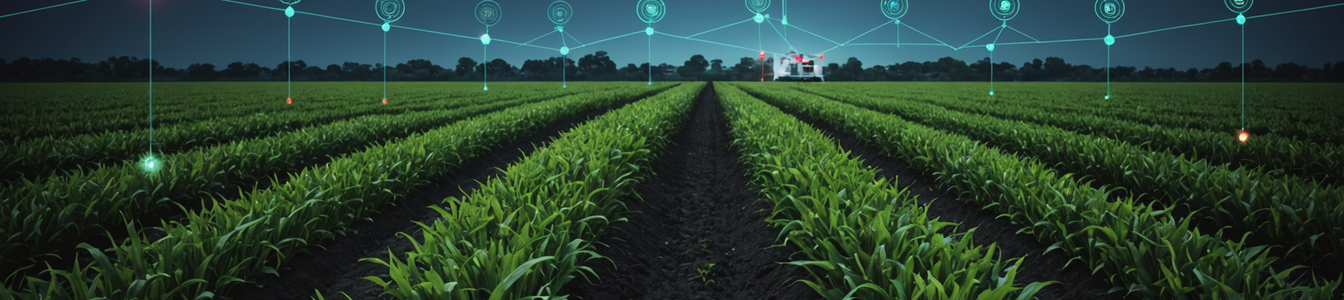
The agricultural sector is undergoing a silent technological revolution that carries significant cybersecurity implications. Recent deployments of sensor-based IoT systems across global farming operations are creating new attack surfaces that could potentially compromise critical food production infrastructure.
In India, the state of Odisha has implemented sophisticated sensor-based IoT networks for precision water management in agriculture. These systems utilize interconnected sensors to monitor soil moisture, weather conditions, and crop hydration needs in real-time. While this technology promises substantial water conservation and yield optimization, it also introduces multiple cybersecurity vulnerabilities. The interconnected nature of these agricultural IoT networks creates potential entry points for malicious actors seeking to disrupt water distribution or manipulate irrigation schedules.
The World Economic Forum's latest report highlights seven deep-tech domains driving agricultural transformation, including artificial intelligence, robotics, and nanotechnology. These technologies are increasingly integrated with IoT sensor networks, creating complex ecosystems where security breaches could have cascading effects across food supply chains. The report emphasizes that as farming becomes more technologically advanced, the cybersecurity measures protecting these systems must evolve correspondingly.
Brazil has witnessed similar technological adoption, with recent reports of helicopter-deployed sensors being used for agricultural monitoring in Ouro Preto districts. These aerial sensor systems collect detailed agricultural data but rely on wireless communication protocols that could be intercepted or manipulated. The convergence of aerial surveillance with ground-based IoT networks creates a multi-layered attack surface that requires comprehensive security strategies.
Cybersecurity professionals face unique challenges in agricultural IoT environments. Many farming operations prioritize functionality over security, implementing connected systems without adequate protection measures. The remote locations of agricultural deployments often mean limited physical security and unreliable network connectivity, complicating security monitoring and incident response.
The stakes are particularly high given agriculture's status as critical infrastructure. A coordinated cyberattack on agricultural IoT systems could disrupt food production, manipulate commodity markets, or even trigger widespread food shortages. Security researchers have identified several concerning vulnerabilities in current agricultural IoT implementations, including unencrypted data transmission, weak authentication protocols, and insufficient access controls.
Addressing these challenges requires a multi-faceted approach. Agricultural technology manufacturers must prioritize security-by-design principles, incorporating robust encryption, secure boot processes, and regular security updates. Farmers and agricultural enterprises need cybersecurity awareness training specific to IoT risks, while governments should develop regulatory frameworks ensuring minimum security standards for agricultural technology.
The integration of AI and machine learning with agricultural IoT presents both opportunities and risks. While AI can enhance threat detection and automated response capabilities, it also introduces new attack vectors through model poisoning, adversarial attacks, and data manipulation. Cybersecurity teams must develop specialized expertise in protecting AI-driven agricultural systems.
As the agricultural IoT market continues its rapid expansion, the cybersecurity community must proactively address these emerging threats. Collaboration between technology providers, agricultural experts, and security professionals is essential to developing resilient systems that can withstand evolving cyber threats while supporting sustainable food production.
The transformation of agriculture through IoT sensors represents a fundamental shift in how we produce food, but this technological progress must be matched by equally advanced security measures. The cybersecurity industry has a critical role to play in ensuring that the agricultural revolution remains secure, reliable, and resilient against emerging digital threats.
Comentarios 0
Comentando como:
¡Únete a la conversación!
Sé el primero en compartir tu opinión sobre este artículo.
¡Inicia la conversación!
Sé el primero en comentar este artículo.