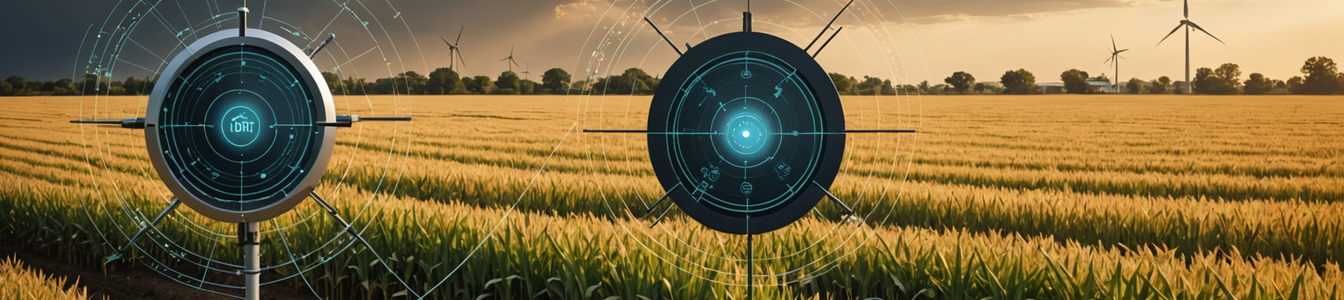
The fields are getting smarter, and so are our homes and cities, bristling with sensors designed to predict disasters and optimize harvests. From AI-driven earthquake detectors to intelligent grain dryers and ubiquitous air quality monitors, the proliferation of Internet of Things (IoT) devices is solving pressing real-world problems. However, this wave of innovation in agriculture and disaster response carries a hidden cost: a rapidly accumulating security debt that expands the attack surface into physical realms traditionally isolated from cyber threats. This sensor sprawl represents a critical blind spot for cybersecurity professionals, creating a paradox where technology built for safety and efficiency inadvertently introduces new vectors for disruption.
The Innovation Frontline: Agriculture and Disaster Tech
The drive for innovation is palpable. In academic and startup environments worldwide, projects focus on tangible benefits. University students develop grain drying systems equipped with temperature and humidity sensors to prevent post-harvest losses, a crucial advancement for food security. Meanwhile, graduates and researchers are deploying networks of low-cost seismic sensors powered by machine learning algorithms to provide earlier warnings for earthquakes, potentially saving countless lives. On the consumer front, large retailers are making smart environmental sensors—for monitoring air quality, temperature, and humidity—affordable and commonplace in homes, including in regions prone to natural disasters like wildfires or floods.
These initiatives are commendable and address genuine needs. The problem lies not in their intent but in their execution. The primary design drivers are typically cost, functionality, accuracy, and ease of deployment. Security is often an afterthought, if it is considered at all. This results in devices communicating over unencrypted protocols like basic MQTT or HTTP, protected by weak or hardcoded default passwords ("admin/admin"), and lacking any mechanism for secure firmware updates. Their software components often rely on outdated, vulnerable open-source libraries with known exploits.
The Expanding OT Attack Surface
This creates a profound shift in the cybersecurity landscape. The attack surface is no longer confined to enterprise servers and employee laptops. It now extends into wheat fields, seismic monitoring stations, and private living rooms. These devices form part of a broader Industrial IoT (IIoT) or Operational Technology (OT) ecosystem, but unlike a controlled factory floor, they are geographically dispersed, physically accessible, and rarely managed by dedicated IT security teams.
For cybersecurity professionals, the implications are severe. An attacker could, in theory, manipulate the data from temperature sensors in a grain dryer, causing spoilage of an entire harvest and creating economic havoc or food shortages. A compromised network of earthquake sensors could trigger false alarms, leading to public panic and eroding trust in early-warning systems, or worse, fail to alert during a real event. Consumer environmental sensors, if breached, could provide a foothold into home networks, exposing personal data or being enlisted into botnets for larger-scale attacks.
The resource-constrained nature of these sensors makes implementing robust security challenging. They often operate on battery power with minimal processing capabilities, making complex encryption or intrusion detection systems impractical. This limitation, however, cannot be an excuse for negligence. The security community has faced similar challenges with traditional IoT and must now adapt those lessons to these life-and-livelihood-critical applications.
Bridging the Security Gap: A Call to Action
Addressing this security debt requires a multi-faceted approach that involves developers, regulators, and the cybersecurity industry.
First, security-by-design must become non-negotiable for all IoT/IIoT projects, especially those touching critical infrastructure like food systems and public safety. This means conducting threat modeling during the design phase, implementing hardware-based secure elements for cryptographic keys, ensuring secure boot processes, and mandating strong, unique credentials out of the box.
Second, the industry needs lightweight security standards and frameworks specifically for resource-constrained OT devices. These standards should define minimum requirements for communication encryption (like DTLS), secure update mechanisms, and device identity management. Organizations like the IoT Security Foundation and industry-specific bodies must lead this effort.
Third, visibility and asset management are paramount. Security teams cannot protect what they cannot see. Organizations deploying sensor networks—whether agribusinesses, research institutions, or government agencies—must maintain a complete inventory of these assets, understand their communication patterns, and monitor for anomalous behavior. Network segmentation is critical to prevent a compromised sensor from becoming a pivot point into core corporate networks.
Finally, there is a need for greater collaboration between OT engineers and cybersecurity experts. The silos between these disciplines must break down. Cybersecurity professionals need to understand the operational constraints and safety requirements of agricultural and geophysical systems, while engineers must integrate security principles into their workflow from day one.
The paradox of innovation in agri-tech and disaster response is clear: the very tools we create to build a more resilient and efficient world can become points of failure if left unsecured. As sensor networks continue to sprawl across our fields and cities, the cybersecurity community has a responsibility and an opportunity to embed resilience into the foundation of this new digital-physical landscape. The time to pay down this security debt is now, before a malicious actor exploits it to cause not just a data breach, but a harvest failure or a preventable tragedy.
Comentarios 0
Comentando como:
¡Únete a la conversación!
Sé el primero en compartir tu opinión sobre este artículo.
¡Inicia la conversación!
Sé el primero en comentar este artículo.