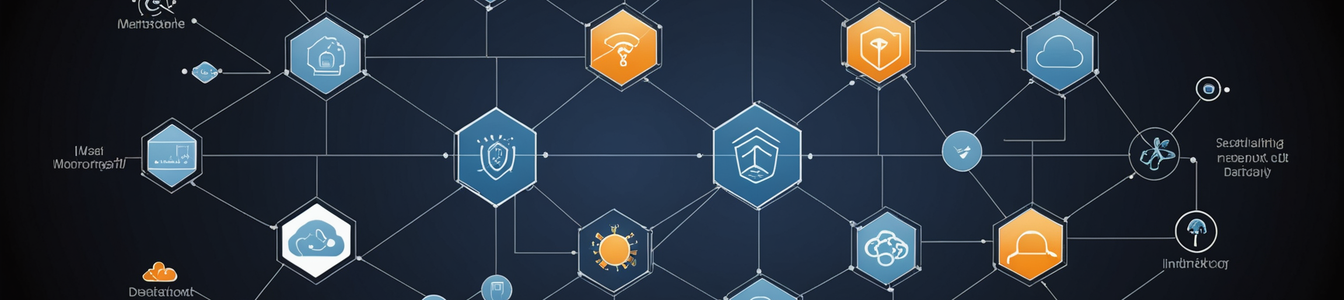
The quiet proliferation of intelligent sensors throughout our physical environments is creating what security researchers are calling 'ambient attack surfaces'—vulnerabilities that exist not in traditional endpoints, but in the very fabric of monitored spaces. From retail stores analyzing customer gait patterns to factories tracking minute environmental changes, the sensorization of everything represents cybersecurity's next major frontier.
The Retail Intelligence Layer
Companies like Sensormatic Solutions are deploying AI-enabled sensor and video technologies that go far beyond simple surveillance. These systems analyze guest behavior patterns, dwell times, movement flows, and even group interactions within retail spaces. The cybersecurity implications are profound: these data streams create detailed behavioral fingerprints that, if intercepted or manipulated, could reveal competitive intelligence, customer privacy information, or enable sophisticated social engineering attacks. The aggregation of ambient data—light levels, foot traffic patterns, audio signatures—creates a digital twin of physical spaces that becomes a high-value target for corporate espionage.
Industrial Integration Vulnerabilities
In manufacturing environments, digital transformation is accelerating sensor deployment for predictive maintenance, quality control, and supply chain optimization. However, as recent industry analyses indicate, integration failures between legacy operational technology (OT) systems and modern Internet of Things (IoT) sensor networks remain a major roadblock. These integration points often become security weak spots where decades-old industrial control systems interface with cloud-connected sensor arrays. The consequence is an expanded attack surface where vulnerabilities in modern sensor networks could provide backdoor access to critical industrial infrastructure.
Healthcare's Predictive Paradigm
Perhaps most sensitive is the healthcare sector's adoption of ambient sensing. Research demonstrates that wearable sensors measuring turning movements during walking can predict Parkinson's disease years before clinical diagnosis. While medically revolutionary, this creates unprecedented categories of sensitive health data collected continuously in everyday environments. The security of these predictive health algorithms and the biometric data streams feeding them becomes a matter of personal safety, not just privacy. Compromised sensor data could lead to false diagnoses, insurance discrimination, or manipulation of health monitoring systems.
The Hardware Foundation
At the physical layer, advancements in sensor technology like Vishay Intertechnology's VEML4031X00 ambient light sensor—recently honored with electronics industry awards—demonstrate the increasing sophistication and miniaturization of sensing components. These components are becoming ubiquitous in consumer electronics, smart buildings, and industrial equipment. Their very ubiquity creates supply chain security challenges, as compromised hardware components could introduce vulnerabilities at the manufacturing source.
Security Implications for Professionals
For cybersecurity teams, the ambient intelligence revolution requires several strategic shifts:
- Beyond Device Security: Traditional endpoint protection models fail when the 'endpoint' is an environment rather than a device. Security strategies must encompass data flow protection across hybrid physical-digital systems.
- Behavioral Data Classification: New frameworks are needed to classify and protect behavioral metadata—data about how people move, interact, and behave in sensorized spaces.
- Integration Layer Hardening: The interfaces between legacy systems and modern sensor networks require specialized security attention, including protocol translation security and anomaly detection at integration points.
- Privacy-Preserving Analytics: Techniques like federated learning and edge-based processing must be implemented to analyze sensor data without centralizing sensitive information.
- Supply Chain Verification: With sensors embedded in everything from medical devices to building materials, hardware provenance and integrity verification become critical security controls.
The Regulatory Landscape
Current regulatory frameworks struggle to keep pace with ambient data collection. While GDPR and similar regulations address personal data, they often fail to adequately cover behavioral metadata or aggregated environmental data that can be reverse-engineered to identify individuals. The cybersecurity community must engage with policymakers to develop standards for ambient data protection.
Conclusion: Securing the Sensored World
The sensorization of everything represents a fundamental shift in how data is created, collected, and analyzed. For cybersecurity professionals, this means expanding protection paradigms beyond traditional network perimeters to encompass entire sensorized environments. The ambient intelligence revolution offers tremendous benefits for efficiency, healthcare, and innovation, but realizing these benefits requires building security into the very fabric of our sensorized world from the ground up. The organizations that succeed will be those that treat ambient data streams with the same security rigor as their most critical digital assets.
Comentarios 0
Comentando como:
¡Únete a la conversación!
Sé el primero en compartir tu opinión sobre este artículo.
¡Inicia la conversación!
Sé el primero en comentar este artículo.