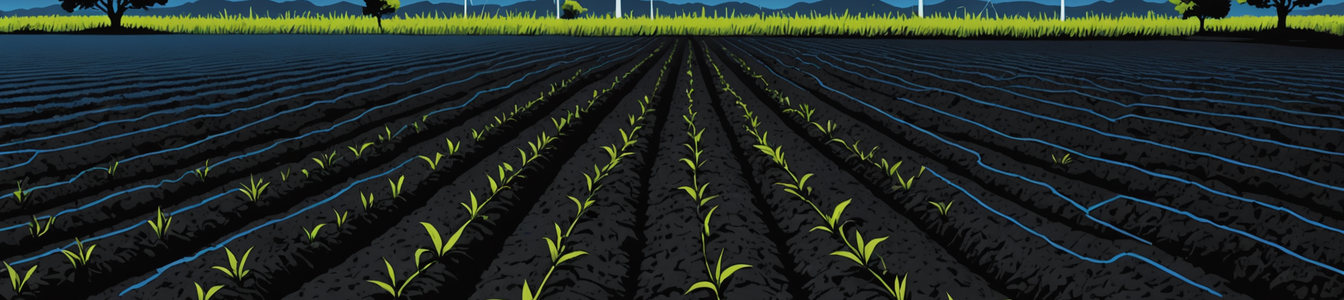
The global agricultural sector is undergoing a profound digital transformation. Driven by the need for efficiency, sustainability, and increased yield, farms are evolving into complex cyber-physical systems. Networks of Internet of Things (IoT) sensors now monitor soil moisture, nutrient levels, and crop health in real-time. Artificial Intelligence (AI) algorithms analyze this data to predict disease outbreaks before visible symptoms appear, as seen in advanced soybean monitoring systems. Meanwhile, satellite and aerial imagery, including technologies repurposed from domains like space debris tracking, provide macro-scale insights into crop development and environmental stress. This 'Smart Farming' revolution promises to optimize every drop of water and every hectare of land.
However, beneath this wave of innovation lies a critical and often overlooked threat: systemic cybersecurity vulnerabilities that now permeate the very foundation of our global food supply chain. The agricultural sector, traditionally viewed as low-tech and resilient, is rapidly becoming a high-value target within the world's critical infrastructure. The integration of operational technology (OT)—the physical devices controlling irrigation, fertilization, and harvesting—with corporate IT networks and public cloud services creates a dangerous convergence. Attack surfaces have expanded from the corporate server room to the remote field, the grain silo, and the autonomous tractor.
The Expanding Attack Surface: From Soil Sensors to Satellites
The vulnerability landscape begins at the ground level. IoT sensors deployed across thousands of acres are typically designed for low cost and long battery life, not robust security. They often lack secure boot mechanisms, use default or hard-coded credentials, and communicate over unencrypted radio protocols. A compromised soil moisture sensor network could feed false data to an irrigation AI, triggering either a drought by shutting off water or a flood by over-saturating fields, destroying crops and depleting precious water resources.
The risk escalates with more complex systems. AI models that flag diseases, like the soybean network mentioned, rely on continuous, trustworthy data streams. Data poisoning attacks—where an adversary subtly manipulates the training or input data—could cause the AI to misdiagnose a devastating blight as harmless, allowing it to spread unchecked. Alternatively, an attacker could trigger false positives, leading to the unnecessary and costly application of pesticides or the premature destruction of healthy crops.
Furthermore, the supply chain for these agricultural technologies is concerningly concentrated. Many farms depend on a single vendor for their entire 'digital agronomy' suite—sensors, gateways, platform, and analytics. This creates a single point of failure. A ransomware attack on a major agri-tech provider could cripple the monitoring and control systems for thousands of farms simultaneously during a critical growing season, with cascading effects on commodity markets and food availability.
The Critical Infrastructure Blind Spot
Agricultural operations frequently fall into a regulatory and preparedness gap. They are not always classified with the same rigor as power grids or water treatment plants, yet their disruption poses a direct threat to national and economic security. The mindset in many agricultural businesses is still oriented towards physical risks—pests, weather, and market prices—rather than digital ones. Cybersecurity budgets are minimal, and there is a severe shortage of professionals with both OT security knowledge and an understanding of agricultural processes.
This blind spot is exacerbated by the remote nature of farm operations. Network connectivity in rural areas often relies on legacy cellular or satellite links with high latency, making continuous monitoring and rapid patch deployment difficult. Physical security of field devices is also a challenge, allowing for potential tampering or the installation of malicious hardware.
A Call to Action for the Cybersecurity Community
Addressing this threat requires a concerted effort. First, security by design must become non-negotiable for agri-tech manufacturers. This includes hardware-based root of trust, mandatory strong authentication, end-to-end encryption, and secure, over-the-air update capabilities. Second, the cybersecurity industry must develop frameworks and best practices tailored to the agricultural OT environment, moving beyond office-based IT models.
Third, information sharing is crucial. The establishment of an Information Sharing and Analysis Center (ISAC) for the food and agriculture sector, where farmers, cooperatives, technology providers, and government agencies can share threat intelligence anonymously, would be a significant step forward. Finally, awareness and education are paramount. Farmers and agricultural operators must be equipped to understand cyber risks as a core component of modern farm management.
The promise of Smart Farming is immense, but its security cannot be an afterthought. As our food production becomes increasingly intelligent and interconnected, we must ensure it is also resilient and secure. Protecting the algorithms that predict our harvests and the networks that control our irrigation is no longer a niche concern—it is a fundamental requirement for global stability in the 21st century.
Comentarios 0
Comentando como:
¡Únete a la conversación!
Sé el primero en compartir tu opinión sobre este artículo.
¡Inicia la conversación!
Sé el primero en comentar este artículo.