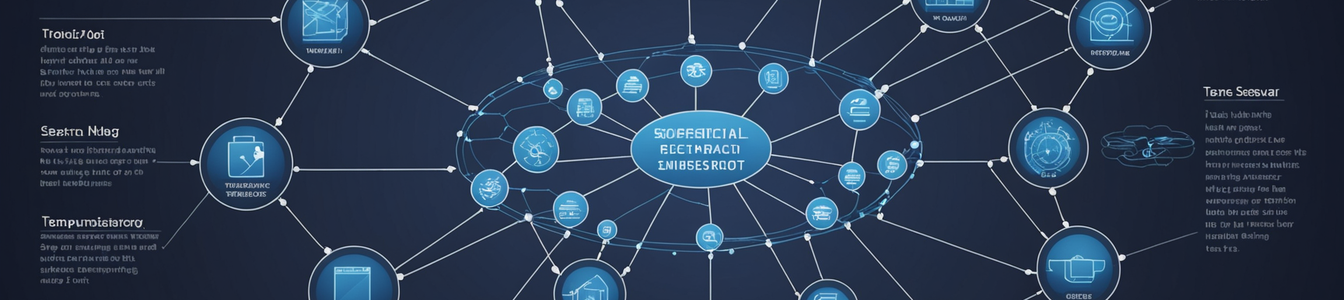
A silent revolution is digitizing the physical world. Fueled by plummeting hardware costs and ubiquitous connectivity, sensors and tracking devices are being embedded into everything from shipping containers and industrial machinery to children's backpacks and pet collars. This phenomenon, termed the 'sensorization of everything,' is creating a real-time, digital twin of global assets and movements. While promising unprecedented efficiency and security for logistics and personal property, this hyper-connected landscape is forging a new frontier of cybersecurity risks that demand immediate and strategic attention.
The Scale of the Boom: Billions of New Endpoints
The numbers are staggering. According to the latest market intelligence, global deployments of cellular IoT projects are set to grow from 743.2 million units to a projected 1.21 billion by 2029, representing a compound annual growth rate (CAGR) of 10.4%. This growth is not confined to industrial settings. The consumer asset tracking solutions market, leveraging GNSS (Global Navigation Satellite System) and wide-area networks for remote monitoring, is a primary driver. These pocket-sized trackers, popularized by brands like Apple and Tile, are creating a dense mesh of location-aware devices in our daily lives.
Parallel to this, the global sensors market is experiencing its own explosive trajectory, providing the essential hardware—temperature, motion, pressure, and location sensors—that feeds data into the IoT ecosystem. This trifecta of growth (connectivity, tracking solutions, and sensors) signifies that the attack surface is expanding exponentially, not linearly.
From Promise to Peril: The Security Implications
For cybersecurity professionals, this sensorized world translates into three core areas of concern:
- The IoT Security Quagmire: Each deployed cellular IoT module or connected sensor is a potential entry point. Many of these devices are designed with cost and battery life as priorities, often at the expense of robust security. Weak default credentials, unencrypted data transmissions, and infrequent security patches are commonplace. A single compromised sensor in a supply chain can serve as a beachhead for lateral movement into corporate networks or for data exfiltration.
- The Privacy Paradox of Persistent Tracking: The very feature that defines asset tracking—constant location monitoring—creates a profound privacy challenge. The aggregation of location data from millions of consumer and industrial devices paints an intimate, real-time picture of individual behavior, corporate logistics, and national infrastructure patterns. This data is a goldmine for threat actors, from stalkers and thieves to state-sponsored espionage groups seeking to map supply chain dependencies or monitor movements of key personnel.
- Supply Chain Visibility as a Double-Edged Sword: The case of Blue Dart, a major logistics player in India, exemplifies the new paradigm. In 2025 alone, the company securely tracked 47 million parcels over a road haul of 2 billion kilometers. This granular, real-time visibility is a logistics dream, enabling theft prevention, route optimization, and proof of delivery. However, it also means the entire supply chain is now a digital entity. Cyber attackers can potentially hijack tracking feeds to orchestrate physical theft ('digital cargo jacking'), manipulate sensor data (e.g., spoofing temperature readings to ruin perishable goods), or launch ransomware attacks that freeze logistics operations by encrypting tracking and management systems.
The Evolving Role of Cybersecurity
The traditional perimeter-based security model is obsolete in this context. Security must be baked into the device lifecycle, from silicon to cloud. Key strategies include:
- Zero-Trust for the Physical World: Implementing strict device identity management and micro-segmentation for IoT networks, ensuring a compromised tracker cannot access sensitive corporate data.
- End-to-End Encryption Mandates: Ensuring all location and sensor data, both at rest and in transit, is encrypted using strong, modern standards.
- Behavioral Anomaly Detection: Using AI and ML to monitor the vast streams of sensor data for unusual patterns—like a shipment tracker moving off its prescribed route or a cluster of consumer tags suddenly reporting from an unexpected location—which could indicate tampering or theft.
- Regulatory and Standards Advocacy: Professionals must guide the development of robust security standards for consumer and industrial IoT tracking devices, moving beyond voluntary guidelines to enforceable requirements.
Conclusion: Securing the Digital Shadow
The sensorization wave is irreversible. Its benefits for security, efficiency, and business intelligence are too significant to ignore. However, the cybersecurity community faces the critical task of ensuring this digital mapping of the physical world does not become its Achilles' heel. By shifting focus to include the security of these billions of new endpoints and the sensitive telemetry they generate, we can build a future where the promise of a tracked, connected world is not undermined by its inherent peril. The mission is clear: secure not just the bits and bytes, but the very things those bits and bytes now represent.
Comentarios 0
Comentando como:
¡Únete a la conversación!
Sé el primero en compartir tu opinión sobre este artículo.
¡Inicia la conversación!
Sé el primero en comentar este artículo.