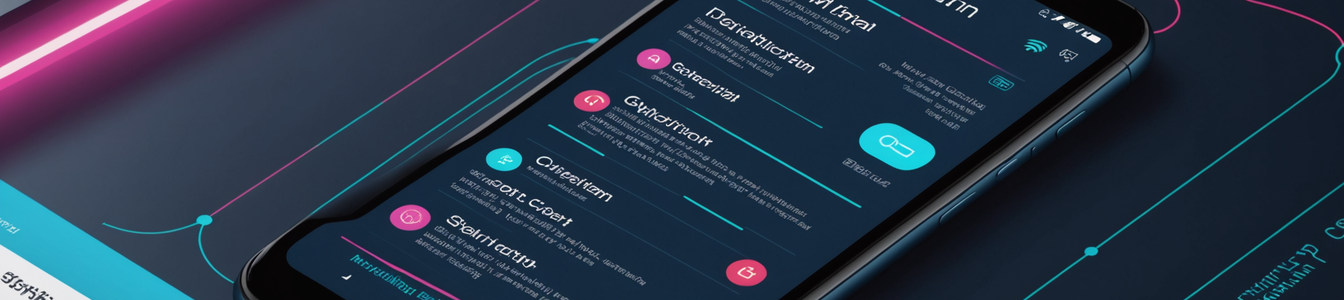
The perimeter of the phishing attack has officially moved from the inbox to the notification center. Cybersecurity teams are reporting a significant surge in social engineering campaigns that bypass email filters entirely, instead weaponizing the trusted notification channels of mobile devices and popular apps. This new wave, colloquially termed "The Calendar Con," leverages iPhone Calendar spam invites and fake payment alerts—such as fraudulent Bizum requests in Spain—to deliver malicious links with alarming success rates.
The technical mechanism is deceptively simple yet highly effective. Attackers exploit the calendar subscription feature (CalDAV) or send direct event invites to victims' email addresses associated with their Apple IDs. These invites appear as native system notifications or calendar entries, often with urgent or enticing titles like "Security Alert Required" or "Payment Overdue." The event description contains the phishing link. Because the notification originates from a core system app, users are conditioned to trust it more than a standard email or SMS, which they have been trained to view with skepticism.
Parallel to this, in regions where instant payment apps are ubiquitous, a complementary scam has evolved. The "reverse Bizum" or fake payment request scam involves attackers posing as banks, service providers, or even friends in distress. A notification from the legitimate Bizum app (or a spoofed version of it) appears, stating a payment is being requested or that a transaction is pending authorization. The message urges the user to click a link to "cancel" the transaction or "verify" their identity, leading directly to a credential-harvesting site designed to mimic their bank's login portal.
This dual-vector approach represents a masterclass in psychological exploitation. It targets two core human tendencies: the trust in automated system alerts and the fear of financial loss. The calendar invite creates the initial point of contact and legitimacy, while the fake payment alert introduces urgency and anxiety, short-circuiting rational decision-making. The separation of the initial contact (the calendar) from the payload (the phishing link in the event details) also helps evade simplistic URL filters that might scan SMS or email bodies in real-time.
For the cybersecurity community, this trend signals a critical shift. The attack surface has expanded from communication channels (email, SMS) to integration and notification channels (calendar sync, app push notifications). Traditional security awareness training focused on "don't click links in emails" is now insufficient. The playbook must be rewritten to include:
- Notification Literacy: Educating users that no system is inherently safe. Notifications from calendars, reminder apps, or even trusted third-party apps can be malicious vectors.
- Pre-emptive Configuration: Encouraging or enforcing corporate policies to disable public calendar sharing via email for work devices and reviewing notification permissions for financial apps.
- Verification Protocols: Instituting a mandatory secondary verification step for any financial action prompted by a notification, such as calling the supposed requester via a known number or logging directly into the banking portal—never through the provided link.
On a technical level, defenders should explore Mobile Device Management (MDM) and endpoint security solutions that can monitor and control calendar subscriptions on corporate devices. Email security gateways should be configured to scrutinize calendar invitation files (.ics) for embedded URLs. Application allow-listing can prevent the installation of spoofed financial apps.
The rise of notification-based phishing is a natural evolution in the attacker's arsenal, moving into spaces where user vigilance is lower and perceived legitimacy is higher. It underscores the need for a holistic defense strategy that combines updated user education, stricter device and application policies, and security tools adapted to protect not just data at rest or in transit, but the very integrity of the user's interface with their digital world. The battle is no longer just at the network perimeter or the inbox; it is on the home screen and in the notification shade.
Comentarios 0
Comentando como:
¡Únete a la conversación!
Sé el primero en compartir tu opinión sobre este artículo.
¡Inicia la conversación!
Sé el primero en comentar este artículo.