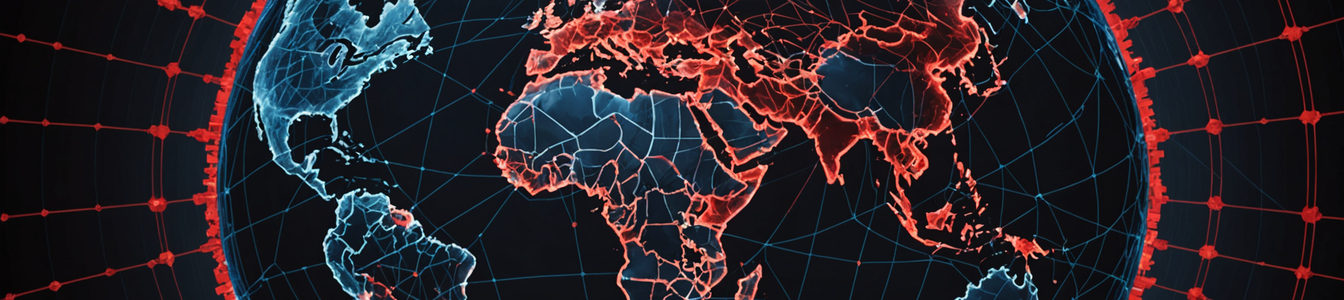
The geopolitical shockwave from the assassination of Iran's Supreme Leader, Ali Khamenei, is rapidly translating into a severe and imminent cybersecurity threat for Western nations. Intelligence agencies in the United States and Canada are now publicly warning that retaliatory cyberattacks from Iran are not just a possibility, but a high-probability event, marking a dangerous new phase in state-sponsored cyber conflict.
A Coordinated Warning from Allies
The Canadian Centre for Cyber Security (CCCS), part of the Communications Security Establishment (CSE), has taken the rare step of issuing a public threat assessment. The agency states that Iranian cyber reprisals targeting critical infrastructure in Canada and among its allies are 'very likely.' This assessment is directly linked to Canada's political support for the US-Israel campaign, which Tehran blames for the killing. The warning underscores a shift from espionage and data theft to potentially disruptive or destructive attacks aimed at causing tangible harm.
Parallel to this, US intelligence agencies have circulated classified and unclassified reports indicating that Iran is actively preparing to retaliate against American interests. The killing of Khamenei, a figure of supreme ideological and political authority, is viewed in Tehran as an act of war requiring a proportional and visible response. Given the overwhelming conventional military superiority of the US and its allies, the cyber domain presents Iran's most viable asymmetric battlefield for a swift and impactful strike.
The Likely Threat Landscape
Historical patterns of Iranian cyber activity, attributed to groups like APT33 (Elfin), APT34 (OilRig), and the Islamic Revolutionary Guard Corps (IRGC)-affiliated Cyber Hosein, provide a blueprint for the expected retaliation. The primary risk is to critical national infrastructure (CNI). Security teams should be on high alert for:
- Energy Sector: Attacks on electrical grids, oil and gas pipelines, and refining facilities. This could involve ransomware-style wipers (like 'ZeroCleare' or 'Meteor') designed to sabotage Operational Technology (OT) and Industrial Control Systems (ICS).
- Water and Wastewater Systems: Following previous attempted intrusions into US water facilities, these vulnerable, often under-resourced systems are prime targets for causing public disruption and fear.
- Transportation and Logistics: Disruption of port operations, rail networks, or aviation systems to create economic paralysis.
- Hybrid Campaigns: Cyberattacks may be coupled with influence operations and hack-and-leak campaigns to sow discord, spread propaganda blaming Western governments, and amplify the psychological impact.
The tactics will likely exploit known vulnerabilities in internet-facing systems (e.g., VPN appliances, firewalls), spear-phishing campaigns targeting engineers and system administrators, and attacks through the software supply chain. The use of 'living-off-the-land' techniques (LotL) to move laterally within networks using legitimate administrative tools will make detection more difficult.
Immediate Actions for Cybersecurity Teams
For CISOs and security operations centers (SOCs), this warning elevates the threat level to its highest point in recent years. Recommended actions include:
- Critical Infrastructure Focus: Immediately conduct threat-hunting exercises focused on OT/ICS environments. Verify segmentation between IT and OT networks is robust and monitor for anomalous protocol communications.
- Patch and Harden: Expedite patching for critical vulnerabilities, especially in perimeter devices and enterprise applications. Implement strict multi-factor authentication (MFA) for all remote access and privileged accounts.
- Review Detection Signatures: Ensure SIEM and EDR rules are updated with the latest Indicators of Compromise (IoCs) and Tactics, Techniques, and Procedures (TTPs) associated with Iranian Advanced Persistent Threat (APT) groups.
- Supply Chain Vigilance: Scrutinize third-party vendors and software updates, as these have been historical vectors for Iranian intrusion.
- Incident Response Readiness: Validate and test incident response plans. Ensure communication protocols with government entities like CISA (in the US) and the CCCS (in Canada) are clear and current.
A New Era of Kinetic-Cyber Linkage
This situation exemplifies the modern reality where geopolitical flashpoints have immediate and direct cybersecurity consequences. The assassination is a kinetic action, but its primary aftermath for global businesses and infrastructure may be digital. The warnings from Ottawa and Washington are not speculative; they are based on intercepted communications, monitoring of hostile cyber reconnaissance, and an understanding of Iran's doctrine of 'active defense.'
Failure to heed these warnings could result in significant operational disruption, financial loss, and even threats to public safety. The time for preparation is now, as the cycle of retaliation has already been set in motion. The cyber defenses of critical infrastructure are no longer just a corporate concern—they are a frontline national security imperative.
Comentarios 0
Comentando como:
¡Únete a la conversación!
Sé el primero en compartir tu opinión sobre este artículo.
¡Inicia la conversación!
Sé el primero en comentar este artículo.