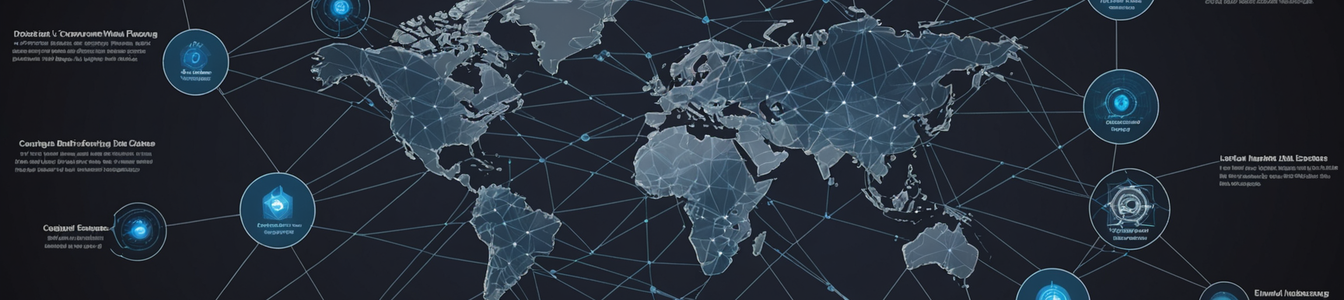
Sanctions Evasion 3.0: Iran's Military Weaponizes UK Crypto Exchanges for a $1B Shadow Treasury
A sophisticated financial operation orchestrated by Iran's Islamic Revolutionary Guard Corps (IRGC) has successfully moved an estimated $1 billion through cryptocurrency exchanges registered in the United Kingdom, according to a recent investigation. This operation marks a paradigm shift in state-sponsored sanctions evasion, moving from crude, individual attempts to a highly organized, military-grade strategy that exploits the very infrastructure of the legitimate crypto economy. Dubbed "Sanctions Evasion 3.0," this case represents a critical inflection point for global financial security and regulatory oversight.
The IRGC, a branch of the Iranian military designated as a Foreign Terrorist Organization by the United States, is subject to extensive international sanctions that severely restrict its access to the global banking system. To circumvent these barriers, the group allegedly established a complex financial pipeline. The operation reportedly began with revenue generated from the sale of sanctioned commodities, such as oil. These traditional fiat funds were then funneled into a network of intermediaries before reaching UK-registered cryptocurrency exchanges.
The choice of UK-based platforms is strategic. The United Kingdom's financial sector is globally respected, and exchanges operating under its jurisdiction benefit from a perception of legitimacy and robust compliance. However, this case suggests that regulatory frameworks, while advanced, may have gaps that sophisticated state actors can exploit. The IRGC operatives allegedly used corporate structures and front persons to open accounts, passing through standard Know-Your-Customer (KYC) and Anti-Money Laundering (AML) checks. Once the fiat capital was converted into cryptocurrencies like Bitcoin or Tether (USDT), the trail became significantly more opaque.
The pseudo-anonymous nature of blockchain transactions, combined with the use of mixers, cross-chain swaps, and a web of private wallets, allowed the IRGC to launder the origin of the funds. The cryptocurrency could then be converted back into fiat currency in jurisdictions with weaker oversight or used directly to procure dual-use goods, technology, or other resources for Iran's military and geopolitical objectives. This effectively created a "shadow treasury" outside the reach of traditional financial sanctions.
Implications for Cybersecurity and Financial Compliance
This incident is not merely a large-scale case of money laundering; it is an act of financial warfare with direct implications for national and economic security. For cybersecurity professionals, especially those in threat intelligence and financial crime units, the operation highlights several critical vulnerabilities:
- Jurisdictional Arbitrage: Adversaries are deliberately targeting exchanges in respected jurisdictions to cloak illicit activity in a veil of legitimacy. Compliance teams must move beyond checkbox KYC and implement continuous, risk-based monitoring that can identify complex organizational structures designed to hide beneficial ownership.
- Weaponization of Infrastructure: Legitimate crypto service providers are being weaponized as critical nodes in state-sponsored financial networks. This blurs the line between cybercrime and cyber warfare, requiring a coordinated response from national security and financial regulatory bodies.
- Blockchain Intelligence Gap: While blockchain is transparent, following the money requires sophisticated analytics tools and cross-exchange collaboration. The siloed nature of many exchanges' data allows sophisticated actors to exploit the seams between platforms. Sharing threat intelligence related to wallet addresses and transaction patterns associated with state actors must become standardized.
- The "Compliance Perimeter" Challenge: The operation demonstrates that compliance is only as strong as its weakest link in a global chain. An exchange in the UK may have strong controls, but if it accepts funds from an intermediary in a lax jurisdiction, the entire system is compromised. A "travel rule" for crypto, similar to the one in traditional banking, is becoming increasingly urgent.
The Road Ahead: From Reaction to Resilience
Countering Sanctions Evasion 3.0 requires a multi-faceted approach. Regulators, particularly in major financial hubs like the UK, must conduct urgent reviews of how crypto entities vet corporate clients and understand their source of wealth. Law enforcement and intelligence agencies need to deepen their expertise in blockchain forensics to attribute activity not just to criminal groups, but to nation-state commands.
For the private sector, this is a call to action. Crypto exchanges must invest in next-generation analytics that can detect patterns consistent with state-level operations, not just retail fraud. Insurance and banking partners servicing the crypto industry must also elevate their due diligence.
The IRGC's successful movement of $1 billion is a stark warning. It proves that decentralized digital assets have become a potent tool in the arsenal of sanctioned states. The response will determine whether the crypto ecosystem matures into a secure component of global finance or remains a high-risk battlefield for shadow conflicts. The era of viewing crypto sanctions evasion as a niche criminal concern is over; it is now a central front in national security.
Comentarios 0
Comentando como:
¡Únete a la conversación!
Sé el primero en compartir tu opinión sobre este artículo.
¡Inicia la conversación!
Sé el primero en comentar este artículo.