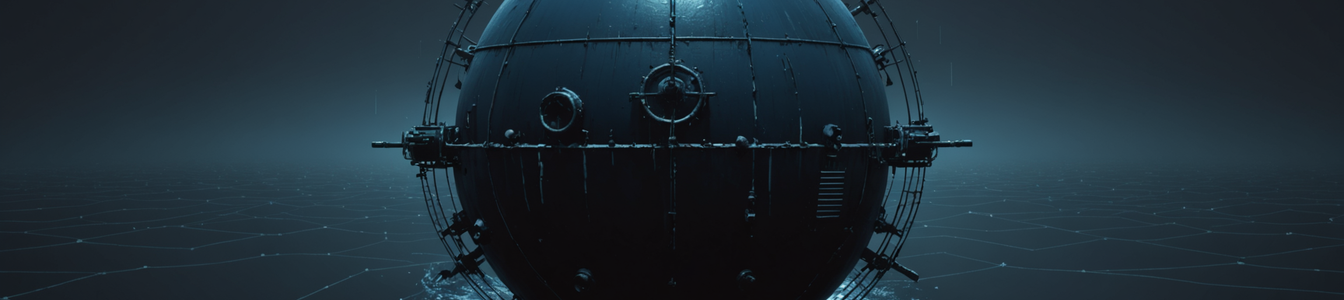
The Strait of Hormuz, a vital artery for global energy supplies, has long been a geopolitical flashpoint. Today, it faces a novel and insidious threat that blurs the lines between physical warfare and digital vulnerability. According to intelligence and maritime security reports, Iran is grappling with a significant operational failure: it has reportedly lost track of a number of its own naval mines deployed in the strategic waterway. This is not merely a military embarrassment; it has created a persistent, low-probability but high-impact cyber-physical risk that endangers global commerce and maritime safety.
From Physical Weapon to Digital Vulnerability
Naval mines are traditionally considered physical weapons. However, modern mines often incorporate digital components for activation, targeting, and, crucially, for identification and decommissioning by their owners. The reported scenario suggests a catastrophic failure in Iran's command, control, and communication (C3) systems related to these assets. Whether due to poor record-keeping, system failures, or the loss of encryption keys and activation codes, these mines have become 'orphaned' from their command infrastructure.
This creates a dual-threat environment. First, the immediate physical danger: unlocated mines pose a constant risk of accidental detonation, threatening any vessel—commercial, military, or civilian—that passes through the world's most important oil chokepoint. Second, and more pertinent to cybersecurity professionals, is the digital threat surface. These lost systems, potentially still active and networked, represent unpatched, unmonitored endpoints in a hostile environment. They could, in theory, be detected and hijacked by state or non-state actors with sufficient technical capability, turning Iran's lost assets into tools for a false-flag attack or an untraceable disruption.
Systemic Risk to Maritime Critical Infrastructure
The implications extend far beyond the mines themselves. The Strait of Hormuz is a hub of interconnected critical infrastructure: shipping lanes, underwater pipelines, communication cables, and port facilities. A mine detonation, whether accidental or maliciously triggered, could cause catastrophic physical damage, environmental disaster, and trigger cascading failures in global supply chains. The insurance sector is already recalibrating risk models for vessels transiting the region, leading to increased premiums and potential rerouting of cargo—a digital risk manifesting in tangible economic costs.
Furthermore, this incident exposes a critical gap in the security of Cyber-Physical Systems (CPS) in high-threat environments. It demonstrates how the failure of digital accountability for physical assets can create enduring, opaque threats. The maritime domain, which relies on the Automated Identification System (AIS), Electronic Chart Display and Information Systems (ECDIS), and other digital navigation tools, is now forced to operate with an unknown variable—digital-physical 'ghosts' that do not appear on any screen but have very real destructive potential.
International Response and the Intelligence Dimension
The response has been multifaceted. Naval forces from the United States, the United Kingdom, and regional partners have increased patrols and mine-sweeping operations. Notably, intelligence agencies are deeply involved. Reports indicate that specialized police and intelligence units in allied nations are being formed or redirected to focus specifically on Iranian maritime and cyber threats. Their mission is twofold: to gather intelligence on the location and status of these lost assets, and to counter any attempts by Iranian intelligence to exploit the resulting chaos or to conduct espionage related to the international cleanup and security efforts.
This intelligence battle adds another layer of cyber risk. The scramble to map the digital and physical minefield likely involves signals intelligence (SIGINT), attempts to intercept communications about the mines, and cyber operations to penetrate Iranian naval networks to find tracking data. This creates a crowded and contested digital space above the Strait, increasing the chances of miscalculation or cyber conflict spillover.
Lessons for Cybersecurity and Critical Infrastructure Protection
For the cybersecurity community, the Strait of Hormuz situation is a stark case study with several key lessons:
- Asset Management is Security: The foundational principle of knowing your assets applies with even greater urgency to cyber-physical systems (CPS). Loss of digital inventory control can have catastrophic physical consequences.
- The Long Tail of Cyber-Physical Threats: A digital failure or lost credential can create a physical threat that persists for years, long after the original conflict or deployment is forgotten. Security planning must account for this longevity.
- Convergence Creates New Attack Vectors: The blending of operational technology (OT) like naval weapon systems with information technology (IT) creates novel vulnerabilities. Orphaned OT assets are particularly dangerous.
- Insurability as a Metric of Cyber Risk: The market's reaction—increased insurance costs—is a direct financial quantification of this cyber-physical risk. It provides a model for assessing the real-world impact of similar CPS failures in other sectors.
Conclusion: Navigating the Digital Minefield
The lost naval mines in the Strait of Hormuz represent more than a maritime hazard; they symbolize a new era of hybrid, persistent threats born from the convergence of physical and digital domains. As nations and industries increasingly deploy smart, connected systems in critical environments, the imperative for robust digital twin management, immutable audit logs, and secure decommissioning protocols becomes clear. Until these orphaned systems are located and neutralized, the world's most important shipping lane will remain a digital minefield, a sobering reminder that in our interconnected age, losing your digital keys can mean losing control of a physical weapon with global repercussions.
Comentarios 0
Comentando como:
¡Únete a la conversación!
Sé el primero en compartir tu opinión sobre este artículo.
¡Inicia la conversación!
Sé el primero en comentar este artículo.