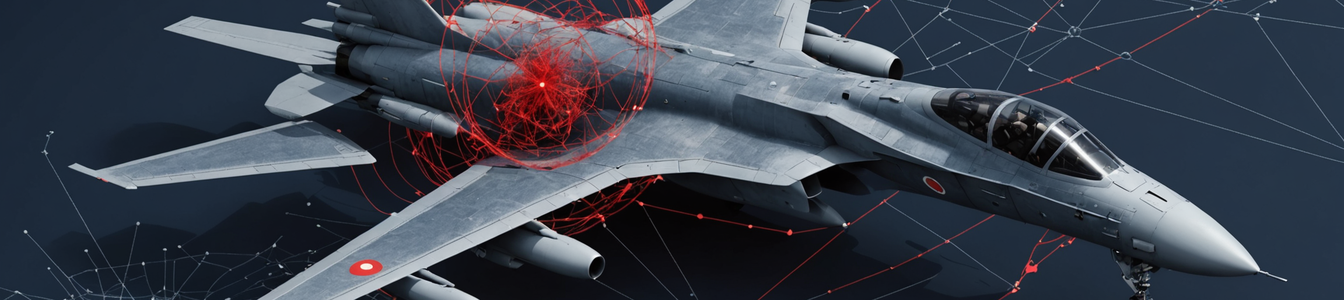
The geopolitical landscape has witnessed a paradigm shift where access control, once a technical domain of cybersecurity professionals, has become a strategic weapon in international relations. Italy's calculated denial of landing rights to U.S. military aircraft at Sigonella Air Base—a critical NATO hub in Sicily—is not merely a diplomatic gesture. It is a definitive case study in the emerging theater of Authorization Warfare, where sovereign decisions on physical and logical access serve as primary instruments of statecraft, with direct and consequential ripple effects for global cybersecurity postures.
From Technical Control to Geopolitical Leverage
Sigonella Air Base is more than a runway; it is a complex node in a global network of military logistics, intelligence sharing, and command-and-control systems. Denying access to this node disrupts predefined operational workflows, forcing ad-hoc rerouting and creating cascading logistical failures. In cybersecurity terms, this is a sovereign entity revoking previously granted privileges within a federated trust model—the NATO alliance. The 'policy decision' by Italy functions as a manual override of established authorization protocols, demonstrating that the highest-level 'admin rights' in any international system ultimately reside with individual nation-states.
This incident moves the concept of 'least privilege' from an enterprise security principle to a geopolitical doctrine. Italy is effectively asserting that U.S. operational access to its territory for Middle East missions exceeds the 'need-to-know' or 'need-to-access' privileges Rome is currently willing to grant. This recalibration of trust boundaries at the state level forces a re-evaluation of all interdependent systems, from flight logistics software and refueling schedules to secure communications relays and intelligence data pipelines that transit through the denied node.
Cybersecurity Implications: The New Attack Surface of Sovereign IAM
For cybersecurity architects and threat modelers, Italy's action illuminates a critical, often overlooked threat vector: the authorized pathway turned hostile. Traditional threat models assume infrastructure within allied territories is permissive. Sigonella's denial flips this assumption, treating a friendly base as a potentially non-cooperative entity. This has several immediate implications:
- Supply Chain Authorization Risks: Military and critical infrastructure operations rely on complex, just-in-time supply chains for fuel, parts, and personnel. A sovereign access denial acts as a physical 'supply chain attack,' disrupting the availability leg of the CIA triad. Cybersecurity strategies must now model geopolitical access denials as a legitimate form of disruption, requiring more resilient, decentralized network architectures that can tolerate the loss of any single node, even an allied one.
- Identity Federation Under Duress: NATO and similar alliances operate on federated identity and access models. Italy's move tests the resilience of this federation. It prompts urgent questions: How are cross-border digital identities and access tokens invalidated or quarantined following a physical access denial? What is the protocol for securely winding down shared network access and data permissions? The incident reveals a potential gap between diplomatic/policy actions and the technical execution of IAM policy changes across federated systems.
- The Blurring of Physical and Logical Perimeters: The firewall at Sigonella is no longer just a network device; it is the sovereign border of Italy. This conflates national borders with network perimeters in a profound way. Security operations centers (SOCs) for multinational entities must now ingest geopolitical intelligence feeds to anticipate where physical access denials might trigger necessary changes in logical access controls, data sovereignty rules, and network segmentation policies.
The Rise of Authorization Warfare: A Framework for Professionals
Authorization Warfare can be defined as the strategic use of access grant/denial decisions by state actors to achieve political, economic, or military objectives, directly impacting the security and operational continuity of targeted entities. Its characteristics include:
- Weaponized Trust: Exploiting established trust relationships within alliances or partnerships.
- Precision Denial: Targeting specific, critical access points to maximize disruptive impact while minimizing broader conflict.
- Escalation Dominance: Using control over access infrastructure as a de-escalatory or coercive tool.
For corporate cybersecurity leaders, especially in defense, aviation, energy, and logistics, the lessons are stark. Your international operations are subject to sovereign IAM policies. A comprehensive Third-Party Risk Management (TPRM) program must now evaluate not just the cybersecurity hygiene of foreign partners, but also the political stability and foreign policy trajectory of host nations. Business Continuity and Disaster Recovery (BCDR) plans require 'geopolitical disruption' scenarios that model the sudden revocation of physical operating licenses or digital data transit agreements.
Strategic Recommendations for a New Era
Organizations must adapt to this new reality where authorization is a battlefield:
- Develop Geopolitical IAM Strategies: Integrate political risk analysis into access governance frameworks. Map all critical operations against potential sovereign access decisions.
- Architect for Resilience: Design critical network and logistics architectures with 'allied denial' as a possible failure state. Embrace zero-trust principles not just internally, but in international partnerships, verifying every transaction and not inherently trusting any jurisdiction.
- Model Sovereign Threat Actors: Include state actors not only as sources of cyber-attacks but as 'system administrators' who can legally alter the rules of access within their territory. Red team exercises should include scenarios where a host nation abruptly modifies access policies.
- Advocate for Clear Protocols: The private sector, through industry bodies, should advocate for clear, standardized international protocols that define the technical processes for implementing sovereign access decisions, providing predictability and allowing for secure technical execution.
Italy's denial at Sigonella is a watershed moment. It proves that in the interconnected modern world, the power to authorize or deny is as potent as any conventional weapon. For the cybersecurity community, the mandate is clear: expand your horizon. The threat landscape now unequivocally includes the map of the world, and every border crossing is an access control decision waiting to be weaponized. Building systems resilient to Authorization Warfare is the next great challenge in securing our global digital and physical infrastructure.
Comentarios 0
Comentando como:
¡Únete a la conversación!
Sé el primero en compartir tu opinión sobre este artículo.
¡Inicia la conversación!
Sé el primero en comentar este artículo.