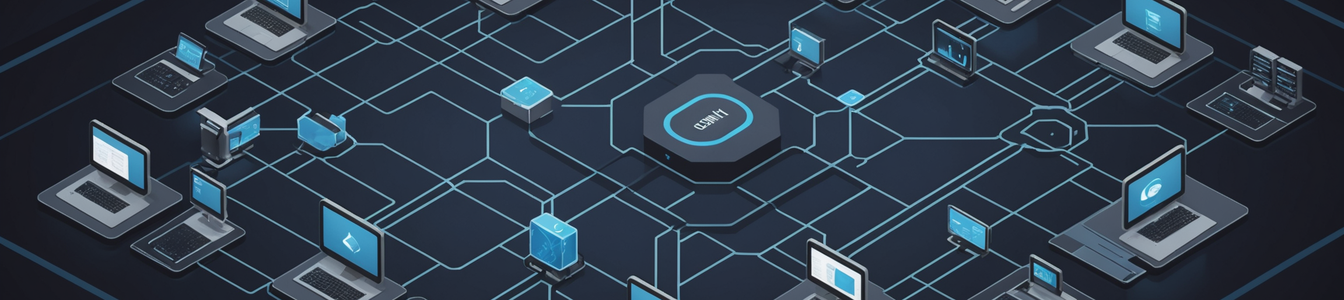
In an era defined by geopolitical instability and relentless cyber aggression, Security Operations Centers (SOCs) are stretched thin. While attention is often focused on external threats and advanced detection tools, a quiet revolution is reshaping a foundational pillar of security: IT Asset Management (ITAM). No longer just a compliance or financial tool, modern ITAM is being strategically overhauled to serve as the high-integrity data backbone for AI-driven security operations, a transformation that is becoming a matter of organizational survival.
The core challenge is visibility. Traditional, siloed ITAM solutions often fail to provide a real-time, unified view of an organization's complete digital estate. Unmanaged devices, shadow IT, and complex software dependencies create blind spots that adversaries eagerly exploit. This fragmentation becomes a critical liability during crises, such as widespread zero-day vulnerabilities or coordinated attacks, where speed and accuracy of response are paramount.
Vendors are responding by aggressively expanding ITAM capabilities. Companies like Freshworks are enhancing their platforms to deliver deeper, more automated discovery and lifecycle management. The goal is to move from periodic inventory snapshots to a continuous, living map of all IT assets—on-premises, in the cloud, and at the edge. This includes granular details on software versions, patch levels, configuration states, and interdependencies, creating a rich context for security analytics.
This evolution is particularly crucial as the hardware landscape itself becomes more complex and security-relevant. The upcoming Qualcomm Snapdragon 8 Elite Gen 6 Pro system-on-chip (SoC), for example, is reported to feature a record-breaking shared L2 cache. While this architectural shift aims to reduce latency and boost energy efficiency for mobile and edge devices, it also introduces new considerations for security teams. Larger, more complex cache hierarchies can influence side-channel attack vectors and low-level firmware security. A sophisticated ITAM system must be capable of tracking not just the presence of such advanced hardware but also understanding its security implications and ensuring that appropriate firmware and driver updates are managed.
The strategic value lies in convergence. By feeding comprehensive, accurate, and timely asset data into Security Information and Event Management (SIEM) systems, Extended Detection and Response (XDR) platforms, and AI-powered security orchestration tools, organizations can achieve transformative outcomes. AI models for threat prediction and vulnerability prioritization are only as good as the data they consume. Poor asset data leads to alert fatigue, misprioritized patches, and missed critical vulnerabilities.
Imagine an AI that, upon detecting a new critical vulnerability (CVE), can instantly query the ITAM database to identify every affected asset across the global enterprise, understand its business criticality, and automatically trigger a tailored remediation workflow for the security team. This is the promise of the modern ITAM-SecOps integration. It enables proactive risk management, where security posture is continuously assessed against the known asset landscape, rather than reactive firefighting.
For CISOs and security architects, the mandate is clear. Evaluating and investing in modern ITAM is no longer an IT infrastructure task but a core security strategy. Key selection criteria must now include: real-time discovery and profiling capabilities, open APIs for deep integration with the security stack, support for hybrid and multi-cloud environments, and the ability to manage the lifecycle of increasingly diverse hardware, from IoT sensors to high-performance mobile SoCs.
The modernization of IT Asset Management represents a foundational shift in building cyber resilience. In a world of chaos, knowing what you have, where it is, and how it's configured is the first and most critical step in defending it. By transforming ITAM from a static catalog into the dynamic central nervous system for security data, organizations can finally empower their AI-driven defenses with the context they desperately need to be effective.
Comentarios 0
Comentando como:
¡Únete a la conversación!
Sé el primero en compartir tu opinión sobre este artículo.
¡Inicia la conversación!
Sé el primero en comentar este artículo.