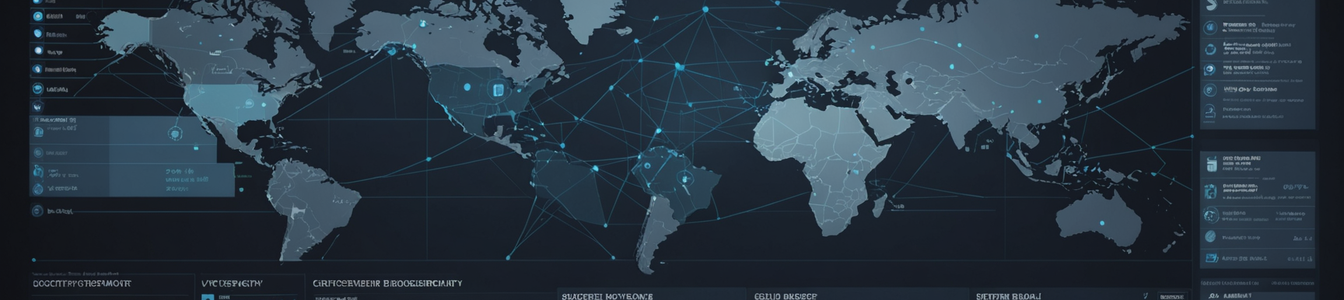
Japan's Corporate Governance Revolution: Unlocking Trillions for Cybersecurity and Strategic Resilience
In a move that could fundamentally reshape Japan's economic landscape and its digital defense posture, the Financial Services Agency (FSA) has implemented sweeping revisions to the country's Corporate Governance Code. The central directive is unambiguous: Japan's listed companies, sitting on a staggering ¥400 trillion ($2.7 trillion) in cash and deposits, must now redirect these 'war chests' toward strategic growth investments, with national economic security—including cybersecurity—as a core priority.
For decades, Japanese corporations have been criticized for their conservative balance sheets, prioritizing liquidity and stability over aggressive investment. This hoarding mentality, while providing a buffer during economic downturns, has left Japan vulnerable in the global technology race. The revised governance code represents a paradigm shift, transforming cash reserves from a defensive asset into an offensive tool for securing Japan's technological sovereignty and economic future.
From Voluntary Guidance to Strategic Imperative
The previous governance framework offered suggestions; the new code establishes expectations. Boards of directors are now explicitly required to develop and disclose clear strategies for utilizing surplus capital. Vague references to 'future opportunities' are no longer sufficient. Companies must articulate how their investments will enhance long-term corporate value and, by extension, contribute to Japan's economic security. This creates a direct line between corporate treasury decisions and national strategic interests.
For cybersecurity leaders and CISOs, this policy shift is a potential game-changer. It provides a powerful, board-level mandate to argue for significant increases in security budgets. Investment proposals for quantum-resistant cryptography, critical infrastructure protection systems, advanced threat intelligence platforms, and next-generation security operation centers (SOCs) can now be framed not just as IT expenses, but as strategic contributions to corporate governance compliance and national resilience.
The Cybersecurity Investment Windfall: A $100+ Billion Opportunity
Analysts estimate that even a modest reallocation of 5-10% of the corporate cash hoard toward strategic technology investments could unleash over $100 billion into the ecosystem. This capital is expected to flow into several key areas with direct cybersecurity implications:
- Strategic M&A for Security Capabilities: Expect increased acquisition activity as Japanese firms seek to buy, rather than build, cutting-edge cybersecurity capabilities. This targets startups specializing in AI-driven security, cloud-native application protection, and industrial control system (ICS) security, particularly those in allied nations.
- Domestic R&D and 'Techno-Nationalism': The code incentivizes investment in homegrown innovation to reduce dependence on foreign, particularly Chinese, technology. This means major funding boosts for research in trusted computing, secure semiconductor design, post-quantum cryptography, and resilient communications networks.
- Digital Infrastructure Hardening: Companies in energy, finance, transportation, and healthcare—deemed critical infrastructure—will face pressure to invest heavily in modernizing and securing their operational technology (OT) and IT environments. This aligns with global trends but is now supercharged by governance requirements.
- Talent Development and Retention: A portion of this capital will inevitably target Japan's acute cybersecurity skills shortage. Investments in university programs, vocational training, competitive compensation packages, and international talent recruitment are likely to see substantial increases.
Countering Foreign Influence and Hostile Takeovers
The geopolitical subtext of the governance revision is clear. By forcing companies to deploy capital productively, Japan aims to increase their market valuation and strategic resilience, making them less vulnerable to undervaluation and subsequent acquisition by foreign entities—especially state-backed funds from geopolitical rivals. A well-funded, innovative, and secure company is a harder target for a hostile takeover. Cybersecurity, in this context, becomes a defensive moat protecting intellectual property, proprietary data, and supply chain integrity.
Implementation Challenges and the Role of the Board
The success of this policy hinges on boardroom comprehension of cybersecurity as a strategic, rather than purely technical, domain. Directors will need to develop cybersecurity fluency to evaluate investment proposals effectively. This may accelerate the appointment of directors with technology and security backgrounds, a trend already emerging in Western markets.
Furthermore, companies must navigate the delicate balance between mandated investment and prudent risk management. The FSA is not advocating for reckless spending but for strategically targeted capital deployment that builds long-term resilience. Cybersecurity investments with clear ROI metrics linked to risk reduction, operational continuity, and brand protection will likely receive favorable board review.
Global Implications and the 'Japan Model'
Japan's experiment is being closely watched in Europe and North America. If successful, it could provide a blueprint for other nations seeking to mobilize private sector capital for public-interest security objectives without resorting to direct nationalization or heavy-handed regulation. It represents a sophisticated form of 'steering' rather than 'rowing,' using governance levers to align corporate and national interests.
For the global cybersecurity industry, Japan's market is poised to become significantly hotter. Vendors, consultancies, and MSSPs should prepare for a wave of procurement driven by strategic, board-level initiatives rather than just compliance. The conversation with Japanese clients will shift from 'what is the minimum we need to spend?' to 'what investments will make us a leader in secure, resilient innovation?'
Conclusion: A Strategic Inflection Point
Japan's revised Corporate Governance Code marks a strategic inflection point. It formally recognizes that corporate financial health and national economic security are inextricably linked in the digital age. By unlocking trillions of yen for strategic investment, Japan is not just seeking economic growth; it is funding its digital defense and technological independence. For cybersecurity professionals worldwide, this represents one of the most significant, centrally-driven demand signals in recent history—a multi-year investment cycle that will reshape Japan's digital landscape and offer substantial opportunities for those prepared to engage with its new strategic imperative.
Comentarios 0
Comentando como:
¡Únete a la conversación!
Sé el primero en compartir tu opinión sobre este artículo.
¡Inicia la conversación!
Sé el primero en comentar este artículo.