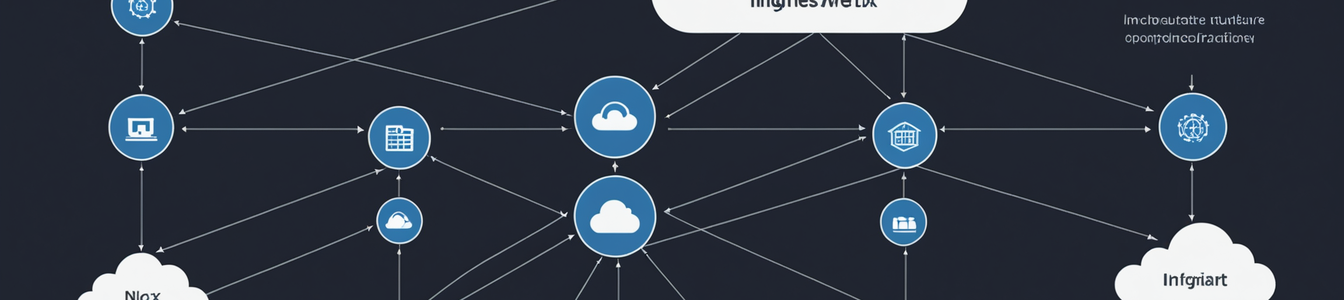
The cloud-native security landscape is facing a foundational shift as one of Kubernetes' most widely deployed ingress controllers, Ingress-Nginx, approaches its official end-of-life. This impending sunset is forcing thousands of organizations worldwide to undertake complex migrations, exposing critical questions about the security and stability of legacy cloud infrastructure components that form the backbone of modern digital operations.
For years, Ingress-Nginx has served as the default gateway for managing external access to services running in Kubernetes clusters. Its role in routing HTTP and HTTPS traffic, handling SSL/TLS termination, and providing basic load balancing made it a ubiquitous component in cloud-native architectures. The tool's simplicity and tight integration with the Kubernetes ecosystem led to widespread adoption across industries, from financial services to healthcare and e-commerce.
The Security Implications of Forced Migration
The forced migration from Ingress-Nginx represents more than just a technical upgrade—it's a significant security event. Organizations running unsupported ingress controllers face multiple risks:
- Vulnerability Management Breakdown: Without security patches and updates, known vulnerabilities in the deprecated Ingress-Nginx will remain unaddressed, creating exploitable entry points into Kubernetes clusters.
- Compliance Violations: Many regulatory frameworks require organizations to maintain supported software with active security updates. Running EOL software can lead to compliance failures with standards like PCI-DSS, HIPAA, and GDPR.
- Configuration Drift: During migration, security teams must recreate complex security policies, rate limiting rules, authentication configurations, and WAF (Web Application Firewall) settings in new environments, increasing the risk of misconfiguration.
- Monitoring Gaps: Security monitoring tools and SIEM integrations tuned for Ingress-Nginx may not function properly with replacement ingress controllers without significant reconfiguration.
Migration Pathways and Security Considerations
The Kubernetes community is steering users toward several alternatives, each with distinct security characteristics:
Traefik Proxy has emerged as a popular migration target, offering dynamic configuration, automatic SSL certificate management via Let's Encrypt, and built-in security features. Security teams should note that Traefik's different architecture requires reevaluating network policies, TLS configuration standards, and access control mechanisms.
NGINX Ingress Controller (the official NGINX-supported version) provides a more direct migration path for organizations heavily invested in NGINX configurations. However, security professionals must understand that this isn't a drop-in replacement—security policies and configurations require careful translation and validation.
Alternative Ingress Controllers like HAProxy Ingress, Contour, or Istio's Gateway API implementations offer different security models and capabilities. Each requires thorough security assessment, particularly regarding their handling of TLS termination, header manipulation, and integration with existing security tooling.
Broader Implications for Cloud-Native Security
This migration crisis reveals systemic vulnerabilities in the cloud-native ecosystem:
Dependency Chain Risks: The Ingress-Nginx situation highlights how foundational tools can become single points of failure. Security architects must now consider the support lifecycle of all critical infrastructure components, not just application-layer software.
Technical Debt Accumulation: Many organizations deployed Ingress-Nginx with extensive custom configurations and security policies that now represent significant technical debt. The migration process forces a security reassessment of these accumulated configurations.
Vendor and Community Support Dynamics: The transition underscores the tension between community-supported projects and commercially backed alternatives. Security teams must develop frameworks for evaluating the long-term viability of infrastructure components based on their support models.
Strategic Recommendations for Security Teams
- Conduct Immediate Inventory: Identify all Kubernetes clusters using Ingress-Nginx, documenting their configurations, security policies, and integration points.
- Risk-Based Prioritization: Classify clusters based on sensitivity of handled data, exposure to the internet, and compliance requirements to prioritize migration efforts.
- Security Validation Framework: Develop testing protocols for replacement ingress controllers that include penetration testing, configuration auditing, and compliance validation.
- Implement Gradual Migration Strategies: Consider canary deployments or parallel running of old and new ingress controllers to minimize security disruption.
- Update Incident Response Plans: Ensure security monitoring and incident response procedures account for the new ingress controller's logging formats, metrics, and alerting capabilities.
- Reevaluate Cloud-Native Security Strategy: Use this migration as an opportunity to implement ingress controller-agnostic security policies using Kubernetes Network Policies, service meshes, or higher-level abstractions like the Gateway API.
The Ingress-Nginx sunset serves as a wake-up call for the entire cloud-native security community. It demonstrates that infrastructure security must evolve beyond vulnerability management to include lifecycle management of core components. As organizations navigate this transition, they're not just replacing a tool—they're stress-testing the resilience of their entire cloud security posture.
Looking forward, this event will likely accelerate adoption of more standardized ingress approaches through the Kubernetes Gateway API, which promises to reduce vendor lock-in and create more portable security configurations. Until then, the migration away from Ingress-Nginx represents both a significant challenge and an opportunity to rebuild cloud ingress security on more sustainable foundations.
Comentarios 0
Comentando como:
¡Únete a la conversación!
Sé el primero en compartir tu opinión sobre este artículo.
¡Inicia la conversación!
Sé el primero en comentar este artículo.