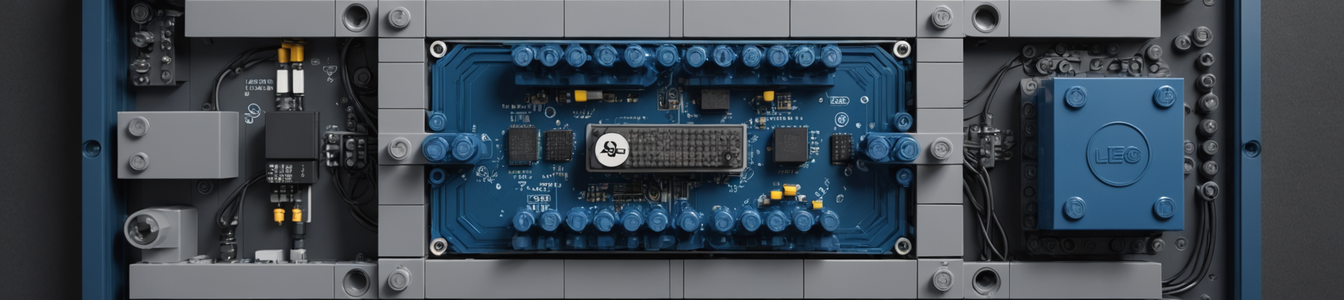
The impending launch of Lego's 'Smart Brick'—a sensor, speaker, and processor-equipped building block—signals a troubling new frontier in consumer IoT security. While manufacturers celebrate the innovation that brings advanced connectivity to children's playrooms, cybersecurity experts are sounding alarms about the creation of a largely unregulated attack surface targeting the most vulnerable users: children and their families.
From Simple Toys to Complex Attack Vectors
The Smart Brick represents more than just a technological upgrade for the iconic toy brand. According to industry analysis, it's part of a broader trend identified in tech anticipation lists for 2026, where consumer products increasingly embed IoT capabilities without corresponding security maturity. These devices typically connect to home Wi-Fi networks, sync with parental smartphones via companion apps, and often feature microphones, speakers, and various sensors.
What distinguishes toy IoT from other consumer categories is the unique risk profile. Unlike smart thermostats or lighting systems, children's toys operate in environments with minimal supervision regarding digital hygiene. The psychological profile of users—children who may share personal information freely—combined with the physical access attackers might gain through compromised toys creates a perfect storm of vulnerabilities.
The Dumb Device Paradox in Smart Homes
Ironically, as noted in recent smart home analyses, the most reliable devices in connected homes often remain the 'dumbest' ones—those without internet connectivity. This observation highlights a fundamental tension in consumer IoT: increased functionality directly correlates with increased vulnerability. The Smart Brick's promised features—voice interaction, environmental sensing, programmable behaviors—require complex software stacks, network connectivity, and data processing that traditional toys never needed.
Security researchers point to several specific concerns:
- Minimal Authentication Protocols: Toy manufacturers historically prioritize ease of use over security, potentially implementing weak or bypassable authentication between devices and apps.
- Inconsistent Firmware Updates: Unlike enterprise IoT, consumer devices often lack automated, secure update mechanisms, leaving known vulnerabilities unpatched for extended periods.
- Data Privacy Implications: Voice recordings, location data, and usage patterns collected from children's toys represent sensitive datasets with inadequate protection standards.
- Network Bridge Attacks: Compromised toys could serve as footholds within home networks to launch attacks against more valuable targets like computers, smartphones, or home security systems.
Supply Chain Vulnerabilities Amplified
The toy industry's global supply chain introduces additional risks. Smart Brick components likely originate from multiple international suppliers, each potentially introducing vulnerabilities at hardware, firmware, or software levels. Unlike regulated industries like medical devices or automotive, toy manufacturing faces minimal cybersecurity requirements, with safety standards focusing primarily on physical rather than digital hazards.
This supply chain complexity mirrors broader IoT security challenges but with heightened stakes when considering the target demographic. A compromised industrial sensor might cause operational disruption; a compromised children's toy could enable real-time audio surveillance, unauthorized communication with children, or collection of intimate family data.
Regulatory Gap and Industry Responsibility
Current regulatory frameworks, including COPPA (Children's Online Privacy Protection Act) in the U.S. and GDPR provisions for children's data in Europe, address privacy concerns but offer limited guidance on device security standards. There's no equivalent to automotive safety testing or medical device validation for connected toys.
Industry response has been predictably mixed. While some manufacturers engage with security researchers through bug bounty programs, others dismiss concerns as theoretical or overblown. The economic reality favors rapid market entry over thorough security testing, with many companies treating cybersecurity as an afterthought rather than a design requirement.
Mitigation Strategies for Security Professionals
For cybersecurity teams and concerned parents, several defensive approaches merit consideration:
- Network Segmentation: Isolating IoT devices, especially children's toys, on separate network VLANs can limit lateral movement if devices are compromised.
- Traffic Monitoring: Implementing network monitoring to detect unusual data flows from IoT devices to external destinations.
- Vendor Assessment: Evaluating toy manufacturers' security postures, update policies, and vulnerability disclosure processes before purchase.
- Physical Security Considerations: Understanding that connected toys with cameras or microphones create potential surveillance vectors within private spaces.
The Future of Connected Play
As Lego and competitors move toward connected play experiences, the industry stands at a crossroads. The same technologies that enable educational coding exercises and interactive storytelling also create potential surveillance tools and attack platforms. Security-by-design approaches—encryption by default, secure update mechanisms, minimal data collection, and transparent privacy controls—must become standard rather than exceptional.
The Smart Brick phenomenon represents a microcosm of broader IoT security challenges, distilled to their most sensitive context: children's environments. How manufacturers, regulators, and the security community respond will set precedents affecting not just toys but the entire consumer IoT landscape. Without immediate action, the connected playroom may become the next frontier in residential cyber attacks, with consequences extending far beyond disrupted playtime.
Comentarios 0
Comentando como:
¡Únete a la conversación!
Sé el primero en compartir tu opinión sobre este artículo.
¡Inicia la conversación!
Sé el primero en comentar este artículo.