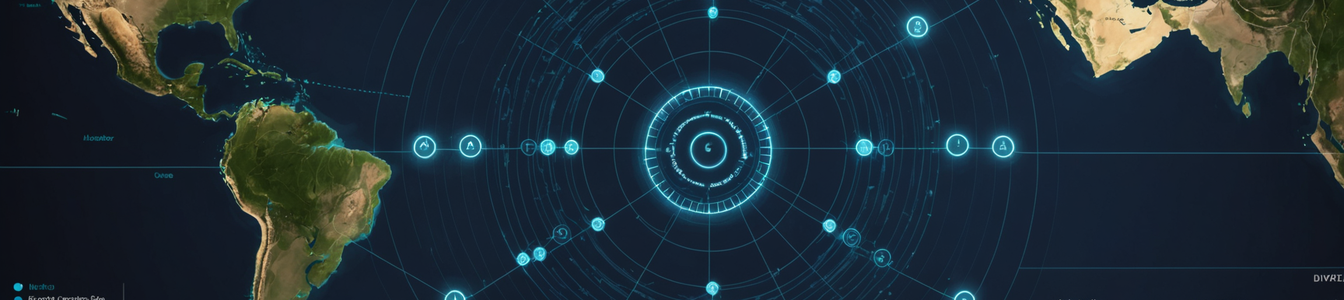
A new front has opened in the convergence of cybersecurity and global power dynamics. The U.S. military's establishment of a digital permit system to enforce a blockade in the Strait of Hormuz, Gulf of Oman, and Arabian Sea is not merely a naval operation; it is a live, large-scale deployment of geopolitical Identity and Access Management (IAM). This move transforms one of the world's most critical maritime chokepoints—through which approximately 20% of global oil consumption passes—into a digitally governed domain where access is predicated on digital authorization.
The System: A Real-World Authorization Protocol
According to notifications issued to the global maritime community, the U.S. has declared that the blockade applies universally. No vessel, regardless of flag or cargo, will be permitted passage without first obtaining a valid digital permit. This creates a stark, real-world analogy to enterprise IAM: the Strait is the "resource," ships are the "users" or "entities," and the U.S. military acts as the centralized "policy enforcement point" and "authorization server." The permit itself functions as a time-bound, revocable access token, likely tied to a vessel's unique identifiers, such as its Maritime Mobile Service Identity (MMSI) number or International Maritime Organization (IMO) number.
Cybersecurity Implications and Critical Infrastructure Parallels
For cybersecurity architects and critical infrastructure defenders, this scenario is a treasure trove of implications. First, it demonstrates the application of Zero Trust principles at a geopolitical level: "never trust, always verify." Every ship is untrusted until it presents a valid credential. The system must perform real-time authentication and authorization checks in a high-stakes, physically dangerous environment.
Second, it raises immediate questions about the system's attack surface. How is the permit application portal secured? What encryption and authentication protocols protect the transmission of permit data? The threat model is immense, encompassing state-sponsored actors attempting to mass-forge permits, hacktivists aiming to disrupt global trade, or criminals seeking to spoof authorized vessels for illicit activities. A successful distributed denial-of-service (DDoS) attack on the permit server could functionally halt legal maritime traffic, creating economic chaos without a single shot being fired.
Third, the integration with existing systems is crucial. The enforcement mechanism likely relies on Automatic Identification System (AIS) data to track vessels and cross-reference them with the permit database. However, AIS is notoriously vulnerable to spoofing and manipulation. This creates a classic identity correlation problem: ensuring the digital identity (the permit) is irrevocably bound to the correct physical asset (the specific ship). Failure here could lead to false authorizations or the wrongful interception of compliant vessels.
The New Frontier: Geopolitical IAM
This blockade represents the maturation of "Geopolitical IAM"—the use of digital access control systems to enforce territorial, economic, or security policy across physical domains. The lessons learned here are directly transferable. Imagine a national government requiring a dynamic digital credential for any device to connect to the power grid, or for any transaction to access a central bank digital currency network. The scale, latency, and assurance requirements are comparable.
The U.S. military's system must adjudicate requests from thousands of global entities, make near-instantaneous pass/fail decisions, and maintain an immutable audit log for accountability and forensics. These are the exact challenges faced by enterprises rolling out cloud-native, policy-based authorization like Open Policy Agent (OPA) or fine-grained AWS IAM policies, but with the added complexity of kinetic consequences.
Challenges and the Road Ahead
The operational success of this digital blockade hinges on cybersecurity fundamentals. The credential issuance system must be resilient. The policy engine defining who gets a permit must be unambiguous and tamper-proof. The communication channels with vessels must be secure and available. Any vulnerability could be exploited to undermine the geopolitical objective, turning a tool of control into a vector for escalation.
Furthermore, this sets a precedent. Other nations may deploy similar digital authorization regimes in contested waterways, creating a patchwork of competing IAM systems that ships must navigate. This could lead to a new form of "protocol conflict," where compliance with one system may violate the rules of another.
For the cybersecurity community, the Strait of Hormuz has become an open-air laboratory. Observing how this system withstands technical and adversarial pressure will provide invaluable insights into building the next generation of access control systems for our most critical infrastructure. The message is clear: in the 21st century, control is increasingly exercised not just through gates and guards, but through bits and authentication protocols.
Comentarios 0
Comentando como:
¡Únete a la conversación!
Sé el primero en compartir tu opinión sobre este artículo.
¡Inicia la conversación!
Sé el primero en comentar este artículo.