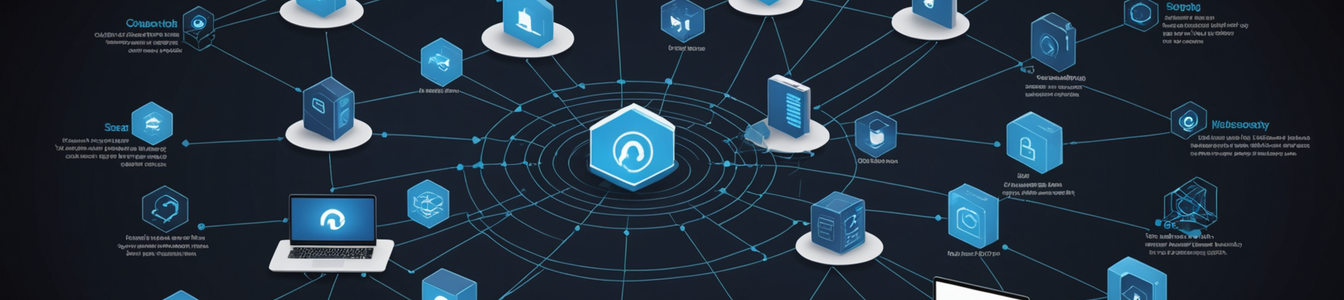
The smart home ecosystem is undergoing its most significant transformation since the advent of connected devices, with the Matter protocol emerging as the new battleground for interoperability and security. As manufacturers race to adopt this unified standard, cybersecurity professionals are grappling with both the promises and perils of this new connectivity paradigm.
Quectel's recent announcement of advanced Matter over Thread modules represents a critical development in this space. These modules enable manufacturers to create devices that communicate seamlessly across different ecosystems while leveraging Thread's mesh networking capabilities. From a security perspective, Matter's built-in encryption and authentication protocols provide a foundation for secure communications, but the implementation complexity introduces new attack vectors that security teams must address.
The interoperability promised by Matter creates both opportunities and challenges for home security. On one hand, standardized security protocols reduce the fragmentation that has plagued smart home security for years. On the other, the increased connectivity between devices means that a vulnerability in one device could potentially compromise an entire ecosystem. This interconnectedness demands a more holistic approach to smart home security than previously required.
Homey's Matter Bridge App exemplifies the bridge solutions emerging to connect legacy devices with Matter-compatible ecosystems. While these bridges enable older devices to participate in the Matter ecosystem, they also create potential security gaps. Bridge solutions often require translating between different security protocols, creating points where security could be weakened or bypassed entirely. Security professionals must scrutinize these translation layers for potential vulnerabilities.
The expansion of smart devices into non-traditional categories, including kitchen appliances like smart pizza ovens and specialized environmental sensors, significantly broadens the attack surface. These devices often have limited computing resources, making robust security implementation challenging. Furthermore, consumers may not apply the same security scrutiny to a smart oven as they would to a security camera, creating potential blind spots in home network security.
Matter's security model relies on several key components: device attestation, secure commissioning, and encrypted communications. Device attestation ensures that only certified devices can join the network, while secure commissioning prevents unauthorized devices from being added. The encryption protocols protect data in transit between devices. However, the effectiveness of these security measures depends entirely on proper implementation by device manufacturers.
For cybersecurity professionals, the Matter protocol introduces several critical considerations. The distributed nature of Thread networks means that security must be maintained across multiple hops in the mesh. The commissioning process, while designed to be secure, relies on user interaction that could be vulnerable to social engineering attacks. Additionally, the long lifespan expected of many smart home devices creates challenges for security updates and vulnerability management over time.
The certification process for Matter devices provides some assurance of security compliance, but it cannot guarantee absolute security. Security teams must assume that vulnerabilities will be discovered post-deployment and plan accordingly. This includes implementing network segmentation, monitoring for anomalous behavior, and maintaining an inventory of all connected devices with their security postures.
As the smart home market continues to evolve, the cybersecurity implications of Matter adoption will become increasingly important. Security professionals must stay informed about emerging threats specific to Matter implementations and develop strategies for securing these increasingly complex ecosystems. The promise of interoperability must not come at the cost of security, and the cybersecurity community has a critical role to play in ensuring that balance is maintained.
Comentarios 0
Comentando como:
¡Únete a la conversación!
Sé el primero en compartir tu opinión sobre este artículo.
¡Inicia la conversación!
Sé el primero en comentar este artículo.