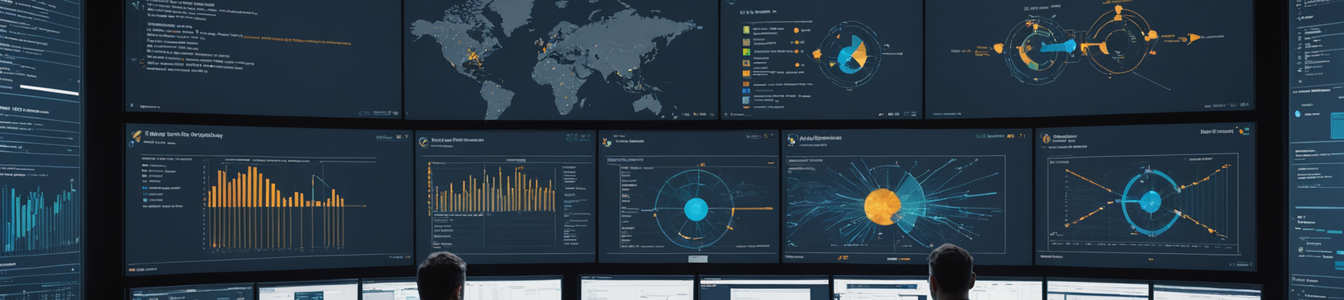
The cybersecurity industry is undergoing a significant transformation as Managed Detection and Response (MDR) services demonstrate clear advantages over traditional Security Operations Center (SOC) models. This shift represents more than just a change in service delivery—it's a fundamental rethinking of how organizations approach threat detection, response, and overall security operations.
Traditional SOC models, while once considered the gold standard for security monitoring, are increasingly showing their limitations in today's complex threat landscape. These legacy approaches often struggle with alert fatigue, high operational costs, and the challenge of maintaining skilled security personnel. The traditional SOC typically operates on a 24/7 monitoring basis but frequently lacks the specialized expertise and advanced technologies needed to effectively combat modern cyber threats.
MDR providers are addressing these gaps through several key advantages. First, they bring specialized threat hunting capabilities that go beyond simple alert monitoring. Rather than waiting for alerts to trigger, MDR teams proactively search for indicators of compromise and subtle threat patterns that might otherwise go unnoticed. This proactive approach significantly reduces mean time to detection (MTTD) and mean time to response (MTTR), critical metrics in cybersecurity effectiveness.
Recent industry developments highlight how MDR providers are innovating to overcome traditional challenges. New solutions like advanced data ingestion platforms are enabling more efficient processing of security telemetry while controlling costs. These technological advancements allow MDR services to analyze larger volumes of data with greater precision, identifying threats that would typically evade traditional security controls.
The certification landscape further validates the maturity of MDR offerings. Leading providers are achieving comprehensive security certifications including ISO/IEC 27001:2022, cloud security standards, and SOC 2 Type 2 compliance. These certifications demonstrate that MDR providers maintain rigorous security controls and operational excellence, giving organizations confidence in outsourcing their security operations.
Cost efficiency represents another significant advantage of MDR over traditional SOC models. Building and maintaining an in-house SOC requires substantial capital investment in technology, infrastructure, and personnel. MDR services, by contrast, offer predictable operational expenses while providing access to specialized expertise and advanced technologies that would be cost-prohibitive for most organizations to develop internally.
The scalability of MDR services also addresses a critical challenge faced by traditional SOCs. As organizations grow and their attack surfaces expand, MDR providers can seamlessly scale security coverage without the delays and costs associated with expanding internal teams. This flexibility is particularly valuable in today's dynamic business environment, where digital transformation initiatives constantly reshape the security perimeter.
Integration capabilities represent another area where MDR services excel. Modern MDR providers leverage advanced security orchestration, automation, and response (SOAR) technologies to integrate with existing security infrastructure. This allows organizations to enhance their current investments while benefiting from MDR expertise, creating a hybrid approach that maximizes security effectiveness.
Looking forward, the evolution of MDR services continues to accelerate. Artificial intelligence and machine learning are being increasingly integrated into MDR offerings, enhancing threat detection capabilities and reducing false positives. These technological advancements, combined with the human expertise of security analysts, create a powerful defense against sophisticated cyber threats.
For organizations considering their security operations strategy, the evidence increasingly favors MDR over traditional SOC models. The combination of specialized expertise, advanced technology, cost efficiency, and scalability makes MDR services the logical choice for organizations seeking to enhance their security posture in an increasingly challenging threat landscape.
As cyber threats continue to evolve in sophistication and frequency, the ability to detect and respond quickly becomes paramount. MDR services, with their proactive approach and specialized capabilities, are well-positioned to meet these challenges head-on, providing organizations with the security assurance they need in today's digital economy.
Comentarios 0
Comentando como:
¡Únete a la conversación!
Sé el primero en compartir tu opinión sobre este artículo.
¡Inicia la conversación!
Sé el primero en comentar este artículo.