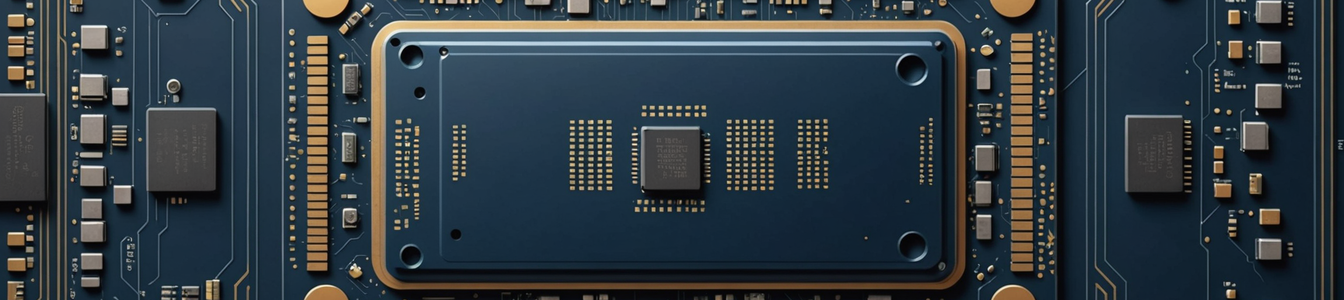
A groundbreaking discovery by security analysts at Ledger has sent shockwaves through the mobile and hardware security communities. They have identified a fundamental, unpatchable vulnerability within the MediaTek Dimensity 7300 system-on-chip (SoC), a processor powering a wide range of mid-to-high-tier Android smartphones. This flaw represents a paradigm shift in mobile threat vectors, moving from software exploits to a direct, physical assault on the silicon itself.
The core of the issue lies in the chip's internal security architecture. Modern SoCs employ a secure boot chain—a series of cryptographic checks that ensure each piece of code loaded during startup is authentic and untampered. The MediaTek Dimensity 7300's implementation of this chain contains a critical weakness. Using a technique known as Electromagnetic Fault Injection (EMFI), attackers can precisely manipulate the chip's electrical environment.
By directing a controlled electromagnetic pulse at a specific region of the chip package during a precise nanosecond of the boot sequence, an attacker can induce a temporary computational error. This 'glitch' can be weaponized to skip or bypass a vital signature verification step in the secure boot process. Successfully executed, this allows the attacker to load and execute unsigned, malicious code with the highest level of privilege from the very first moments of the device's operation.
The implications of this bypass are catastrophic for device integrity. An attacker with brief physical access—measured in minutes—can achieve permanent, root-level compromise. They can install firmware-level backdoors that survive factory resets, extract cryptographic secrets (including those protecting cryptocurrency wallets and enterprise credentials), and fundamentally alter the device's operating system to be undetectably malicious.
What makes this vulnerability particularly alarming is its permanence. As a silicon-level defect, it is etched into the physical chip. No software update from MediaTek, smartphone OEMs, or the Android ecosystem can remediate it. The vulnerability is a permanent fixture in every Dimensity 7300 chip that has left the factory. Mitigation, therefore, shifts entirely to physical security and threat detection.
This discovery by Ledger's research team, known for its work on hardware security modules (HSMs) and secure elements, highlights a critical escalation in offensive capabilities. EMFI equipment, once confined to well-funded state laboratories, is becoming more accessible. The demonstration that a mass-market consumer chip is susceptible to such an attack lowers the barrier for sophisticated adversaries targeting high-value individuals, executives, or anyone with sensitive digital assets on their phones.
For the cybersecurity community, this serves as a stark reminder. The industry's heavy reliance on 'secure boot' as a root-of-trust must be re-evaluated in the context of physical attack vectors. Defense-in-depth strategies must now more rigorously incorporate physical tamper detection, runtime integrity monitoring, and the use of dedicated, isolated secure elements for protecting ultra-sensitive keys—a practice long standard in the banking and hardware wallet sectors that may need to migrate to premium mobile devices.
For consumers and enterprises using devices powered by the affected chip, the path forward is one of heightened awareness. While mass exploitation remains complex, the threat is real for targeted attacks. Organizations should consider this vulnerability in their mobile device management (MDM) and threat models, potentially restricting devices with this SoC from accessing crown-jewel assets until manufacturers can provide hardware-based mitigations in future chip revisions.
Comentarios 0
Comentando como:
¡Únete a la conversación!
Sé el primero en compartir tu opinión sobre este artículo.
¡Inicia la conversación!
Sé el primero en comentar este artículo.