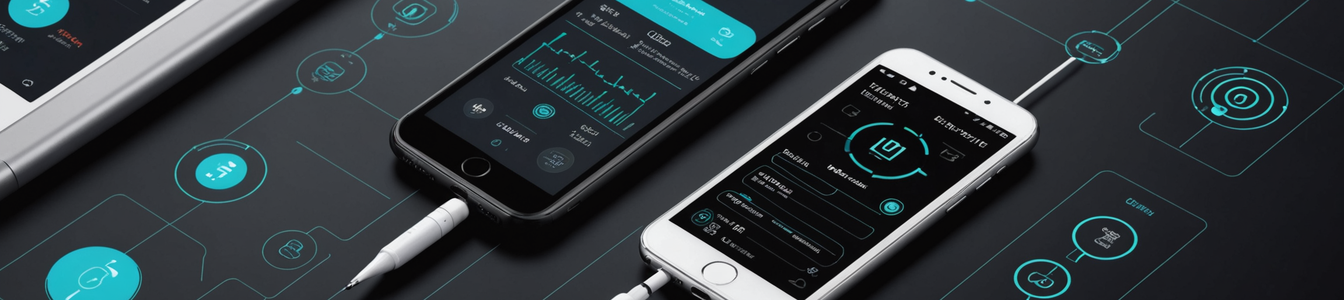
The U.S. Food and Drug Administration's (FDA) recent clearance of Medtronic's MiniMed Go Smart MDI system marks a significant milestone in the evolution of connected healthcare. This system represents a quintessential case study in the "Medical IoT Merger"—the seamless integration of a medical device (insulin pen), a continuous glucose monitor (Abbott's Instinct sensor), and a smartphone application for dose calculation and logging. While heralded for its potential to simplify diabetes management, this convergence creates a fragile, multi-component digital patient whose security is only as strong as its weakest link, presenting a critical new frontier for cybersecurity professionals.
Deconstructing the Converged Ecosystem: A Hacker's Playground
The MiniMed Go system is not a single device but an ecosystem. The Abbott Instinct sensor collects real-time glucose data, which is transmitted to the Medtronic Go mobile app. The app then calculates recommended insulin doses based on this data, which the patient administers via a connected insulin pen. This data flow—sensor to app, app to user, user to pen—creates multiple attack vectors. Each wireless communication channel (likely Bluetooth Low Energy) is a potential point of interception or manipulation. The smartphone app itself, residing on a consumer-grade operating system constantly exposed to threats, becomes a high-value target. A compromised app could deliver maliciously calculated insulin doses, directly endangering patient life. The security of this entire chain depends on the implementation of robust encryption, secure device pairing, firmware integrity checks, and app hardening—areas where medical device manufacturers have historically lagged behind the cybersecurity industry.
Beyond the Device: The Expanding Business Attack Surface
The cybersecurity implications extend beyond the clinical user. The strategic hire of Mark Duarte, a seasoned business development director, by Interlink Electronics—a company specializing in human-machine interface solutions—signals aggressive market expansion into integrated healthcare systems. As more firms rush to create connected medical solutions, the supply chain complexity increases. Each new vendor, software library, or cloud integration point introduces potential vulnerabilities. The focus on business development often outpaces parallel investment in security-by-design, creating products that are market-ready but not security-resilient. Furthermore, the push for interoperability, while clinically beneficial, forces open proprietary protocols and creates dependencies on third-party components whose security posture may be unknown or unmanaged.
The Regulatory Gap: FDA Clearance ≠ Cybersecurity Certification
A critical misconception in the market is that FDA clearance implies robust cybersecurity. The FDA's regulatory pathway primarily evaluates safety and efficacy from a clinical perspective. While the agency has issued guidance on cybersecurity for medical devices, its enforcement and the depth of technical review are not equivalent to a comprehensive security audit. A device can be cleared for market while containing known vulnerable software components or employing weak cryptographic standards. The responsibility thus falls on healthcare delivery organizations and patients to assess and manage the cyber risks of these devices post-procurement—a task for which they are often ill-equipped. This gap creates a dangerous environment where life-critical systems are deployed at scale with inherent, unmitigated vulnerabilities.
The Urgent Need for a Specialized Security Framework
The convergence seen in the MiniMed Go system is not an anomaly but the new standard. The cybersecurity community must respond with equal innovation. This requires moving beyond traditional IT security models. Medical IoT demands a framework that considers:
- Life-Critical Impact: Risk models where consequences include direct physical harm or death.
- Constrained Device Security: Implementing strong security on devices with limited processing power and battery life.
- Ecosystem-Wide Vigilance: Monitoring not just individual devices but the entire data flow and interactions between sensors, apps, gateways, and cloud platforms.
- Patient-Centric Response: Developing incident response plans that prioritize patient safety over system availability or data confidentiality.
Initiatives like the large-scale AI and coding training programs emerging from institutions (such as the reported Madras University program) are a step in the right direction, but they must be channeled into specialized medical device security tracks. The industry needs penetration testers who understand insulin pharmacokinetics and security architects who can design for both HIPAA compliance and resilience against life-threatening attacks.
Conclusion: Securing the Digital Patient
The approval of the MiniMed Go system is a wake-up call. The Medical IoT Merger offers tremendous benefits but builds a digital house of cards if security is an afterthought. Cybersecurity teams must engage early with clinical engineering and procurement departments. Researchers need to focus on threat modeling these converged systems. Manufacturers must adopt a "security-first" mandate, transparently disclosing vulnerabilities and providing timely patches. As patients become more digitally connected, their physical well-being becomes inextricably linked to the digital realm. Protecting them requires a fundamental shift in how we approach the cybersecurity of everything that touches human health.
Comentarios 0
Comentando como:
¡Únete a la conversación!
Sé el primero en compartir tu opinión sobre este artículo.
¡Inicia la conversación!
Sé el primero en comentar este artículo.