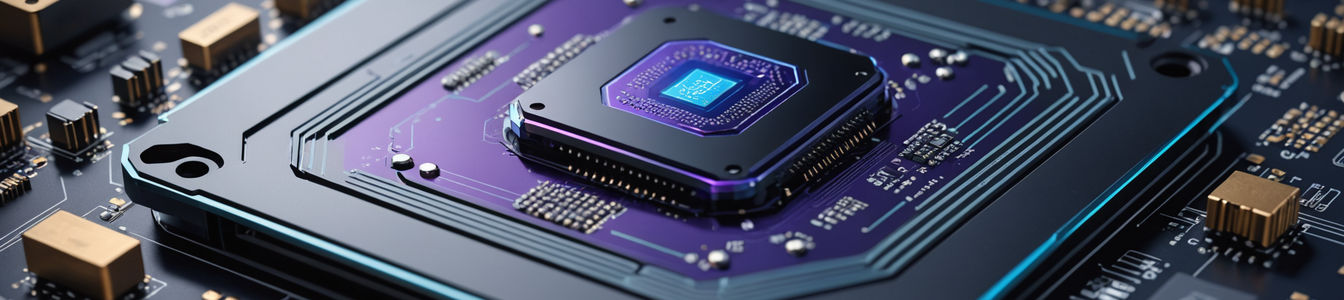
The strategic landscape of artificial intelligence infrastructure is undergoing a seismic shift, with profound implications for global cybersecurity and supply chain resilience. Microsoft's unveiling of its second-generation Maia 200 AI accelerator chip represents not merely a product launch, but a calculated offensive in the escalating 'Chip Wars' aimed at dismantling Nvidia's near-monopoly on advanced AI hardware. This move, coupled with a critical exclusive partnership with memory giant SK hynix, signals a fundamental reordering of power dynamics that will redefine security postures, vendor risk assessments, and national tech sovereignty strategies for years to come.
The Maia 200 Offensive: Challenging the Hardware-Software Fortress
Microsoft's Maia 200 is engineered specifically to train and run large language models like those underpinning its Azure OpenAI services. The chip's architecture is a direct challenge to Nvidia's H100 and upcoming Blackwell GPUs. However, the battle extends far beyond silicon. Microsoft's most audacious gambit is its simultaneous assault on Nvidia's formidable software moat—the CUDA ecosystem. CUDA has become the de facto programming model for AI developers, creating immense lock-in. By developing and promoting its own software stack and tools designed to work seamlessly with Maia (and potentially other non-Nvidia hardware), Microsoft aims to fracture this dependency. For cybersecurity leaders, this software diversification is a double-edged sword. It reduces the systemic risk of a single-point software vulnerability affecting the global AI pipeline but simultaneously expands the attack surface, requiring security teams to validate and harden multiple new toolchains and frameworks.
The SK hynix Alliance: Reshaping Fragile Supply Chains
Perhaps the most strategically significant revelation is Microsoft's selection of SK hynix as the exclusive supplier of high-bandwidth memory (HBM) for the Maia 200. HBM is a critical, supply-constrained component for high-performance AI chips. This exclusive deal secures a vital pipeline for Microsoft but also redirects a key portion of the world's advanced HBM production away from other players, including Nvidia. This move has immediate cybersecurity ramifications:
- Supply Chain Concentration Risk: It creates a new critical chokepoint. A cyber-attack, geopolitical disruption, or technical failure at SK hynix could directly impair production of Maia 200, impacting Azure AI capabilities for thousands of enterprises globally.
- Geopolitical Realignment: It strengthens the US-South Korea tech axis in the face of regional tensions, influencing where and how sensitive AI hardware is built. Security teams must now map and monitor a more complex, geopolitically charged supply web.
- Vendor Security Scrutiny: Microsoft and its clients will inherit the cybersecurity posture of SK hynix's manufacturing and design processes. Ensuring the integrity of the HBM supply chain against hardware-level tampering (e.g., hardware Trojans) becomes a paramount shared responsibility.
The Ripple Effect: ASML and Foundational Security
The chip war's effects cascade down to foundational equipment providers. Companies like ASML, which produces the extreme ultraviolet (EUV) lithography machines essential for manufacturing cutting-edge chips, are experiencing soaring demand. ASML's machinery is itself a pinnacle of complexity and a high-value target for nation-state espionage and sabotage. Protecting the intellectual property and operational integrity of these 'toolmakers' is now a national security imperative for multiple countries. A successful cyber-operation against ASML could slow the entire industry's progress, making the security of these second- and third-tier suppliers a top-tier concern for everyone dependent on advanced semiconductors.
Cybersecurity Implications: A New Threat Landscape
For Chief Information Security Officers (CISOs) and security architects, the diversification of AI hardware mandates a strategic rethink:
- Firmware & Hardware Security: Each new chip architecture, like Maia 200, comes with its own firmware, management controllers, and potential proprietary interconnects. These represent new, less-audited codebases and hardware attack surfaces that must be secured.
- Multi-Vendor Security Posture Management: Organizations running AI workloads across hybrid environments (e.g., Nvidia on-premise, Maia on Azure) will need unified security policies that account for different hardware vulnerabilities, patch cycles, and management interfaces.
- Software Supply Chain for AI: The competition to provide the best AI development stack will lead to rapid innovation but also potentially rushed code. Security teams must integrate software composition analysis and vulnerability scanning deeply into the AI model development lifecycle, regardless of the underlying hardware.
- Data Sovereignty & Compliance: As AI hardware choices become tied to specific cloud providers and their geographic data centers, ensuring compliance with data residency regulations becomes more complex, influencing hardware selection itself.
Conclusion: Beyond Performance, Towards Resilience
The launch of the Maia 200 is more than a bid for better performance or cost savings. It is a cornerstone in building a more resilient, diversified, and secure global AI infrastructure. While Nvidia's dominance is far from over, the emergence of credible alternatives begins to mitigate the catastrophic risk of a single-vendor ecosystem failure—whether from a pervasive security flaw, a geopolitical blockade, or a natural disaster.
The role of cybersecurity professionals is evolving in lockstep. They are no longer just guardians of networks and endpoints but essential advisors on strategic technology bets, supply chain risk analysts, and architects of resilient hybrid AI infrastructures. The Chip Wars are not just about who makes the fastest processor; they are about who builds the most secure, reliable, and sovereign foundation for the intelligent future. In this high-stakes arena, security is not a feature—it is the bedrock of competition.
Comentarios 0
Comentando como:
¡Únete a la conversación!
Sé el primero en compartir tu opinión sobre este artículo.
¡Inicia la conversación!
Sé el primero en comentar este artículo.