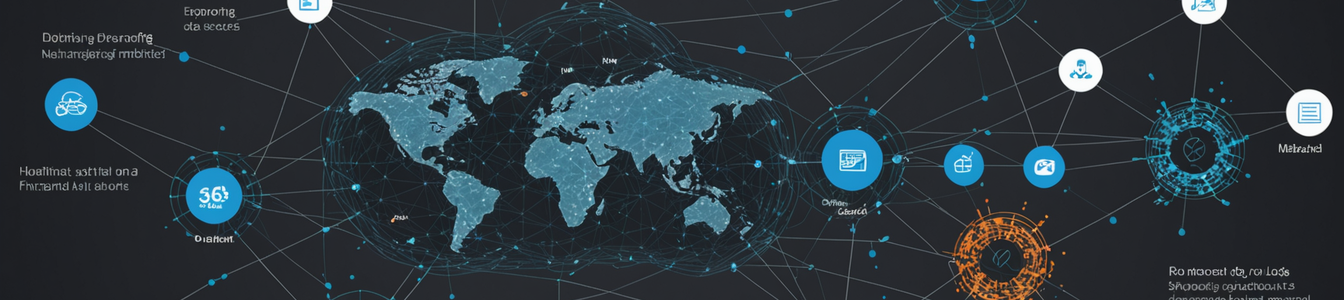
A new wave of AI-driven phishing attacks has reached industrial scale, compromising Microsoft accounts across 344 organizations worldwide through a sophisticated campaign that leverages legitimate no-code platforms to bypass traditional security measures. This represents a fundamental shift in how cybercriminals orchestrate credential theft, moving from amateurish operations to systematic, large-scale attacks using commercially available tools.
The campaign, detected by cybersecurity researchers, utilizes advanced social engineering techniques combined with artificial intelligence to craft convincing phishing emails that appear to originate from trusted sources within organizations. These emails contain links directing users to fake Microsoft login pages hosted on legitimate no-code development platforms, particularly Bubble.io, which allows attackers to create professional-looking websites without writing a single line of code.
The No-Code Attack Infrastructure
The exploitation of platforms like Bubble represents a significant evolution in phishing infrastructure. These legitimate services provide attackers with several advantages: they're trusted by email security filters, offer reliable hosting with legitimate SSL certificates, and enable rapid deployment of convincing phishing pages. The attackers create clones of Microsoft's official login portals that are virtually indistinguishable from the real sites to untrained users.
Researchers have observed that the phishing pages are meticulously designed to capture Microsoft 365 credentials, including those for Outlook, SharePoint, Teams, and other enterprise services. Once credentials are entered, they're immediately exfiltrated to attacker-controlled servers while victims are redirected to legitimate Microsoft services to avoid raising suspicion.
Industrial-Scale Operations
What distinguishes this campaign from previous phishing operations is its industrial character. Rather than targeting specific organizations, the attackers have created a phishing "factory" capable of generating thousands of customized phishing pages with minimal effort. The use of AI helps automate the creation of convincing email content and the customization of phishing pages to match specific organizational contexts.
Security analysts note that the campaign has affected organizations across multiple sectors, including finance, healthcare, manufacturing, and government agencies. The global reach and scale suggest a well-resourced threat actor or group operating with business-like efficiency.
Technical Sophistication and Evasion Techniques
The attackers employ several advanced techniques to evade detection:
- Domain Reputation Manipulation: By using subdomains of legitimate no-code platforms, the phishing sites benefit from the good reputation of the parent domain.
- Dynamic Content Generation: The phishing pages adapt based on the victim's geographic location, language preferences, and referring source.
- Multi-Stage Authentication Simulation: Some attacks simulate multi-factor authentication flows to capture additional security credentials.
- Timed Redirections: After credential capture, victims are seamlessly redirected to legitimate services with appropriate delay mechanisms.
Impact on Windows Users and Organizations
While the campaign primarily targets organizational credentials, individual Windows users are also at risk through similar attack vectors. The stolen credentials provide attackers with access to sensitive corporate data, email communications, and potentially broader network access through connected services.
The compromise of Microsoft accounts is particularly concerning given the central role these credentials play in modern enterprise environments. A single compromised account can provide access to email, document repositories, collaboration tools, and potentially serve as a foothold for lateral movement within networks.
Defensive Recommendations
Security teams should implement several defensive measures:
- Enhanced Email Filtering: Deploy advanced email security solutions that analyze not just links but also the context and behavior of email communications.
- User Awareness Training: Conduct regular training focusing on identifying sophisticated phishing attempts, particularly those using legitimate platforms.
- Multi-Factor Authentication Enforcement: Require MFA for all Microsoft 365 accounts, preferably using phishing-resistant methods like FIDO2 security keys.
- Domain Monitoring: Implement tools to detect unauthorized use of organizational branding in external domains.
- Access Controls: Apply principle of least privilege and monitor for anomalous sign-in patterns.
The Future of Industrialized Phishing
This campaign represents a troubling trend toward the industrialization of cybercrime. The combination of legitimate tools, AI automation, and systematic operations lowers the barrier to entry for sophisticated attacks while increasing their potential scale. As no-code platforms continue to grow in popularity, security professionals must adapt their defensive strategies to address this new attack surface.
The cybersecurity community is calling for increased collaboration with platform providers to develop better detection mechanisms for malicious use of their services while maintaining the legitimate benefits these tools provide to developers and businesses.
Organizations must recognize that traditional email security measures are no longer sufficient against these advanced attacks. A layered security approach combining technical controls, user education, and continuous monitoring is essential to defend against the evolving threat of industrialized phishing operations.
Comentarios 0
Comentando como:
¡Únete a la conversación!
Sé el primero en compartir tu opinión sobre este artículo.
¡Inicia la conversación!
Sé el primero en comentar este artículo.