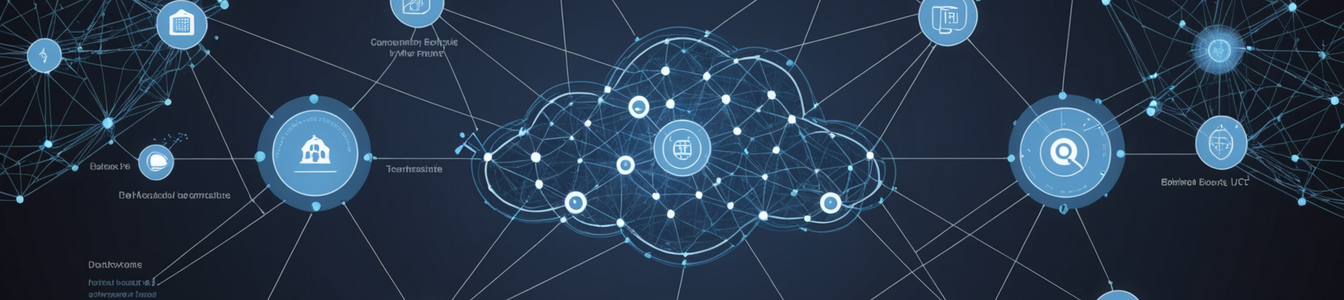
The landscape of Network Access Control (NAC) is undergoing its most significant transformation in decades, driven by the dual forces of cloud migration and Internet of Things (IoT) expansion. Traditional NAC solutions, designed for perimeter-based network security, are proving increasingly inadequate in today's distributed enterprise environments.
As organizations accelerate their cloud adoption, the concept of a defined network perimeter has become obsolete. Modern enterprises operate across hybrid environments spanning on-premises infrastructure, multiple cloud platforms, and remote workforce connections. This shift necessitates a fundamental rethinking of how network access is controlled and managed.
The evolution of NAC systems now focuses on cloud-native architectures that can seamlessly integrate with platforms like AWS, Azure, and Google Cloud. These next-generation solutions provide consistent security policies across all environments, regardless of where users or devices connect. The integration extends beyond traditional network boundaries to include SaaS applications, where built-in security features are becoming increasingly sophisticated.
IoT security represents another critical driver for NAC evolution. The proliferation of connected devices—from industrial sensors to smart office equipment—has created unprecedented attack surfaces. Modern NAC solutions incorporate specialized IoT profiling capabilities that automatically identify device types, assess their security posture, and enforce appropriate access policies. This granular control is essential for preventing compromised IoT devices from becoming entry points for broader network breaches.
Behavioral analytics and machine learning have become integral components of advanced NAC platforms. These technologies enable dynamic risk assessment based on user behavior, device health, and contextual factors. Instead of static access rules, modern systems can adjust permissions in real-time based on detected anomalies or changing threat levels.
The human element remains crucial in this evolving landscape. While technology provides the tools, security awareness and proper procedures form the foundation of effective network security. Organizations must balance automated controls with comprehensive training to create what security professionals call the 'human firewall'—employees who understand and actively participate in maintaining security protocols.
Recent developments in the NAC market show increased emphasis on zero-trust principles, where access decisions are based on continuous verification rather than initial authentication. This approach aligns perfectly with the needs of modern distributed networks, where trust cannot be assumed based on network location alone.
The future of NAC lies in its ability to become more adaptive, intelligent, and integrated. As networks continue to evolve, access control solutions must keep pace with emerging technologies while maintaining the security and compliance requirements that enterprises depend on.
Comentarios 0
Comentando como:
¡Únete a la conversación!
Sé el primero en compartir tu opinión sobre este artículo.
¡Inicia la conversación!
Sé el primero en comentar este artículo.