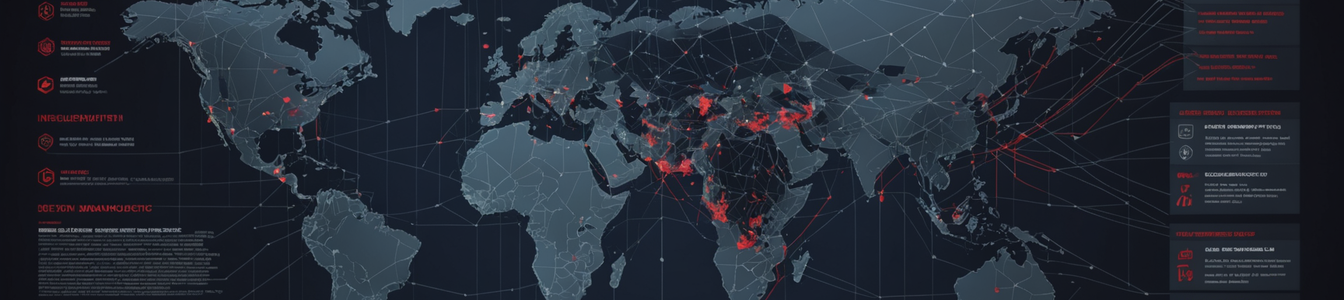
The cybersecurity landscape is facing an unprecedented corporate impersonation crisis as sophisticated threat actors weaponize trusted service brands in highly coordinated phishing campaigns. Recent investigations reveal alarming trends in how major providers are being systematically targeted and exploited to compromise both enterprise networks and individual consumers.
Security analysts have documented sophisticated attacks leveraging the trusted reputation of web services giant Aruba, where attackers create convincing replica interfaces and communications that mimic legitimate corporate messaging. These campaigns demonstrate advanced social engineering techniques combined with technical precision, making detection increasingly challenging for both automated security systems and human users.
The Aruba impersonation scheme represents a particularly concerning development in corporate-targeted phishing. Attackers have developed comprehensive fake portals that perfectly mirror legitimate Aruba authentication pages, complete with proper branding, SSL certificates, and security indicators that would typically reassure cautious users. The sophistication extends to email communications that replicate corporate templates and use language consistent with legitimate IT security notifications.
Parallel investigations have uncovered similar tactics targeting streaming giant Netflix, where attackers employ psychological shock tactics to prompt immediate action from victims. These campaigns use fake security alerts about account suspensions or unauthorized access attempts, creating artificial urgency that overrides normal caution. The Netflix phishing emails often include threats of immediate service termination unless users "verify" their account information through provided links.
What makes these new campaigns particularly dangerous is their multi-layered approach to deception. Beyond simple brand imitation, attackers incorporate current events, seasonal trends, and legitimate security concerns into their narratives. They monitor actual corporate communications and security advisories to time their attacks for maximum credibility.
The technical execution shows significant advancement from previous phishing waves. Attackers now use domain generation algorithms to create numerous convincing URLs, implement proper TLS encryption on their fake sites, and employ anti-detection techniques that bypass traditional email security filters. Some campaigns even incorporate two-factor authentication bypass techniques by creating real-time credential harvesting portals.
Corporate security teams face mounting challenges in defending against these attacks. The blurred lines between legitimate corporate communications and sophisticated fakes create confusion among employees, particularly in large organizations where IT departments regularly send legitimate security notifications. The problem is compounded by the increasing sophistication of mobile-optimized phishing sites that appear identical to genuine applications on smartphone screens.
Financial institutions and enterprise service providers appear to be primary targets, but the collateral damage extends to all organizations whose employees use these services. A single compromised corporate credential can provide initial access to enterprise networks, leading to potential data breaches, ransomware attacks, or intellectual property theft.
Defense strategies must evolve to address this new threat landscape. Security experts recommend implementing advanced email authentication protocols like DMARC, DKIM, and SPF to verify legitimate corporate communications. Multi-factor authentication remains critical, though organizations should be aware that some sophisticated attacks now attempt to intercept MFA tokens.
Employee awareness training needs to move beyond basic phishing recognition to address these advanced impersonation techniques. Simulated phishing exercises should include realistic brand impersonation scenarios, and security teams should establish clear communication protocols for verifying suspicious messages.
Technical controls should include advanced threat protection solutions that analyze behavioral patterns and use machine learning to identify subtle indicators of compromise. Web filtering solutions should be configured to block newly registered domains that mimic trusted brands, and endpoint protection should include browser security extensions that warn users about potential phishing sites.
The economic impact of these sophisticated impersonation campaigns is substantial, with losses ranging from direct financial theft to reputational damage for the impersonated brands. As attackers continue to refine their techniques, the cybersecurity community must collaborate on sharing threat intelligence and developing more robust authentication frameworks.
Looking forward, the convergence of artificial intelligence and social engineering presents both challenges and opportunities. While AI could enable even more convincing impersonation attacks, it also offers potential for developing advanced detection systems that can identify subtle patterns indicative of fraudulent communications.
Organizations must adopt a assume-breach mentality and implement defense-in-depth strategies that combine technological controls with comprehensive user education. Only through this multi-faceted approach can businesses hope to stay ahead of the increasingly sophisticated corporate impersonation threat.
Comentarios 0
Comentando como:
¡Únete a la conversación!
Sé el primero en compartir tu opinión sobre este artículo.
¡Inicia la conversación!
Sé el primero en comentar este artículo.