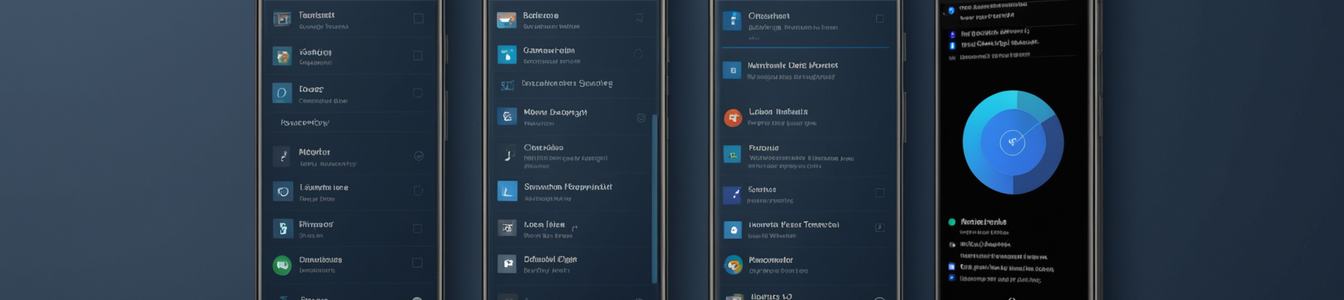
The mobile technology landscape is on the cusp of a radical transformation with the announcement of the NexPhone, a device engineered to run three full-fledged operating systems—Android, Windows 11, and Linux—concurrently. Powered by a Qualcomm Snapdragon 8cx Gen 4 chipset, it promises desktop-level functionality in a smartphone form factor. While the technical achievement is notable, the cybersecurity community is grappling with the profound and uncharted risks inherent in such a multi-OS architecture. This convergence doesn't just blend features; it merges three entirely separate attack surfaces, creating a potent new threat vector that challenges existing security paradigms.
Architectural Complexity and the Hypervisor Risk
At the heart of the NexPhone's functionality lies a hypervisor or a sophisticated containerization layer that allows the three operating systems to share the device's hardware resources. This abstraction layer itself becomes a critical single point of failure. A vulnerability in the hypervisor could grant an attacker overarching control of the device, bypassing the security boundaries of all three guest OSes. Furthermore, the ARM-based architecture running a full x86-64-emulated Windows 11 environment adds another layer of complexity and potential exploitability, as translation and compatibility layers have historically been rich targets for security researchers and malicious actors alike.
Cross-Platform Contamination and Vulnerability Chaining
The most significant threat stems from the potential for cross-platform contamination. Each OS—Android, Windows, and Linux—has a unique kernel, security model, permission system, and patch cadence. A vulnerability in one environment could be leveraged as a pivot point to attack the others. Imagine a malicious Android application exploiting a kernel flaw to break out of its sandbox, gain control of the hypervisor, and then deploy a Windows ransomware payload or exfiltrate data from the Linux partition. The shared hardware, including memory, storage, and network interfaces, provides potential bridges for these attacks. Data intended to be isolated within one OS could be accessed from another if the isolation mechanisms fail.
The Management and Patching Quagmire
From an enterprise security perspective, the NexPhone introduces a management nightmare. IT departments would need to oversee and enforce policies across three distinct platforms on a single device. Patching becomes a logistical challenge: Google's monthly Android security updates, Microsoft's Patch Tuesday cycle, and the disparate release schedules of various Linux distributions would rarely align. A device is only as secure as its least-updated component. An unpatched Linux library or a delayed Windows update could leave the entire system vulnerable, nullifying the security of the other, fully-patched OSes. Consistent security policy enforcement—mandatory encryption, device attestation, app allow-listing—across three different ecosystems is currently an unsolved problem.
Expanded Attack Surface and Social Engineering
The attack surface expands exponentially. An attacker now has three sets of default services, network stacks, pre-installed applications, and user interfaces to probe for weaknesses. A network service vulnerable on Windows but typically absent on Android could now be present and exploitable on the same physical device. Social engineering attacks also gain new dimensions. A phishing email delivering a Windows Trojan could be effective even when the user primarily interacts with the Android interface, as the malicious payload lies in wait within the Windows partition, activated when the user switches OS for a specific task.
Data Privacy and Regulatory Compliance Concerns
The commingling of personal (Android) and professional (Windows/Linux) data on a single device, even with purported isolation, raises severe data privacy and compliance questions. Regulations like GDPR, HIPAA, or CCPA mandate strict controls over data segregation and access. A flaw that allows data leakage between partitions could constitute a major compliance breach. Forensic analysis of such a device in the event of an incident would be extraordinarily complex, requiring expertise in three different OS forensic methodologies.
Conclusion: A Calculated Risk for a Niche Market
The NexPhone is undeniably innovative, catering to developers, power users, and niche professional audiences who desire ultimate flexibility. However, from a security standpoint, it represents a high-risk proposition. It is not merely a smartphone with extra features; it is a convergence point for three complex software ecosystems, each with its own history of vulnerabilities. Until robust, transparent security architectures are demonstrated—including hardware-enforced isolation, unified secure boot across all OSes, and a manageable, consolidated update mechanism—the NexPhone and devices like it should be approached with extreme caution by enterprises and security-conscious individuals. The convenience of a triple-OS device may come at the ultimate cost: the integrity and security of the data it holds.
Comentarios 0
Comentando como:
¡Únete a la conversación!
Sé el primero en compartir tu opinión sobre este artículo.
¡Inicia la conversación!
Sé el primero en comentar este artículo.