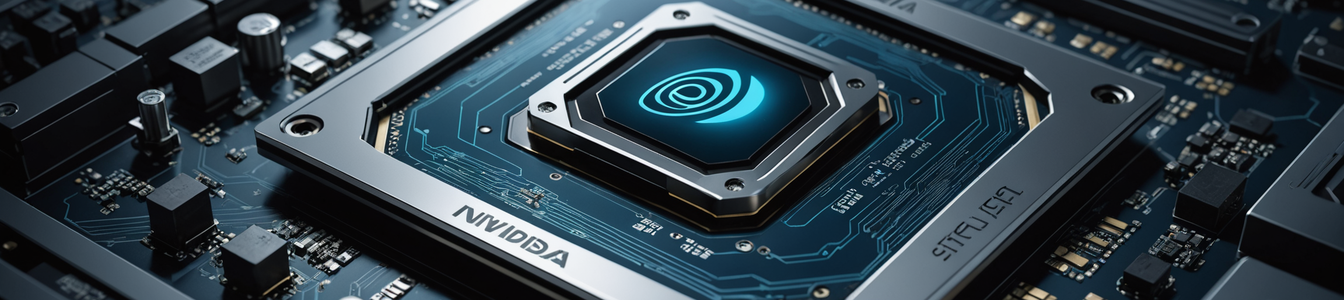
The race to dominate the AI PC market is accelerating, but beneath the surface of promised performance leaps lies a growing security chasm. Recent sightings of prototype hardware, including a laptop motherboard equipped with NVIDIA's unannounced N1 System-on-Chip (SoC) and a staggering 128GB of RAM, offer a glimpse into a powerful future. However, for cybersecurity professionals, these leaks are less a preview of capability and more a stark warning of the operational blind spots about to be introduced into enterprise environments. The integration of novel, proprietary silicon like the N1 threatens to fracture the visibility and control that Security Operations Centers (SOCs) rely upon, creating what experts are calling "Silicon Shadows"—areas of the computing stack where security tools can no longer see.
The Hardware Shift: Beyond x86 Transparency
The N1 SoC represents a fundamental shift from traditional PC architecture. As a true System-on-Chip, it likely integrates an ARM-based CPU complex, a next-generation GPU, and dedicated neural processing units (NPUs) or tensor cores onto a single piece of silicon. This design, optimized for efficiency and AI workload performance, departs from the familiar, well-instrumented x86 ecosystem. The proprietary nature of the firmware, memory controllers, and interconnects within the N1 creates a black box for security tools architected for a different era. Legacy Endpoint Detection and Response (EDR) agents and forensic utilities depend on known hardware interfaces and standard telemetry sources that may not exist or may be inaccessible on these new platforms.
The SecOps Visibility Gap: Firmware, Memory, and AI Cores
The emerging security challenge is threefold, centering on firmware, memory, and the AI accelerators themselves.
First, firmware security enters uncharted territory. The Unified Extensible Firmware Interface (UEFI) and BIOS in traditional systems are already high-value attack surfaces. In a proprietary SoC like the N1, the boot process and low-level firmware are even more opaque. Without deep partnerships and tooling from the silicon vendor, SOCs will struggle to verify firmware integrity, detect rootkits at this layer, or even conduct basic firmware inventory—a critical aspect of asset management.
Second, memory analysis and forensics face new hurdles. The leaked prototype's 128GB RAM configuration highlights the massive, high-bandwidth memory pools these AI PCs will employ. Traditional memory acquisition and analysis tools are built for specific memory controller architectures. A novel SoC may render these tools ineffective, blinding investigators during a critical incident. Furthermore, the close coupling of CPU, GPU, and NPU memory spaces could create shared memory regions that are invisible to OS-level security agents, perfect for covert data exfiltration or malware staging.
Third, and most critically, is the security of the AI accelerators. These NPUs are essentially new, powerful processors running their own microcode and workloads. Today, no standard security solution can monitor what computations are being performed on an NPU. This creates a potential sanctuary for malicious activity. Imagine malware that uses the NPU to encrypt files at hardware-accelerated speeds, or a stealthy inference model running on the chip to identify sensitive data on a device. The lack of telemetry from these components means such attacks could occur completely undetected.
The Threat Landscape: Sophisticated, Hardware-Aware Malware
This visibility gap will not go unnoticed by threat actors. The next generation of advanced persistent threats (APTs) and sophisticated malware will likely evolve to exploit these Silicon Shadows. We can anticipate the development of firmware rootkits specifically designed for the N1's boot environment, malware that leverages NPU instructions to hide its cryptographic operations, and exploits that target the unique memory management unit of the integrated GPU. Incident response will become exponentially more difficult, as responders may lack the tools to perform a credible root cause analysis on a compromised AI PC.
Bridging the Gap: A Call to Action for the Security Community
The commercialization of AI-optimized SoCs is inevitable. The cybersecurity industry must begin adapting now to avoid being left in the dark. This requires action on multiple fronts:
- Vendor Collaboration: Security tool vendors must establish deep technical partnerships with silicon manufacturers like NVIDIA, Qualcomm, and AMD early in the design phase. Security requirements, including standardized telemetry hooks and debug interfaces for forensic use, must be baked into the hardware architecture, not bolted on afterward.
- Tooling Evolution: The next generation of EDR and extended detection and response (XDR) platforms must be built with architectural agnosticism in mind. They need lightweight agents capable of interfacing with proprietary hardware security modules and consuming telemetry from non-CPU processors.
- Standardization Efforts: Industry consortia should push for open standards governing security telemetry from AI accelerators and other specialized silicon, similar to how TPMs provided a standard for hardware-based root of trust.
- Skill Development: Security analysts and incident responders will need training on the architectures and potential attack surfaces of these new SoCs. Understanding the hardware is no longer optional for effective defense.
The leaked N1 prototype is a canary in the coal mine. It heralds a wave of high-performance, AI-native devices that will redefine personal computing. For the security community, the message is clear: the race for performance must be matched by a parallel race for visibility and control. If we fail to illuminate the Silicon Shadows, we risk building a future where our most powerful computers are also our most vulnerable.
Comentarios 0
Comentando como:
¡Únete a la conversación!
Sé el primero en compartir tu opinión sobre este artículo.
¡Inicia la conversación!
Sé el primero en comentar este artículo.