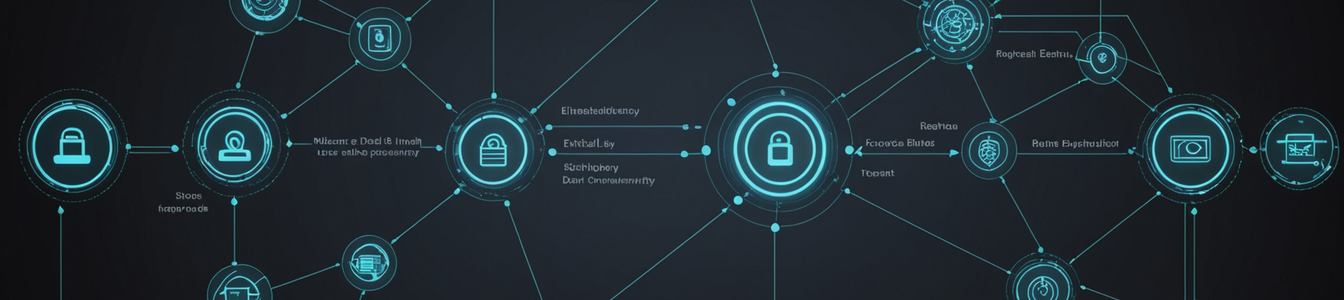
Beneath the surface of every phishing email lies a complex, globalized economy. What was once the domain of opportunistic hackers has evolved into a professionalized supply chain where stolen credentials are harvested, processed, and monetized with chilling efficiency. This ecosystem, which security researchers term 'The Phishing Economy,' is a primary driver behind the relentless volume of credential theft attacks targeting individuals and corporations worldwide.
The journey begins with the initial compromise. Phishing campaigns have moved far beyond the crude, mass-emailed pleas from a fictional prince. Today's operations are often highly targeted, leveraging data from previous breaches to craft convincing lures. Spear-phishing and business email compromise (BEC) campaigns target specific individuals within organizations, particularly those in finance or with privileged access. The initial phishing kit—the software used to create fake login pages—can be purchased or rented for a nominal fee, lowering the barrier to entry for aspiring data harvesters.
Once credentials are captured, they enter a validation and sorting pipeline. Raw dumps of usernames and passwords are often 'cracked' or tested against various services using automated tools. This process separates active, valuable credentials from dead data. The sorted credentials are then categorized based on their perceived market value. A key differentiator is the type of account. Consumer email and social media logins form the bulk of low-tier inventory, while corporate VPN, Remote Desktop Protocol (RDP), and SaaS admin credentials command premium prices.
The dark web serves as the primary marketplace for this illicit trade. These platforms operate with a surprising degree of professionalism, featuring user reviews, customer support tickets, and tiered pricing models. Sellers offer credentials in various formats: bulk 'combo lists' containing millions of entries for a flat fee, 'fresh' batches of recently stolen data sold at a premium, and even subscription services providing a continuous stream of new credentials.
Pricing is dictated by a clear set of economic principles. A standard consumer email password might sell for as little as $1 to $5. However, the value skyrockets for corporate assets. Access to a corporate network via validated VPN credentials can fetch between $500 and $5,000, depending on the company's size and industry. Financial sector credentials are at the apex, with prices regularly exceeding $10,000 per account. Geographic location also plays a role; credentials from users in North America and Western Europe typically carry higher price tags due to higher average incomes and the perceived wealth of their associated accounts.
The monetization phase is where the real damage occurs. Buyers of these credentials are not necessarily the original phishers. A thriving secondary market exists where specialists purchase access to execute specific crimes. One actor may use bank login details for direct fraud, while another uses corporate email access to launch further Business Email Compromise (BEC) attacks or to move laterally within a network to deploy ransomware. This specialization creates a scalable, efficient criminal enterprise where risk is distributed.
For the cybersecurity community, understanding this economy is crucial for effective defense. Tactics focused solely on blocking individual phishing emails treat a symptom, not the disease. A robust defense requires a multi-layered approach:
- Eliminating Password Reuse: Enforcing strict policies against password reuse across personal and professional accounts breaks a fundamental link in the credential supply chain. The use of a corporate password manager can be instrumental.
- Universal Adoption of MFA: Multi-factor authentication (MFA), particularly using phishing-resistant methods like FIDO2 security keys, renders stolen passwords nearly useless. It is the single most effective control to disrupt the credential economy.
- Continuous Threat Exposure Management: Proactively searching for corporate credentials that have already been leaked on the dark web and forcing resets is a critical reactive measure. Services that monitor credential dumps are essential.
- Security Awareness with a Focus on Impact: Training must evolve beyond 'don't click the link.' Users need to understand the tangible economic value of their credentials and their role in protecting a valuable corporate asset.
The persistence of the phishing economy is a testament to its profitability. As long as credentials can be easily stolen and converted into cash, the attacks will continue. The defense strategy must therefore aim to increase the cost and complexity of theft while drastically reducing the value of the stolen goods. By devaluing the core commodity—the password—through MFA and smart credential hygiene, organizations can begin to dismantle this global black market from the ground up.
Comentarios 0
Comentando como:
¡Únete a la conversación!
Sé el primero en compartir tu opinión sobre este artículo.
¡Inicia la conversación!
Sé el primero en comentar este artículo.